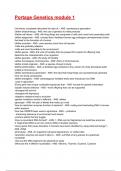
Portage Genetics module 1
Cell theory completely debunked the idea of: - ANS -spontaneous generation
\define biotechnology - ANS -the use of genetics to make products
\Define cell theory - ANS -All living things are composed of cells and come from preexisting cells
\define epigenesis - ANS -concept that a fertilized human egg undergoes developmental events
that lead to the formation of a human
\define evolution - ANS --new species come from old species
-traits are gradually adaptive
-traits are more favorable to the environment
\define genes - ANS -the units of heredity that are passed from parent to offspring help
determine the characteristics of an organism
\define genetics - ANS -the study of heredity
\define homologous chromosomes - ANS -Pairs of chromosomes
\define model organism - ANS -a species chosen to study
\Define preformation - ANS -a fertilized egg contained a tiny version of a fully developed adult
(called a homunculus)
\define spontaneous generation - ANS -the idea that living things can spontaneously generate
from non living components
\define transgenic - ANS -advantageous heritable traits were introduced via rDNA
-used in agriculture
\Every gene has unique nucleotide sequences that: - ANS -encode for genetic information
\explain natural selection - ANS --more offspring than can be supported
-strongest will survive
-strongest will reproduce
-adaptive variations lead to evolution
\genetic mutations results in different: - ANS -alleles
\genotype - ANS -the pair of alleles that make up a trait
\how do restriction enzymes function in bacteria? - ANS -cutting and inactivating DNA of viruses
within bacteria
\how has CRISPR been used in agriculture - ANS -- probiotics
- enhancing tolerance to environment and insects
-produce plants that are bugger
\How is recumbent DNA formed? - ANS -1. DNA can be fragmented via restrictive enzymes
2. fragmented DNA is put into vectors (DNA of another species)
\many genes that cause disorders in humans have been identified by using what technology? -
ANS -rDNA
\phenotype - ANS -An organism's physical appearance, or visible traits.
\restriction enzymes are used in labs to: - ANS -cut DNA of any species at a particular
nucleotide
-then put the DNA fragment into plasmids to study
\What are the 4 different nucleotides - ANS -Adenine, Thymine, Guanine, Cytosine
Cell theory completely debunked the idea of: - ANS -spontaneous generation
\define biotechnology - ANS -the use of genetics to make products
\Define cell theory - ANS -All living things are composed of cells and come from preexisting cells
\define epigenesis - ANS -concept that a fertilized human egg undergoes developmental events
that lead to the formation of a human
\define evolution - ANS --new species come from old species
-traits are gradually adaptive
-traits are more favorable to the environment
\define genes - ANS -the units of heredity that are passed from parent to offspring help
determine the characteristics of an organism
\define genetics - ANS -the study of heredity
\define homologous chromosomes - ANS -Pairs of chromosomes
\define model organism - ANS -a species chosen to study
\Define preformation - ANS -a fertilized egg contained a tiny version of a fully developed adult
(called a homunculus)
\define spontaneous generation - ANS -the idea that living things can spontaneously generate
from non living components
\define transgenic - ANS -advantageous heritable traits were introduced via rDNA
-used in agriculture
\Every gene has unique nucleotide sequences that: - ANS -encode for genetic information
\explain natural selection - ANS --more offspring than can be supported
-strongest will survive
-strongest will reproduce
-adaptive variations lead to evolution
\genetic mutations results in different: - ANS -alleles
\genotype - ANS -the pair of alleles that make up a trait
\how do restriction enzymes function in bacteria? - ANS -cutting and inactivating DNA of viruses
within bacteria
\how has CRISPR been used in agriculture - ANS -- probiotics
- enhancing tolerance to environment and insects
-produce plants that are bugger
\How is recumbent DNA formed? - ANS -1. DNA can be fragmented via restrictive enzymes
2. fragmented DNA is put into vectors (DNA of another species)
\many genes that cause disorders in humans have been identified by using what technology? -
ANS -rDNA
\phenotype - ANS -An organism's physical appearance, or visible traits.
\restriction enzymes are used in labs to: - ANS -cut DNA of any species at a particular
nucleotide
-then put the DNA fragment into plasmids to study
\What are the 4 different nucleotides - ANS -Adenine, Thymine, Guanine, Cytosine