Bio 338 Exam 2 Questions with correct
answers
1. |Describe |concept |of |hormone-receptor |interaction |- |VERIFIED |ANSWER✔✔-Hormones |are |chemical
|messengers |that |interact |with |receptors |present |on |the |surface |of |a |cell |membrane |or |with |receptors
|that |are |located |inside |the |cell, |in |the |cytoplasm |(cytoplasmic |receptors). |This |interaction |gives |rise |
to |the |effects |hormones |exert |on |target |cells |and |organs.
Downregulation |- |VERIFIED |ANSWER✔✔-Decrease |in |receptor |number |in |response |to |high |
concentration |of |hormone |(diminishing |response |for |same |hormone |concentration |- |less |sensitive)
Upregulation |- |VERIFIED |ANSWER✔✔-Increase |in |receptor |number |in |response |to |low |concentration |
of |hormone |- |enhance |sensitivity
saturation |- |VERIFIED |ANSWER✔✔-all |receptors |in |or |on |a |cell |are |bound |wit |a |hormone |- |any |
additional |increase |in |hormone |concentration |will |have |no |effect |at |the |tissue
Competition |- |VERIFIED |ANSWER✔✔-Receptors |are |specific |to |chemical |shape |so |two |hormones |can |
have |a |similar |chemical |shape |and |thus |"compete" |for |binding
2. |Identify |factors |influencing |concentration |of |a |hormone |in |blood |- |VERIFIED |ANSWER✔✔-Rate |of |
secretion |from |the |gland
Rate |of |metabolism |or |excretion
quality |of |transport |proteins |(for |steroids)
Changes |in |plasma |volume
3. |Describe |"mechanisms |of |hormone |actions" |- |VERIFIED |ANSWER✔✔-Steroids: |Altering |the |activity |
of |DNA |in |the |nucleus |to |imitate |or |suppress |the |synthesis |of |a |specific |protein
, Insulin: |Activation |of |special |proteins |called |" |second |messengers". |Altering |membrane |transport |
mechanisms
4. |Define |the |term |"competitive |binding" |- |VERIFIED |ANSWER✔✔-Receptors |are |specific |to |chemical |
shape |so |two |hormones |can |have |a |similar |chemical |shape |and |thus |"compete" |for |binding
5. |Describe |role(s) |of |hypothalamus |and |pituitary |- |VERIFIED |ANSWER✔✔-Hypothalamus: |Controls |
secretions |from |the |pituitary |gland. |Located |at |the |base |of |the |brain; |attached |to |pituitary
Anterior |Pituitary: |Hormone |release |controlled |via |chemicals |that |originate |in |neurons |in |the |
hypothalamus. |These |chemicals |stimulate |or |inhibit |the |release |of |specific |hormones |from |the |
anterior |pituitary
Posterior |Pituitary: |hormones |move |down |the |axon |to |blood |vessels |in |posterior |pituitary |where |they
|discharge |into |the |circulation
identify |sites |and |stimuli |of |release |of: |epinephrine |and |norepinephrine |- |VERIFIED |ANSWER✔✔-
Adrenal |Medulla
Catecholamine |(80% |EPI, |20% |NE)
Fast-acting |hormones |- |appear |quickly |and |disappear |quickly
Maintain |blood |glucose |during |exercise |
Plasma |EPI |and |NE |increase |during |exercise
identify |sites |and |stimuli |of |release |of: |glucagon |and |insulin |- |VERIFIED |ANSWER✔✔-Pancreas
Insulin: |secreted |from |β |cells |of |the |pancreas |and |is |most |important |hormone |during |absorptive |state
|
- |Facilitates |the |movement |of |glucose |from |circulation |to |the |inside |of |cells |
answers
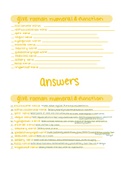
1. |Describe |concept |of |hormone-receptor |interaction |- |VERIFIED |ANSWER✔✔-Hormones |are |chemical
|messengers |that |interact |with |receptors |present |on |the |surface |of |a |cell |membrane |or |with |receptors
|that |are |located |inside |the |cell, |in |the |cytoplasm |(cytoplasmic |receptors). |This |interaction |gives |rise |
to |the |effects |hormones |exert |on |target |cells |and |organs.
Downregulation |- |VERIFIED |ANSWER✔✔-Decrease |in |receptor |number |in |response |to |high |
concentration |of |hormone |(diminishing |response |for |same |hormone |concentration |- |less |sensitive)
Upregulation |- |VERIFIED |ANSWER✔✔-Increase |in |receptor |number |in |response |to |low |concentration |
of |hormone |- |enhance |sensitivity
saturation |- |VERIFIED |ANSWER✔✔-all |receptors |in |or |on |a |cell |are |bound |wit |a |hormone |- |any |
additional |increase |in |hormone |concentration |will |have |no |effect |at |the |tissue
Competition |- |VERIFIED |ANSWER✔✔-Receptors |are |specific |to |chemical |shape |so |two |hormones |can |
have |a |similar |chemical |shape |and |thus |"compete" |for |binding
2. |Identify |factors |influencing |concentration |of |a |hormone |in |blood |- |VERIFIED |ANSWER✔✔-Rate |of |
secretion |from |the |gland
Rate |of |metabolism |or |excretion
quality |of |transport |proteins |(for |steroids)
Changes |in |plasma |volume
3. |Describe |"mechanisms |of |hormone |actions" |- |VERIFIED |ANSWER✔✔-Steroids: |Altering |the |activity |
of |DNA |in |the |nucleus |to |imitate |or |suppress |the |synthesis |of |a |specific |protein
, Insulin: |Activation |of |special |proteins |called |" |second |messengers". |Altering |membrane |transport |
mechanisms
4. |Define |the |term |"competitive |binding" |- |VERIFIED |ANSWER✔✔-Receptors |are |specific |to |chemical |
shape |so |two |hormones |can |have |a |similar |chemical |shape |and |thus |"compete" |for |binding
5. |Describe |role(s) |of |hypothalamus |and |pituitary |- |VERIFIED |ANSWER✔✔-Hypothalamus: |Controls |
secretions |from |the |pituitary |gland. |Located |at |the |base |of |the |brain; |attached |to |pituitary
Anterior |Pituitary: |Hormone |release |controlled |via |chemicals |that |originate |in |neurons |in |the |
hypothalamus. |These |chemicals |stimulate |or |inhibit |the |release |of |specific |hormones |from |the |
anterior |pituitary
Posterior |Pituitary: |hormones |move |down |the |axon |to |blood |vessels |in |posterior |pituitary |where |they
|discharge |into |the |circulation
identify |sites |and |stimuli |of |release |of: |epinephrine |and |norepinephrine |- |VERIFIED |ANSWER✔✔-
Adrenal |Medulla
Catecholamine |(80% |EPI, |20% |NE)
Fast-acting |hormones |- |appear |quickly |and |disappear |quickly
Maintain |blood |glucose |during |exercise |
Plasma |EPI |and |NE |increase |during |exercise
identify |sites |and |stimuli |of |release |of: |glucagon |and |insulin |- |VERIFIED |ANSWER✔✔-Pancreas
Insulin: |secreted |from |β |cells |of |the |pancreas |and |is |most |important |hormone |during |absorptive |state
|
- |Facilitates |the |movement |of |glucose |from |circulation |to |the |inside |of |cells |