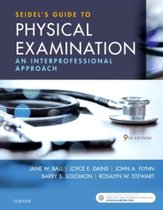
TEST BANK FOR
SEIDEL'S GUIDE TO PHYSICAL EXAMINATION 9TH EDITION
BY BALL COMPLETE CHAPTERS 1-26
,Table of Contents
Chapter 01: The History And Interviewing Process ...................................................................................... 3
Chapter 02: Cultural Competency............................................................................................................... 14
Chapter 03: Examination Techniques And Equipment ............................................................................... 22
Chapter 04: Clinical Reasoning.................................................................................................................... 35
Chapter 05: Documentation ....................................................................................................................... 41
Chapter 06: Vital Signs And Pain Assessment ............................................................................................. 51
Chapter 07: Mental Status .......................................................................................................................... 55
Chapter 08: Growth, Measurement, And Nutrition ................................................................................... 66
Chapter 09: Skin, Hair, And Nails ................................................................................................................ 82
Chapter 10: Lymphatic System ................................................................................................................. 102
Chapter 11: Head And Neck ...................................................................................................................... 111
Chapter 12: Eyes ....................................................................................................................................... 119
Chapter 13: Ears, Nose, And Throat.......................................................................................................... 131
Chapter 14: Chest And Lungs .................................................................................................................... 140
Chapter 15: Heart ..................................................................................................................................... 146
Chapter 16: Blood Vessels ........................................................................................................................ 154
Chapter 17: Breasts And Axillae ................................................................................................................ 162
Chapter 18: Abdomen ............................................................................................................................... 169
Chapter 19: Female Genitalia ................................................................................................................... 179
Chapter 20: Male Genitalia ....................................................................................................................... 191
Chapter 21: Anus, Rectum, And Prostate ................................................................................................. 202
Chapter 22: Musculoskeletal System ........................................................................................................ 212
Chapter 23: Neurologic System ................................................................................................................ 225
Chapter 24: Sports Participation Evaluation ............................................................................................. 243
Chapter 25: Putting It All Together ........................................................................................................... 248
Chapter 26: Emergency Or Life-Threatening Situations ........................................................................... 266
,Chapter 01: The History And Interviewing Process
Ball: Seidel’s Guide To Physical Examination, 9th Edition
MULTIPLE CHOICE
1. Which Question Would Be Considered A “Leading Question?”
A. “What Do You Think Is Causing Your Headaches?”
B. “You Don’t Get Headaches Often, Do You?”
C. “On A Scale Of 1 To 10, How Would You Rate The Severity Of Your Headaches?”
D. “At What Time Of The Day Are Your Headaches The Most Severe?”
ANSWER: B
Stating To The Patient That He Or She Does Not Get Headaches Would Limit The Information In The
Patient’s Answer. Asking The Patient What He Or She Thinks Is Causing The Headaches Is An Open-
Ended Question. Asking The Patient How He Or She Would Rate The Severity Of The Headaches And
Asking What Time Of The Day The Headaches Are The Most Severe Are Direct Questions.
DIF: Cognitive Level: Applying (Application)
OBJ: Nursing Process—Assessment
MSC: Physiologic Integrity: Physiologic Adaptation
2. When Are Open-Ended Questions Generally Most Useful?
A. During Sensitive Area Part Of The Interview
B. After Several Closed-Ended Questions Have Been Asked
C. While Designing The Genogram
D. During The Review Of Systems
ANSWER: A
,Asking Open-Ended Questions During The Sensitive Part Of The Interview Allows You To Gather More
Information And Establishes You As An Empathic Listener, Which Is The First Step Of Effective
Communication. Asking Closed-Ended Questions May Stifle The Patient’s Desire To Discuss The
History Of The Illness. Interviewing For The Purpose Of Designing A Genogram Or Conducting A
Review Of Systems Requires More Focused Data Than Can Be More Easily Gathered With Direct
Questioning.
DIF: Cognitive Level: Understanding (Comprehension)
OBJ: Nursing Process—Assessment
MSC: Physiologic Integrity: Physiologic Adaptation
3. Periods Of Silence During The Interview Can Serve Important Purposes, Such As:
A. Allowing The Clinician To Catch Up On Documentation.
B. Promoting Calm.
C. Providing Time For Reflection.
D. Increasing The Length Of The Visit.
ANSWER: C
Silence Is A Useful Tool During Interviews For The Purposes Of Reflection, Summoning Courage, And
Displaying Compassion. This Is Not A Time To Document In The Chart, But Rather To Focus On The
Patient. Periods Of Silence May Cause Anxiety Rather Than Promote Calm. The Length Of The Visit Is
Less Important Than Getting Critical Information.
DIF: Cognitive Level: Understanding (Comprehension)
OBJ: Nursing Process—Assessment
MSC: Physiologic Integrity: Physiologic Adaptation
4. Mr. Franklin Is Speaking With You, The Healthcare Provider, About His Respiratory Problem. Mr.
Franklin Says, “I’ve Had This Cough For 3 Days, And It’s Getting Worse.” You Reply, “Tell Me More About
Your Cough.” Mr. Franklin States, “I Wish I Could Tell You More. That’s Why I’m Here. You Tell Me
What’s Wrong!” Which Caregiver Response Would Be Most Appropriate For Enhancing Communication?
,A. “After 3 Days, You’re Tired Of Coughing. Have You Had A Fever?”
B. “I’d Like To Hear More About Your Experiences. Where Were You Born?”
C. “I Don’t Know What’s Wrong. You Could Have Almost Any Disease.”
D. “I’ll Examine You And Figure Out Later What The Problem Is.”
ANSWER: A
“After 3 Days, You’re Tired Of Coughing. Have You Had A Fever?” Is The Only Response Aimed At
Focusing On The Chief Compliant To Gather More Data And Does Not Digress From The Issue.
DIF: Cognitive Level: Analyzing (Analysis)
OBJ: Nursing Process—Assessment
MSC: Physiologic Integrity: Physiologic Adaptation
5. After You Ask A Patient About Her Family History, She Says, “Tell Me About Your Family Now.” Which
Response Is Generally Most Appropriate?
A. Ignore The Patient’s Comment And Continue With The Interview.
B. Give A Brief, Undetailed Answer.
C. Ask The Patient Why She Needs To Know.
D. Tell The Patient That You Do Not Discuss Your Family With Patients.
ANSWER: B
Giving A Brief, Undetailed Answer Will Satisfy The Patient’s Curiosity About Yourself Without
Invading Your Private Life. Ignoring The Patient’s Comment, Continuing With The Interview, And
Telling The Patient That You Do Not Discuss Your Family With Patients Will Potentially Anger Or
Frustrate Her And Keep Her From Sharing Openly. Asking The Patient Why She Needs To Know Will
Distract From The Real Reason She Is Seeking Care And Instead Move The Interview Conversation
Away From The Topics That Should Be Discussed.
DIF: Cognitive Level: Applying (Application)
OBJ: Nursing Process—Assessment
MSC: Physiologic Integrity: Physiologic Adaptation
6. A 36-Year-Old Woman Complains That She Has Had Crushing Chest Pain For The Past 2 Days. She
Seems Nervous As She Speaks To You. An Appropriate Response Is To:
,A. Continue To Collect Information Regarding The Chief Complaint In An Unhurried Manner.
B. Finish The Interview As Rapidly As Possible.
C. Ask The Patient To Take A Deep Breath And Calm Down.
D. Ask The Patient If She Wants To Wait Until Another Day To Talk To You.
ANSWER: A
With An Anxious, Vulnerable Patient, It Is Best To Not Hurry; A Calm Demeanor Will Communicate
Caring To The Patient. If You As A Healthcare Provider Are Hurried, The Patient Will Be More Anxious.
The Best Way To Assist An Anxious Patient Is To Not Hurry And Remain Calm, Because This Will
Communicate Caring To The Patient. Asking The Patient If She Wants To Wait Until Another Day To
Talk To You Delays The Needed Health Care.
DIF: Cognitive Level: Applying (Application)
OBJ: Nursing Process—Assessment
MSC: Physiologic Integrity: Physiologic Adaptation
7. Ms. A States, “My Life Is Just Too Painful. It Isn’t Worth It.” She Appears Depressed. Which One Of The
Following Statements Is The Most Appropriate Caregiver Response?
A. “Try To Think About The Good Things In Life.”
B. “What In Life Is Causing You Such Pain?”
C. “You Can’t Mean What You’re Saying.”
D. “If You Think About It, Nothing Is Worth Getting This Upset About.”
ANSWER: B
Specific But Open-Ended Questions Are Best Used When The Patient Has Feelings Of Loss Of
Self-Worth And Depression. “Try To Think About The Good Things In Life,” “You Can’t Mean What
You’re Saying,” And “If You Think About It, Nothing Is Worth Getting This Upset About” Are
Statements That Will Hurry The Patient And Offer Only Superficial Assurance.
DIF: Cognitive Level: Analyzing (Analysis)
OBJ: Nursing Process—Assessment
MSC: Physiologic Integrity: Physiologic Adaptation
8. You Are Collecting A History From A 16-Year-Old Girl. Her Mother Is Sitting Next To Her In The
Examination Room. When Collecting History From Older Children Or Adolescents, They Should Be:
,A. Given The Opportunity To Be Interviewed Without The Parent At Some Point During The
Interview.
B. Mailed A Questionnaire In Advance To Avoid The Need For Them To Talk.
C. Ignored While You Address All Questions To The Parent.
D. Allowed To Direct The Flow Of The Interview.
ANSWER: A
The Adolescent Should Be Given The Opportunity To Give Information Directly. This Enhances The
Probability That The Adolescent Will Follow Your Advice. Mailing A Questionnaire In Advance To
Avoid The Need For Her To Talk Does Not Assist The Adolescent In Learning To Respond To Answers
Regarding Her Health. The Parent Can Help Fill In Gaps At The End. If She Is Ignored While You Address
All Questions To The Parent, The Patient Will Feel As Though She Is Just Being Discussed And Is Not
Part Of The Process For The Health Care. The Healthcare Provider Should Always Direct The Flow Of
The Interview According To The Patient’s Responses.
DIF: Cognitive Level: Applying (Application)
OBJ: Nursing Process—Assessment
MSC: Physiologic Integrity: Physiologic Adaptation
9. Information That Is Needed During The Initial Interview Of A Pregnant Woman Includes All The
Following Except:
A. The Gender That The Woman Hopes The Baby Will Be.
B. Past Medical History.
C. Healthcare Practices.
D. The Woman’s Remembering (Knowledge) About Pregnancy.
ANSWER: A
The Initial Interview For The Pregnant Woman Should Include Information About Her Past Medical
History, Assessment Of Health Practices, Identification Of Potential Risk Factors, And Assessment Of
Remembering (Knowledge) As It Affects The Pregnancy. The Gender Of The Fetus Is Not As Important
As The Information About Her Past Medical History, Healthcare Practices, And The Woman’s
Remembering (Knowledge) About Her Pregnancy.
DIF: Cognitive Level: Understanding (Comprehension)
OBJ: Nursing Process—Assessment
MSC: Physiologic Integrity: Physiologic Adaptation
,10. When Interviewing Older Adults, The Examiner Should:
A. Speak Extremely Loudly, Because Most Older Adults Have Significant Hearing Impairment.
B. Provide A Written Questionnaire In Place Of An Interview.
C. Position Himself Or Herself Facing The Patient.
D. Dim The Lights To Decrease Anxiety.
ANSWER: C
The Healthcare Provider Should Position Himself Or Herself So That The Older Patient Can See His Or
Her Face. Shouting Distorts Speech, Dimming The Lights Impairs Vision, And A Written Interview May
Be Necessary If All Else Fails.
DIF: Cognitive Level: Understanding (Comprehension)
OBJ: Nursing Process—Assessment
MSC: Physiologic Integrity: Physiologic Adaptation
11. To What Extent Should The Patient With A Physical Disability Or Emotional Disorder Be Involved In
Providing Health History Information To The Health Professional?
A. The Patient Should Be Present During Information Collection But Should Not Be Addressed
Directly.
B. All Information Should Be Collected From Past Records And Family Members While The Patient
Is In Another Room.
C. The Patient Should Be Involved Only When You Sense That He Or She May Feel Ignored.
D. The Patient Should Be Fully Involved To The Limit Of His Or Her Ability.
ANSWER: D
Patients Who Are Disabled May Not Give An Effective History, But They Must Be Respected, And The
History Must Be Obtained From Them To The Greatest Extent Possible. Patients Should Be Addressed
Directly And Participate In The Interview To The Extent Of Their Ability.
DIF: Cognitive Level: Understanding (Comprehension)
OBJ: Nursing Process—Assessment
MSC: Physiologic Integrity: Physiologic Adaptation
,12. When Taking A History, The Nurse Should:
A. Ask The Patient To Give You Any Information He Or She Can Recall About His Or Her Health.
B. Start The Interview With The Patient’s Family History.
C. Use A Chronologic And Sequential Framework.
D. Use A Holistic And Eclectic Structure.
ANSWER: C
To Give Structure To The Present Problem Or Chief Complaint, The Provider Should Proceed In A
Chronologic And Sequential Framework. Asking Patients To Give Any Information They Can Recall
About Their Health And Using A Holistic And Electric Structure Do Not Provide Structure To The
History. Gathering The Patient’s Family History Is Only The First Step.
DIF: Cognitive Level: Understanding (Comprehension)
OBJ: Nursing Process—Assessment MSC: Physiologic Integrity: Physiologic Adaptation
13. When Questioning The Patient Regarding His Or Her Sexual History, Which Question Should Be
Asked Initially?
A. “Do You Have Any Particular Sexual Likes Or Dislikes?”
B. “Do You Have Any Worries Or Concerns Regarding Your Sex Life?”
C. “How Often Do You Have Intercourse And With Whom?”
D. “Do You Have Any Reason To Think You May Have Been Exposed To A Sexually Transmitted
Infection?”
ANSWER: B
When Approaching Questioning About A Sensitive Area, It Is Recommended That The Provider First
Ask Open-Ended Questions That Explore The Patient’s Feelings About The Issue. “Do You Have Any
Particular Sexual Likes Or Dislikes?” Is Not A Question That Should Be Asked In An Interview Regarding
Sexual History. “How Often Do You Have Intercourse And With Whom?” And “Do You Have Any
Reason To Think You May Have Been Exposed To A Sexually Transmitted Infection?” Are Not
Questions That Should Be Asked Initially In An Interview Regarding The Patient’s Sexual History.
DIF: Cognitive Level: Applying (Application)
OBJ: Nursing Process—Assessment:. Physiologic Integrity: Physiologic Adaptation
, 14. A Guideline For History Taking Is For Caregivers To:
A. Ask Direct Questions Before Open-Ended Questions So That Data Move From Simple To
Complex.
B. Ask For A Complete History At Once So That Data Are Not Forgotten Between Meetings.
C. Make Notes Sparingly So That The Patient Can Be Observed During The History Taking.
D. Write Detailed Information As Stated By Patients So That Their Priorities Are Reflected.
ANSWER: C
During The Interview, You Should Maintain Eye Contact With The Patient, Observing Body Language And
Proceeding From Open-Ended To Direct Questions. Asking Direct Questions First May Upset The Patient.
During The Interview You Should Gather As Much Information As You Need For The Current Reason The
Patient Is Seeking Health Care. It Is Important To Focus On The Patient. Brief Notes Can Be Charted, But
You Should Maintain Eye Contact With The Patient, Observing Body Language And Proceeding From
Open-Ended To Direct Questions.
DIF: Cognitive Level: Understanding (Comprehension)
OBJ: Nursing Process—Assessment MSC: Physiologic Integrity: Physiologic Adaptation
15. Mr. D Complains Of A Headache. During The History, He Mentions His Use Of Alcohol And Illicit
Drugs. This Information Would Most Likely Belong In The:
A. Chief Complaint.
B. Past Medical History.
C. Personal And Social History.
D. Review Of Systems.
ANSWER: C
Habits Are Included Within The Personal And Social History. The Chief Complaint Is The Reason The
Patient Is Seeking Health Care. The Past Medical History Is Made Up Of The Previous Medical Conditions
That The Patient Has Had. The Review Of Systems Is An Overview Of Problems With Other Body
Systems.
DIF: Cognitive Level: Understanding (Comprehension)
OBJ: Nursing Process—Assessment MSC: Physiologic Integrity: Physiologic Adaptation
16. Direct Questioning About Domestic Violence In The Home Should Be:
A. A Routine Component Of History Taking With Female Patients.
SEIDEL'S GUIDE TO PHYSICAL EXAMINATION 9TH EDITION
BY BALL COMPLETE CHAPTERS 1-26
,Table of Contents
Chapter 01: The History And Interviewing Process ...................................................................................... 3
Chapter 02: Cultural Competency............................................................................................................... 14
Chapter 03: Examination Techniques And Equipment ............................................................................... 22
Chapter 04: Clinical Reasoning.................................................................................................................... 35
Chapter 05: Documentation ....................................................................................................................... 41
Chapter 06: Vital Signs And Pain Assessment ............................................................................................. 51
Chapter 07: Mental Status .......................................................................................................................... 55
Chapter 08: Growth, Measurement, And Nutrition ................................................................................... 66
Chapter 09: Skin, Hair, And Nails ................................................................................................................ 82
Chapter 10: Lymphatic System ................................................................................................................. 102
Chapter 11: Head And Neck ...................................................................................................................... 111
Chapter 12: Eyes ....................................................................................................................................... 119
Chapter 13: Ears, Nose, And Throat.......................................................................................................... 131
Chapter 14: Chest And Lungs .................................................................................................................... 140
Chapter 15: Heart ..................................................................................................................................... 146
Chapter 16: Blood Vessels ........................................................................................................................ 154
Chapter 17: Breasts And Axillae ................................................................................................................ 162
Chapter 18: Abdomen ............................................................................................................................... 169
Chapter 19: Female Genitalia ................................................................................................................... 179
Chapter 20: Male Genitalia ....................................................................................................................... 191
Chapter 21: Anus, Rectum, And Prostate ................................................................................................. 202
Chapter 22: Musculoskeletal System ........................................................................................................ 212
Chapter 23: Neurologic System ................................................................................................................ 225
Chapter 24: Sports Participation Evaluation ............................................................................................. 243
Chapter 25: Putting It All Together ........................................................................................................... 248
Chapter 26: Emergency Or Life-Threatening Situations ........................................................................... 266
,Chapter 01: The History And Interviewing Process
Ball: Seidel’s Guide To Physical Examination, 9th Edition
MULTIPLE CHOICE
1. Which Question Would Be Considered A “Leading Question?”
A. “What Do You Think Is Causing Your Headaches?”
B. “You Don’t Get Headaches Often, Do You?”
C. “On A Scale Of 1 To 10, How Would You Rate The Severity Of Your Headaches?”
D. “At What Time Of The Day Are Your Headaches The Most Severe?”
ANSWER: B
Stating To The Patient That He Or She Does Not Get Headaches Would Limit The Information In The
Patient’s Answer. Asking The Patient What He Or She Thinks Is Causing The Headaches Is An Open-
Ended Question. Asking The Patient How He Or She Would Rate The Severity Of The Headaches And
Asking What Time Of The Day The Headaches Are The Most Severe Are Direct Questions.
DIF: Cognitive Level: Applying (Application)
OBJ: Nursing Process—Assessment
MSC: Physiologic Integrity: Physiologic Adaptation
2. When Are Open-Ended Questions Generally Most Useful?
A. During Sensitive Area Part Of The Interview
B. After Several Closed-Ended Questions Have Been Asked
C. While Designing The Genogram
D. During The Review Of Systems
ANSWER: A
,Asking Open-Ended Questions During The Sensitive Part Of The Interview Allows You To Gather More
Information And Establishes You As An Empathic Listener, Which Is The First Step Of Effective
Communication. Asking Closed-Ended Questions May Stifle The Patient’s Desire To Discuss The
History Of The Illness. Interviewing For The Purpose Of Designing A Genogram Or Conducting A
Review Of Systems Requires More Focused Data Than Can Be More Easily Gathered With Direct
Questioning.
DIF: Cognitive Level: Understanding (Comprehension)
OBJ: Nursing Process—Assessment
MSC: Physiologic Integrity: Physiologic Adaptation
3. Periods Of Silence During The Interview Can Serve Important Purposes, Such As:
A. Allowing The Clinician To Catch Up On Documentation.
B. Promoting Calm.
C. Providing Time For Reflection.
D. Increasing The Length Of The Visit.
ANSWER: C
Silence Is A Useful Tool During Interviews For The Purposes Of Reflection, Summoning Courage, And
Displaying Compassion. This Is Not A Time To Document In The Chart, But Rather To Focus On The
Patient. Periods Of Silence May Cause Anxiety Rather Than Promote Calm. The Length Of The Visit Is
Less Important Than Getting Critical Information.
DIF: Cognitive Level: Understanding (Comprehension)
OBJ: Nursing Process—Assessment
MSC: Physiologic Integrity: Physiologic Adaptation
4. Mr. Franklin Is Speaking With You, The Healthcare Provider, About His Respiratory Problem. Mr.
Franklin Says, “I’ve Had This Cough For 3 Days, And It’s Getting Worse.” You Reply, “Tell Me More About
Your Cough.” Mr. Franklin States, “I Wish I Could Tell You More. That’s Why I’m Here. You Tell Me
What’s Wrong!” Which Caregiver Response Would Be Most Appropriate For Enhancing Communication?
,A. “After 3 Days, You’re Tired Of Coughing. Have You Had A Fever?”
B. “I’d Like To Hear More About Your Experiences. Where Were You Born?”
C. “I Don’t Know What’s Wrong. You Could Have Almost Any Disease.”
D. “I’ll Examine You And Figure Out Later What The Problem Is.”
ANSWER: A
“After 3 Days, You’re Tired Of Coughing. Have You Had A Fever?” Is The Only Response Aimed At
Focusing On The Chief Compliant To Gather More Data And Does Not Digress From The Issue.
DIF: Cognitive Level: Analyzing (Analysis)
OBJ: Nursing Process—Assessment
MSC: Physiologic Integrity: Physiologic Adaptation
5. After You Ask A Patient About Her Family History, She Says, “Tell Me About Your Family Now.” Which
Response Is Generally Most Appropriate?
A. Ignore The Patient’s Comment And Continue With The Interview.
B. Give A Brief, Undetailed Answer.
C. Ask The Patient Why She Needs To Know.
D. Tell The Patient That You Do Not Discuss Your Family With Patients.
ANSWER: B
Giving A Brief, Undetailed Answer Will Satisfy The Patient’s Curiosity About Yourself Without
Invading Your Private Life. Ignoring The Patient’s Comment, Continuing With The Interview, And
Telling The Patient That You Do Not Discuss Your Family With Patients Will Potentially Anger Or
Frustrate Her And Keep Her From Sharing Openly. Asking The Patient Why She Needs To Know Will
Distract From The Real Reason She Is Seeking Care And Instead Move The Interview Conversation
Away From The Topics That Should Be Discussed.
DIF: Cognitive Level: Applying (Application)
OBJ: Nursing Process—Assessment
MSC: Physiologic Integrity: Physiologic Adaptation
6. A 36-Year-Old Woman Complains That She Has Had Crushing Chest Pain For The Past 2 Days. She
Seems Nervous As She Speaks To You. An Appropriate Response Is To:
,A. Continue To Collect Information Regarding The Chief Complaint In An Unhurried Manner.
B. Finish The Interview As Rapidly As Possible.
C. Ask The Patient To Take A Deep Breath And Calm Down.
D. Ask The Patient If She Wants To Wait Until Another Day To Talk To You.
ANSWER: A
With An Anxious, Vulnerable Patient, It Is Best To Not Hurry; A Calm Demeanor Will Communicate
Caring To The Patient. If You As A Healthcare Provider Are Hurried, The Patient Will Be More Anxious.
The Best Way To Assist An Anxious Patient Is To Not Hurry And Remain Calm, Because This Will
Communicate Caring To The Patient. Asking The Patient If She Wants To Wait Until Another Day To
Talk To You Delays The Needed Health Care.
DIF: Cognitive Level: Applying (Application)
OBJ: Nursing Process—Assessment
MSC: Physiologic Integrity: Physiologic Adaptation
7. Ms. A States, “My Life Is Just Too Painful. It Isn’t Worth It.” She Appears Depressed. Which One Of The
Following Statements Is The Most Appropriate Caregiver Response?
A. “Try To Think About The Good Things In Life.”
B. “What In Life Is Causing You Such Pain?”
C. “You Can’t Mean What You’re Saying.”
D. “If You Think About It, Nothing Is Worth Getting This Upset About.”
ANSWER: B
Specific But Open-Ended Questions Are Best Used When The Patient Has Feelings Of Loss Of
Self-Worth And Depression. “Try To Think About The Good Things In Life,” “You Can’t Mean What
You’re Saying,” And “If You Think About It, Nothing Is Worth Getting This Upset About” Are
Statements That Will Hurry The Patient And Offer Only Superficial Assurance.
DIF: Cognitive Level: Analyzing (Analysis)
OBJ: Nursing Process—Assessment
MSC: Physiologic Integrity: Physiologic Adaptation
8. You Are Collecting A History From A 16-Year-Old Girl. Her Mother Is Sitting Next To Her In The
Examination Room. When Collecting History From Older Children Or Adolescents, They Should Be:
,A. Given The Opportunity To Be Interviewed Without The Parent At Some Point During The
Interview.
B. Mailed A Questionnaire In Advance To Avoid The Need For Them To Talk.
C. Ignored While You Address All Questions To The Parent.
D. Allowed To Direct The Flow Of The Interview.
ANSWER: A
The Adolescent Should Be Given The Opportunity To Give Information Directly. This Enhances The
Probability That The Adolescent Will Follow Your Advice. Mailing A Questionnaire In Advance To
Avoid The Need For Her To Talk Does Not Assist The Adolescent In Learning To Respond To Answers
Regarding Her Health. The Parent Can Help Fill In Gaps At The End. If She Is Ignored While You Address
All Questions To The Parent, The Patient Will Feel As Though She Is Just Being Discussed And Is Not
Part Of The Process For The Health Care. The Healthcare Provider Should Always Direct The Flow Of
The Interview According To The Patient’s Responses.
DIF: Cognitive Level: Applying (Application)
OBJ: Nursing Process—Assessment
MSC: Physiologic Integrity: Physiologic Adaptation
9. Information That Is Needed During The Initial Interview Of A Pregnant Woman Includes All The
Following Except:
A. The Gender That The Woman Hopes The Baby Will Be.
B. Past Medical History.
C. Healthcare Practices.
D. The Woman’s Remembering (Knowledge) About Pregnancy.
ANSWER: A
The Initial Interview For The Pregnant Woman Should Include Information About Her Past Medical
History, Assessment Of Health Practices, Identification Of Potential Risk Factors, And Assessment Of
Remembering (Knowledge) As It Affects The Pregnancy. The Gender Of The Fetus Is Not As Important
As The Information About Her Past Medical History, Healthcare Practices, And The Woman’s
Remembering (Knowledge) About Her Pregnancy.
DIF: Cognitive Level: Understanding (Comprehension)
OBJ: Nursing Process—Assessment
MSC: Physiologic Integrity: Physiologic Adaptation
,10. When Interviewing Older Adults, The Examiner Should:
A. Speak Extremely Loudly, Because Most Older Adults Have Significant Hearing Impairment.
B. Provide A Written Questionnaire In Place Of An Interview.
C. Position Himself Or Herself Facing The Patient.
D. Dim The Lights To Decrease Anxiety.
ANSWER: C
The Healthcare Provider Should Position Himself Or Herself So That The Older Patient Can See His Or
Her Face. Shouting Distorts Speech, Dimming The Lights Impairs Vision, And A Written Interview May
Be Necessary If All Else Fails.
DIF: Cognitive Level: Understanding (Comprehension)
OBJ: Nursing Process—Assessment
MSC: Physiologic Integrity: Physiologic Adaptation
11. To What Extent Should The Patient With A Physical Disability Or Emotional Disorder Be Involved In
Providing Health History Information To The Health Professional?
A. The Patient Should Be Present During Information Collection But Should Not Be Addressed
Directly.
B. All Information Should Be Collected From Past Records And Family Members While The Patient
Is In Another Room.
C. The Patient Should Be Involved Only When You Sense That He Or She May Feel Ignored.
D. The Patient Should Be Fully Involved To The Limit Of His Or Her Ability.
ANSWER: D
Patients Who Are Disabled May Not Give An Effective History, But They Must Be Respected, And The
History Must Be Obtained From Them To The Greatest Extent Possible. Patients Should Be Addressed
Directly And Participate In The Interview To The Extent Of Their Ability.
DIF: Cognitive Level: Understanding (Comprehension)
OBJ: Nursing Process—Assessment
MSC: Physiologic Integrity: Physiologic Adaptation
,12. When Taking A History, The Nurse Should:
A. Ask The Patient To Give You Any Information He Or She Can Recall About His Or Her Health.
B. Start The Interview With The Patient’s Family History.
C. Use A Chronologic And Sequential Framework.
D. Use A Holistic And Eclectic Structure.
ANSWER: C
To Give Structure To The Present Problem Or Chief Complaint, The Provider Should Proceed In A
Chronologic And Sequential Framework. Asking Patients To Give Any Information They Can Recall
About Their Health And Using A Holistic And Electric Structure Do Not Provide Structure To The
History. Gathering The Patient’s Family History Is Only The First Step.
DIF: Cognitive Level: Understanding (Comprehension)
OBJ: Nursing Process—Assessment MSC: Physiologic Integrity: Physiologic Adaptation
13. When Questioning The Patient Regarding His Or Her Sexual History, Which Question Should Be
Asked Initially?
A. “Do You Have Any Particular Sexual Likes Or Dislikes?”
B. “Do You Have Any Worries Or Concerns Regarding Your Sex Life?”
C. “How Often Do You Have Intercourse And With Whom?”
D. “Do You Have Any Reason To Think You May Have Been Exposed To A Sexually Transmitted
Infection?”
ANSWER: B
When Approaching Questioning About A Sensitive Area, It Is Recommended That The Provider First
Ask Open-Ended Questions That Explore The Patient’s Feelings About The Issue. “Do You Have Any
Particular Sexual Likes Or Dislikes?” Is Not A Question That Should Be Asked In An Interview Regarding
Sexual History. “How Often Do You Have Intercourse And With Whom?” And “Do You Have Any
Reason To Think You May Have Been Exposed To A Sexually Transmitted Infection?” Are Not
Questions That Should Be Asked Initially In An Interview Regarding The Patient’s Sexual History.
DIF: Cognitive Level: Applying (Application)
OBJ: Nursing Process—Assessment:. Physiologic Integrity: Physiologic Adaptation
, 14. A Guideline For History Taking Is For Caregivers To:
A. Ask Direct Questions Before Open-Ended Questions So That Data Move From Simple To
Complex.
B. Ask For A Complete History At Once So That Data Are Not Forgotten Between Meetings.
C. Make Notes Sparingly So That The Patient Can Be Observed During The History Taking.
D. Write Detailed Information As Stated By Patients So That Their Priorities Are Reflected.
ANSWER: C
During The Interview, You Should Maintain Eye Contact With The Patient, Observing Body Language And
Proceeding From Open-Ended To Direct Questions. Asking Direct Questions First May Upset The Patient.
During The Interview You Should Gather As Much Information As You Need For The Current Reason The
Patient Is Seeking Health Care. It Is Important To Focus On The Patient. Brief Notes Can Be Charted, But
You Should Maintain Eye Contact With The Patient, Observing Body Language And Proceeding From
Open-Ended To Direct Questions.
DIF: Cognitive Level: Understanding (Comprehension)
OBJ: Nursing Process—Assessment MSC: Physiologic Integrity: Physiologic Adaptation
15. Mr. D Complains Of A Headache. During The History, He Mentions His Use Of Alcohol And Illicit
Drugs. This Information Would Most Likely Belong In The:
A. Chief Complaint.
B. Past Medical History.
C. Personal And Social History.
D. Review Of Systems.
ANSWER: C
Habits Are Included Within The Personal And Social History. The Chief Complaint Is The Reason The
Patient Is Seeking Health Care. The Past Medical History Is Made Up Of The Previous Medical Conditions
That The Patient Has Had. The Review Of Systems Is An Overview Of Problems With Other Body
Systems.
DIF: Cognitive Level: Understanding (Comprehension)
OBJ: Nursing Process—Assessment MSC: Physiologic Integrity: Physiologic Adaptation
16. Direct Questioning About Domestic Violence In The Home Should Be:
A. A Routine Component Of History Taking With Female Patients.