PPR Exam EC-12 160 Notes exam with
complete solutions
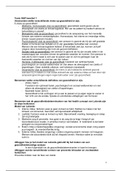
Constructivist Models - ANS• Student is responsible for their learning
• Students construct information and learn by taking personal responsibility
• Student construct from the information you give them answers and problem solving.
Interdisciplinary Learning or Cross Content Leaning - ANS• Different ways and angles to
learn about a topic.
• All the same thing
• How would I solve this problem?
• Math and Science
• Reading and Social Studies
Operant Conditioning - ANSA type of learning in which behavior is strengthened if
followed by a reinforcer or diminished if followed by a punisher
• Think Positive
• Incentive Programs
1. Reinforcement (UP)
-Positive
--Addition Pleasant Motivation (Reward)
-Negative
--Removal of Unpleasant Motivation (Escape)
2. Punishment (DOWN)
-Positive
--Addition Unpleasant Motivation (Applied)
-Negative
--Removal of pleasant Motivation (Remove)
Criterion-Referenced test - ANSIndividual's performance is measured against mastery
of curriculum criteria rather than other students
Norm Referenced Assessment - ANSAn assessment that compares a student's
performance to a sample of that student's peers.
-SAT Test
-GRE Test
,Formal Assessment - ANSStandardized written or performance test of knowledge,
aptitude, values, etc.
-Standardized Test
-STAR Test
Summative Assessment - ANSEvaluation at the conclusion of a unit.
-Unit Test
-Project Test
-Midterm Exam
-Final Exam
Mean - ANSAVERAGE
• Adding the scores and then dividing by the number of scores.
Median - ANSMIDDLE
• Put the numbers in numerical order. Choose the number that's in the middle.
Mode - ANSMost Often
Most frequently occurring score
Rubric - ANS• Data Drives Instruction
• A guide listing specific criteria for grading or scoring academic papers, projects, or
tests.
Bloom's Taxonomy - ANSTaxonomy of six cognitive processes, varying in complexity,
that lessons might be designed to foster.
1. Create
2. Evaluate
3. Analyze
4. Apply
5. Understand
6. Remember
Create - ANS(Highest Level)
• Produce New Or Original Work
-Verbs: Design, Assemble, Construct, Conjecture, Develop, Formulate, Author, &
Investigate.
Evaluate - ANS(Higher Level)
• Justify A Strand Or Decision
- Verbs: Appraise, Argue, Defend, Judge, Select Support, Value, Critique, & Weigh.
Analyze - ANS(Higher Level)
• Draw Connections Among Ideas
- Verbs: Differentiate, Organize, Relate, Compare, Contrast, Distinguish, Examine,
Experiment, Question & Test.
, Apply - ANS(Lower Level)
• Use Information In New Situations
- Verbs: Execute, Implement, Solve, Use, Demonstrate, Interpret, Operate, Schedule, &
Sketch
Understand - ANS(Lower Level
• Explain Ideas or Concepts
- Verbs: Classify, Describe, Discuss, Explain, Identify, Locate, Recognize, Report
Select, & Translate.
Remember - ANS(Lowest Level)
• Recall Facts & Basic Concepts
- Verbs: Define, Duplicate, List, Memorize, Repeat, and state.
Differentiated Instruction - ANSA variety of techniques used to adapt instruction to the
individual ability levels and learning styles of each student in the classroom
Examples
• Use Familiar Vocab
• Use Prior Knowledge
• Use Familiar content formats
• Music as Poetry
• Use Content That Reflects Familiar/ Interesting Themes.
• Relate Content to Student Interest
• Demonstrate Connection
• Apply Knowledge to Students Ability
Response to Intervention (RTI) - ANSan educational strategy intended to help children
who demonstrate below-average achievement in early grades, using special
intervention.
• Tier 1
- All students participate on the first level
-Differentiated Instruction
• Tier 2
- Uses Strategic Evidence Based Intervention
-Delivered in small groups
• Tier 3
-Uses Intensive Evidence Based Intervention
- Individual students or in very small groups
Curriculum Alignment - ANSIs the process in which educators across all levels
Vertical Alignment - ANS2nd to 3rd to 4th to 5th Grade
Horizontal Alignment - ANSAligned across lessons, courses, subject areas, and grade
levels.
complete solutions
Constructivist Models - ANS• Student is responsible for their learning
• Students construct information and learn by taking personal responsibility
• Student construct from the information you give them answers and problem solving.
Interdisciplinary Learning or Cross Content Leaning - ANS• Different ways and angles to
learn about a topic.
• All the same thing
• How would I solve this problem?
• Math and Science
• Reading and Social Studies
Operant Conditioning - ANSA type of learning in which behavior is strengthened if
followed by a reinforcer or diminished if followed by a punisher
• Think Positive
• Incentive Programs
1. Reinforcement (UP)
-Positive
--Addition Pleasant Motivation (Reward)
-Negative
--Removal of Unpleasant Motivation (Escape)
2. Punishment (DOWN)
-Positive
--Addition Unpleasant Motivation (Applied)
-Negative
--Removal of pleasant Motivation (Remove)
Criterion-Referenced test - ANSIndividual's performance is measured against mastery
of curriculum criteria rather than other students
Norm Referenced Assessment - ANSAn assessment that compares a student's
performance to a sample of that student's peers.
-SAT Test
-GRE Test
,Formal Assessment - ANSStandardized written or performance test of knowledge,
aptitude, values, etc.
-Standardized Test
-STAR Test
Summative Assessment - ANSEvaluation at the conclusion of a unit.
-Unit Test
-Project Test
-Midterm Exam
-Final Exam
Mean - ANSAVERAGE
• Adding the scores and then dividing by the number of scores.
Median - ANSMIDDLE
• Put the numbers in numerical order. Choose the number that's in the middle.
Mode - ANSMost Often
Most frequently occurring score
Rubric - ANS• Data Drives Instruction
• A guide listing specific criteria for grading or scoring academic papers, projects, or
tests.
Bloom's Taxonomy - ANSTaxonomy of six cognitive processes, varying in complexity,
that lessons might be designed to foster.
1. Create
2. Evaluate
3. Analyze
4. Apply
5. Understand
6. Remember
Create - ANS(Highest Level)
• Produce New Or Original Work
-Verbs: Design, Assemble, Construct, Conjecture, Develop, Formulate, Author, &
Investigate.
Evaluate - ANS(Higher Level)
• Justify A Strand Or Decision
- Verbs: Appraise, Argue, Defend, Judge, Select Support, Value, Critique, & Weigh.
Analyze - ANS(Higher Level)
• Draw Connections Among Ideas
- Verbs: Differentiate, Organize, Relate, Compare, Contrast, Distinguish, Examine,
Experiment, Question & Test.
, Apply - ANS(Lower Level)
• Use Information In New Situations
- Verbs: Execute, Implement, Solve, Use, Demonstrate, Interpret, Operate, Schedule, &
Sketch
Understand - ANS(Lower Level
• Explain Ideas or Concepts
- Verbs: Classify, Describe, Discuss, Explain, Identify, Locate, Recognize, Report
Select, & Translate.
Remember - ANS(Lowest Level)
• Recall Facts & Basic Concepts
- Verbs: Define, Duplicate, List, Memorize, Repeat, and state.
Differentiated Instruction - ANSA variety of techniques used to adapt instruction to the
individual ability levels and learning styles of each student in the classroom
Examples
• Use Familiar Vocab
• Use Prior Knowledge
• Use Familiar content formats
• Music as Poetry
• Use Content That Reflects Familiar/ Interesting Themes.
• Relate Content to Student Interest
• Demonstrate Connection
• Apply Knowledge to Students Ability
Response to Intervention (RTI) - ANSan educational strategy intended to help children
who demonstrate below-average achievement in early grades, using special
intervention.
• Tier 1
- All students participate on the first level
-Differentiated Instruction
• Tier 2
- Uses Strategic Evidence Based Intervention
-Delivered in small groups
• Tier 3
-Uses Intensive Evidence Based Intervention
- Individual students or in very small groups
Curriculum Alignment - ANSIs the process in which educators across all levels
Vertical Alignment - ANS2nd to 3rd to 4th to 5th Grade
Horizontal Alignment - ANSAligned across lessons, courses, subject areas, and grade
levels.