EXPRESSIONISM IN DRAMA
Expressionism: a style of painting, music, or drama in which the artist or writer seeks to express the
inner world of emotion rather than external reality.
These techniques and characteristics became associated with early expressionistic plays.
(Researched from: thedramateacher.com):
Its atmosphere was often vividly dreamlike and The plot and structure of the play tended to be
nightmarish. The mood was aided by shadowy, disjointed and broken into episodes, incidents, and
unrealistic lighting and visual distortions in the set tableaux, each making a point of its own. Instead
to convey inner emotions of the characters and to of the dramatic conflict of the well-made play, the
add a sinister undertone. emphasis was on a sequence of dramatic
statements made by the dreamer, usually the
author himself. From this structure, grew Brecht’s
epic theatre.
Characters lost their individuality and were
merely identified by nameless designations, like
The Man, The Father, The Son.
Such characteristics were stereotypes and
caricatures rather than individual personalities and
represented social groups rather than particular
people. They could appear grotesque and unreal.
The style of acting, known as the ‘ecstatic’ style,
A FEW FAMOUS EXPRESSIONIST
was intense and violent, and expressed tormented PLAYWRIGHTS:
emotions. Actors might erupt in sudden passion
and attack each other physically. Speech was rapid,
breathless, and staccato, with gesture and Tennessee
movement urgent and energetic eyes rolling, teeth
bared, fingers and hands clutching like claws. Williams
The dialogue is increasingly clipped, fragmented,
and unreal. It became known as ‘telegram style’.
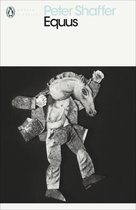
Peter Shaffer’s work is influenced by Bertolt
Brecht’s school of theatre, which emphasises
the medium’s artificiality: in Brecht’s view, a Arthur
play should distance itself from its audience so Miller
that viewers may reflect critically on what is
happening onstage. Ancient Greek drama is
another powerful presence in the play, as
evidenced by Shaffer’s use of the Greek
chorus. There are also important similarities
between Equus and The Bacchae by
Euripides. The Bacchae deals with the central Seán
conflict of human nature—the struggle
between the rational, civilized side of man and O'Casey
the irrational, sensual side.
Researched from: www.litcharts.com.
Expressionism: a style of painting, music, or drama in which the artist or writer seeks to express the
inner world of emotion rather than external reality.
These techniques and characteristics became associated with early expressionistic plays.
(Researched from: thedramateacher.com):
Its atmosphere was often vividly dreamlike and The plot and structure of the play tended to be
nightmarish. The mood was aided by shadowy, disjointed and broken into episodes, incidents, and
unrealistic lighting and visual distortions in the set tableaux, each making a point of its own. Instead
to convey inner emotions of the characters and to of the dramatic conflict of the well-made play, the
add a sinister undertone. emphasis was on a sequence of dramatic
statements made by the dreamer, usually the
author himself. From this structure, grew Brecht’s
epic theatre.
Characters lost their individuality and were
merely identified by nameless designations, like
The Man, The Father, The Son.
Such characteristics were stereotypes and
caricatures rather than individual personalities and
represented social groups rather than particular
people. They could appear grotesque and unreal.
The style of acting, known as the ‘ecstatic’ style,
A FEW FAMOUS EXPRESSIONIST
was intense and violent, and expressed tormented PLAYWRIGHTS:
emotions. Actors might erupt in sudden passion
and attack each other physically. Speech was rapid,
breathless, and staccato, with gesture and Tennessee
movement urgent and energetic eyes rolling, teeth
bared, fingers and hands clutching like claws. Williams
The dialogue is increasingly clipped, fragmented,
and unreal. It became known as ‘telegram style’.
Peter Shaffer’s work is influenced by Bertolt
Brecht’s school of theatre, which emphasises
the medium’s artificiality: in Brecht’s view, a Arthur
play should distance itself from its audience so Miller
that viewers may reflect critically on what is
happening onstage. Ancient Greek drama is
another powerful presence in the play, as
evidenced by Shaffer’s use of the Greek
chorus. There are also important similarities
between Equus and The Bacchae by
Euripides. The Bacchae deals with the central Seán
conflict of human nature—the struggle
between the rational, civilized side of man and O'Casey
the irrational, sensual side.
Researched from: www.litcharts.com.