CCRN Exam V2 (Latest Update
) Questions with Verified
Answers | Grade A | 100% Correct
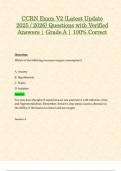
Question:
Which of the following increases oxygen consumption?
A. Anxiety
B. Hypothermia
C. Sepsis
D. Sedation
Answer:
You may have thought of sepsis because you associate it with infection, fever,
and hypermetabolism. Remember, however, that sepsis causes a decrease in
the ability of the tissues to extract and use oxygen.
Answer A
,Question:
Which of the following is the most common side effect of nesiritide
(Natrecor) therapy in heart failure?
Answer:
Hypotension
Question:
absorptive atelectasis. What is the cause of this complication of oxygen
therapy?
Answer:
Nitrogen washout
Absorptive atelectasis is caused by the elimination of nitrogen from the
alveoli. Normally inspired air is approximately 21% oxygen and 79% nitrogen.
This nitrogen is an unabsorbed gas that, along with the effect of surfactant,
holds the alveoli partially open at the end of expiration. When 100% of the
inspired gas is oxygen (an absorbable gas), the nitrogen is not present in the
alveoli (described as nitrogen washout) to keep the alveoli open, and
atelectasis occurs.
,Question:
Over the past 2 hours, a patient admitted with severe acute heart failure has
the following changes in assessment parameters:
Admission 2 Hours Later
Heart sounds S1, S2 S1, S2, S3 audible at apex
Blood pressure 118/60 mm Hg 98/54 mm Hg
Heart rate 105 beats/min 126 beats/min
Respiratory rate 30 breaths/min 36 breaths/min
Which of the following combinations of drugs are indicated for the
achievement of the therapeutic goals of this patient?
A. Nitroprusside (Nipride) and furosemide (Lasix)
B. Dobutamine (Dobutrex) and furosemide (Lasix)
C. Dobutamine (Dobutrex) and nitroprusside (Nipride)
D. Morphine sulfate and furosemide (Lasix)
Answer:
B - The answer would not be C, because nipride would to severely lower SVR
and MAP
, Question:
Positioning for infratentorial carniotomy
Answer:
HOB flat!
Question:
Which of the following best describes multiple organ dysfunction syndrome
(MODS)?
A. Progressive insufficiency of two or more organ systems
B. Cessation of function of two or more organ systems
C. Sepsis involving two or more organ systems
D. Loss of function of two or more components of the same organ system
Answer:
A
The definition does not require complete dysfunction, but more than 1 organ
system needs to be involved.
) Questions with Verified
Answers | Grade A | 100% Correct
Question:
Which of the following increases oxygen consumption?
A. Anxiety
B. Hypothermia
C. Sepsis
D. Sedation
Answer:
You may have thought of sepsis because you associate it with infection, fever,
and hypermetabolism. Remember, however, that sepsis causes a decrease in
the ability of the tissues to extract and use oxygen.
Answer A
,Question:
Which of the following is the most common side effect of nesiritide
(Natrecor) therapy in heart failure?
Answer:
Hypotension
Question:
absorptive atelectasis. What is the cause of this complication of oxygen
therapy?
Answer:
Nitrogen washout
Absorptive atelectasis is caused by the elimination of nitrogen from the
alveoli. Normally inspired air is approximately 21% oxygen and 79% nitrogen.
This nitrogen is an unabsorbed gas that, along with the effect of surfactant,
holds the alveoli partially open at the end of expiration. When 100% of the
inspired gas is oxygen (an absorbable gas), the nitrogen is not present in the
alveoli (described as nitrogen washout) to keep the alveoli open, and
atelectasis occurs.
,Question:
Over the past 2 hours, a patient admitted with severe acute heart failure has
the following changes in assessment parameters:
Admission 2 Hours Later
Heart sounds S1, S2 S1, S2, S3 audible at apex
Blood pressure 118/60 mm Hg 98/54 mm Hg
Heart rate 105 beats/min 126 beats/min
Respiratory rate 30 breaths/min 36 breaths/min
Which of the following combinations of drugs are indicated for the
achievement of the therapeutic goals of this patient?
A. Nitroprusside (Nipride) and furosemide (Lasix)
B. Dobutamine (Dobutrex) and furosemide (Lasix)
C. Dobutamine (Dobutrex) and nitroprusside (Nipride)
D. Morphine sulfate and furosemide (Lasix)
Answer:
B - The answer would not be C, because nipride would to severely lower SVR
and MAP
, Question:
Positioning for infratentorial carniotomy
Answer:
HOB flat!
Question:
Which of the following best describes multiple organ dysfunction syndrome
(MODS)?
A. Progressive insufficiency of two or more organ systems
B. Cessation of function of two or more organ systems
C. Sepsis involving two or more organ systems
D. Loss of function of two or more components of the same organ system
Answer:
A
The definition does not require complete dysfunction, but more than 1 organ
system needs to be involved.