100% de satisfacción garantizada Inmediatamente disponible después del pago Tanto en línea como en PDF No estas atado a nada 4,6 TrustPilot
logo-home
Examen

Chapter 20 Evaluation Fundamentals of Nursing 11th Edition (Potter & Perry) 50 NCLEX-Style Exam Questions with Detailed Rationales

Puntuación
-
Vendido
-
Páginas
12
Grado
A
Subido en
02-06-2025
Escrito en
2024/2025

A nurse evaluates the effectiveness of pain management interventions for a postoperative patient. Which finding indicates a positive patient outcome? A. The patient states, “The pain is still the same.” B. The patient refuses to ambulate due to pain. C. The patient rates pain as 3/10 and ambulates 50 feet with assistance. D. The patient requests more medication every hour. Correct Answer: C Rationale: Pain rating of 3/10 with improved mobility indicates that the intervention was effective. Options A, B, and D show unresolved or worsening symptoms. ________________________________________ 2. Which action best represents the evaluation phase of the nursing process? A. Documenting medication administration. B. Teaching a patient how to self-administer insulin. C. Reviewing the effectiveness of a care plan intervention. D. Delegating vital signs assessment to a nursing assistant. Correct Answer: C Rationale: Evaluation involves determining whether desired patient outcomes have been achieved. Reviewing intervention effectiveness is a key component. ________________________________________ 3. After implementing a nursing intervention to reduce fall risk, what should the nurse assess during evaluation? A. Whether the patient’s call light is within reach. B. If the patient signed the informed consent form. C. Whether the patient experienced any falls. D. The nurse’s completion of documentation. Correct Answer: C Rationale: Evaluation focuses on patient outcomes, such as whether the patient fell. Ensuring equipment placement is implementation, not evaluation. ________________________________________ 4. A nurse identifies that a patient's pressure injury has increased in size despite interventions. What is the most appropriate next step? A. Continue current treatment plan. B. Increase dressing change frequency. C. Revise the nursing care plan. D. Apply additional padding to the bed. Correct Answer: C Rationale: When goals are unmet or condition worsens, the care plan should be revised to include new strategies. ________________________________________ 5. Which of the following statements reflects an evaluative judgment? A. “The patient was repositioned every 2 hours.” B. “The dressing was changed as ordered.” C. “The patient’s wound improved, decreasing in size by 1 cm.” D. “The patient received the prescribed antibiotics.” Correct Answer: C Rationale: This statement compares the patient’s response to expected outcomes, demonstrating evaluation. ________________________________________ 6. What should a nurse do if a patient does not meet the desired outcome? A. Blame the patient’s noncompliance. B. Discontinue the care plan. C. Reassess the situation and modify the plan. D. Document the unmet goal and wait for physician instructions. Correct Answer: C Rationale: Nurses must reassess and adjust care as needed when goals are not achieved. ________________________________________ 7. Which is an example of an evaluative measure? A. Administering a prescribed diuretic. B. Educating a patient on dietary restrictions. C. Monitoring blood pressure after medication administration. D. Obtaining informed consent. Correct Answer: C Rationale: Monitoring a response to an intervention is an evaluative measure. ________________________________________ 8. When reviewing a patient's care plan, the nurse notes that the outcome was not achieved. What action should follow? A. Retain the outcome and increase monitoring. B. Replace the outcome with a new one without reassessment. C. Analyze contributing factors and revise interventions. D. Wait for the next shift to reassess the patient. Correct Answer: C Rationale: Critical thinking requires reassessing contributing factors and updating the plan accordingly. ________________________________________ 9. Which of the following best indicates a successful outcome in managing a patient’s blood glucose levels? A. Blood glucose readings are below 70 mg/dL daily. B. The patient eats whatever they desire without issues. C. The patient demonstrates proper insulin administration and reports average glucose readings between 90–130 mg/dL. D. The nurse administers insulin as prescribed. Correct Answer: C Rationale: Successful management includes patient understanding and appropriate physiologic outcomes. 10. Which documentation most accurately reflects evaluation? A. “Patient continues to complain of chest pain.” B. “Oxygen therapy started at 2 L/min via nasal cannula.” C. “Patient’s respiratory rate decreased from 28 to 20 breaths/min after intervention.” D. “Patient received nebulizer treatment.” Correct Answer: C Rationale: It shows a direct comparison of patient response to treatment, indicating evaluation. ________________________________________ 11. A patient goal was “Ambulate 50 feet independently within 3 days.” On day 3, the patient requires minimal assistance. How should the nurse document the evaluation? A. Goal met. B. Goal partially met. C. Goal not met. D. Intervention ineffective. Correct Answer: B Rationale: The patient did not meet the goal independently but made progress toward it. ________________________________________ 12. Which action is inappropriate during evaluation? A. Collecting data on patient progress. B. Comparing actual outcomes with expected outcomes. C. Modifying the care plan based on unmet goals. D. Rewriting the care plan without reassessment. Correct Answer: D Rationale: Care plans should not be revised without reassessment and data analysis. ________________________________________ 13. A nurse evaluates the outcome “Patient will verbalize three low-sodium foods by discharge.” Which patient response meets this goal? A. “I’ll just eat what I like and take medication.” B. “Potato chips, canned soup, and cheese are low-sodium.” C. “Bananas, unsalted nuts, and fresh vegetables are good options.” D. “Salt is important, so I’ll keep using it.” Correct Answer: C Rationale: The response identifies appropriate low-sodium foods, indicating the outcome was achieved. ________________________________________ 14. In the evaluation process, the nurse determines whether nursing care was: A. Cost-effective. B. Properly delegated. C. Effective in meeting the client outcomes. D. Approved by the physician. Correct Answer: C Rationale: Evaluation focuses on the effectiveness of nursing care in meeting desired outcomes. ________________________________________ 15. After evaluating the plan of care, the nurse finds that a patient has not met several outcomes. What should be the nurse’s priority? A. Terminate the plan of care. B. Refer the patient to another provider. C. Identify reasons for failure and revise the plan. D. Reassign the patient to another nurse. Correct Answer: C Rationale: Evaluation includes identifying reasons for failure and revising the care plan accordingly. ________________________________________

Mostrar más Leer menos
Institución
Grado


Ups! No podemos cargar tu documento ahora. Inténtalo de nuevo o contacta con soporte.

Escuela, estudio y materia

Institución
Grado

Información del documento

Subido en
2 de junio de 2025
Número de páginas
12
Escrito en
2024/2025
Tipo
Examen
Contiene
Preguntas y respuestas

Temas

Vista previa del contenido

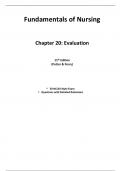
Fundamentals of Nursing


Chapter 20: Evaluation

11th Edition
(Potter & Perry)


 50 NCLEX-Style Exam
 Questions with Detailed Rationales

, Chapter 20 Evaluation Fundamentals of Nursing 11th Edition (Potter & Perry) 50 NCLEX-Style
Exam Questions with Detailed Rationales


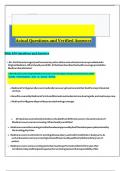
A nurse evaluates the effectiveness of pain management interventions for a postoperative
patient. Which finding indicates a positive patient outcome?
A. The patient states, “The pain is still the same.”
B. The patient refuses to ambulate due to pain.
C. The patient rates pain as 3/10 and ambulates 50 feet with assistance.
D. The patient requests more medication every hour.
Correct Answer: C
Rationale: Pain rating of 3/10 with improved mobility indicates that the intervention was
effective. Options A, B, and D show unresolved or worsening symptoms.

2. Which action best represents the evaluation phase of the nursing process?
A. Documenting medication administration.
B. Teaching a patient how to self-administer insulin.
C. Reviewing the effectiveness of a care plan intervention.
D. Delegating vital signs assessment to a nursing assistant.
Correct Answer: C
Rationale: Evaluation involves determining whether desired patient outcomes have been
achieved. Reviewing intervention effectiveness is a key component.

3. After implementing a nursing intervention to reduce fall risk, what should the nurse assess
during evaluation?
A. Whether the patient’s call light is within reach.
B. If the patient signed the informed consent form.
C. Whether the patient experienced any falls.
D. The nurse’s completion of documentation.
Correct Answer: C
Rationale: Evaluation focuses on patient outcomes, such as whether the patient fell. Ensuring
equipment placement is implementation, not evaluation.

4. A nurse identifies that a patient's pressure injury has increased in size despite interventions.
What is the most appropriate next step?
A. Continue current treatment plan.
B. Increase dressing change frequency.
C. Revise the nursing care plan.
D. Apply additional padding to the bed.
Correct Answer: C
Rationale: When goals are unmet or condition worsens, the care plan should be revised to
include new strategies.

5. Which of the following statements reflects an evaluative judgment?
A. “The patient was repositioned every 2 hours.”
B. “The dressing was changed as ordered.”


2

$10.49
Accede al documento completo:

100% de satisfacción garantizada
Inmediatamente disponible después del pago
Tanto en línea como en PDF
No estas atado a nada

Conoce al vendedor
Seller avatar
TopStudyResources

Documento también disponible en un lote

Conoce al vendedor

Seller avatar
TopStudyResources Chamberlain College Of Nursng
Seguir Necesitas iniciar sesión para seguir a otros usuarios o asignaturas
Vendido
2
Miembro desde
9 meses
Número de seguidores
0
Documentos
74
Última venta
2 meses hace
Study Notes, Summaries, Case Studies, Assignments, Exam Prep & Learning Resources

I provide high-quality study notes, summaries, and exam materials designed to help you succeed. All my resources are clear, well-structured, and easy to understand, making studying more efficient.

0.0

0 reseñas

5
0
4
0
3
0
2
0
1
0

Recientemente visto por ti

Por qué los estudiantes eligen Stuvia

Creado por compañeros estudiantes, verificado por reseñas

Calidad en la que puedes confiar: escrito por estudiantes que aprobaron y evaluado por otros que han usado estos resúmenes.

¿No estás satisfecho? Elige otro documento

¡No te preocupes! Puedes elegir directamente otro documento que se ajuste mejor a lo que buscas.

Paga como quieras, empieza a estudiar al instante

Sin suscripción, sin compromisos. Paga como estés acostumbrado con tarjeta de crédito y descarga tu documento PDF inmediatamente.

Student with book image

“Comprado, descargado y aprobado. Así de fácil puede ser.”

Alisha Student

Preguntas frecuentes