Secondary & Tertiary prevention (lesson8)
DEFINITION OF WHAT IS SECONDARY 1 AND TERTIARY PREVENTION2
SECONDARY PREVENTION
- Target group: individuals or groups with known risk factors.
- Goal: prevent the development of social, behavioral, emotional, or physical disorders.
- Approach:
• Early identification of at-risk individuals.
• Application of evidence-based interventions.
- Objectives:
• Lower the prevalence of disorders.
• Ameliorate symptoms.
• Reduce the duration of disorders.
• Increase protective factors to enhance resiliency
when exposed to risks.
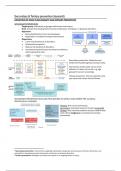
Secondary prevention: Detection and
treatment of pathological processes early.
Intervention at this point can be more
effective (when not at risk, e.g. age
groups for cancer screening).
Tertiary prevention: Chronic disorder, how
you cope with certain kind of illness.
SECONDARY PREVENTION INVOLVES PROCEDURES TO DETECT AND ARREST PRE-CLINICAL
PATHOLGICAL CHANGES
Primary: this can be risk factors
Secondary: testing for levels for insulin (screening)
Tertiary: they have the problem and you need to deal
with it (from diagnosis one switches to tertiary
prevention)
1
Secondary prevention: interventions targeting individuals and groups who, because of known risk factors, are
vulnerable to developing social, behavioral, emotional, or physical disorders.
2
Tertiary prevention: strategies to reduce the impact of an ongoing illness or injury.
DEFINITION OF WHAT IS SECONDARY 1 AND TERTIARY PREVENTION2
SECONDARY PREVENTION
- Target group: individuals or groups with known risk factors.
- Goal: prevent the development of social, behavioral, emotional, or physical disorders.
- Approach:
• Early identification of at-risk individuals.
• Application of evidence-based interventions.
- Objectives:
• Lower the prevalence of disorders.
• Ameliorate symptoms.
• Reduce the duration of disorders.
• Increase protective factors to enhance resiliency
when exposed to risks.
Secondary prevention: Detection and
treatment of pathological processes early.
Intervention at this point can be more
effective (when not at risk, e.g. age
groups for cancer screening).
Tertiary prevention: Chronic disorder, how
you cope with certain kind of illness.
SECONDARY PREVENTION INVOLVES PROCEDURES TO DETECT AND ARREST PRE-CLINICAL
PATHOLGICAL CHANGES
Primary: this can be risk factors
Secondary: testing for levels for insulin (screening)
Tertiary: they have the problem and you need to deal
with it (from diagnosis one switches to tertiary
prevention)
1
Secondary prevention: interventions targeting individuals and groups who, because of known risk factors, are
vulnerable to developing social, behavioral, emotional, or physical disorders.
2
Tertiary prevention: strategies to reduce the impact of an ongoing illness or injury.