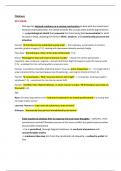
NURS 5315: Advanced Pathophysiology GI Module 9, Exam 5 Questions with 100% Correct Answers | Updated 2025 / 2026| Download to score A+
NURS 5315: Advanced Pathophysiology GI Module 9, Exam 5 Questions with 100% Correct Answers | Updated 2025 / 2026| Download to score A+ Upper GI organs - CORRECT Answer mouth,pharynx, esophagus, stomach, and duodenum Lower GI organs - CORRECT Answer small intestine, large intestine, rectum and anus Hepatoportal circulation - CORRECT Answer hepatic artery receives oxygenated blood from the inferior mesenteric, gastric, and cystic veins. The hepatic portal vein receives deoxygenated blood from the inferior and superior mesenteric vein and splenic vein and delivers nutrients that have been absorbed from the intestinal system Osmotic diarrhea - CORRECT Answer Caused by the presence of a nonabsorbable substance in the intestines. This pulls water by osmosis into the intestinal lumen and results in large volume diarrhea. This is how mag citrate, lactulose and miralax work. Causes include: excessive ingestion of nonabsorbable sugars, tube feedings, dumping syndrome, malabsorption, pancreatic enzyme deficiency, bile salt deficiency, small intestine bacterial overgrowth or celiac disease Secretory diarrhea - CORRECT Answer Results in large volume losses secondary to infectious causes such as rotavirus, bacterial enterotoxins, or c-diff. Motility diarrhea - CORRECT Answer AKA short bowel syndrome. Results from resection of small intestine or surgical bypass of small intestine, IBS, diabetic neuropathy, hyperthyroidism, and laxative abuse. Fatty stools and bloating are common in malabsorption syndrome. Complications include: dehydration, electrolyte imbalance, metabolic acidosis, weight loss and malabsorption. Upper GI bleed - CORRECT Answer bleeding that occurs in the esophagus, stomach or duodenum commonly caused by bleeding varices, peptic ulcers or Mallory-Weiss tear(tearing of esophagus from stomach) Characterized by frank, bright red or coffee ground emesis. Lower GI bleed - CORRECT Answer Bleeding in the jejunum, ileum, colon or rectum from inflammatory bowel disease, cancer, diverticula or hemorrhoids. Hematochezia, or the presence of bright red blood in the stools, suggest what kind of bleed Peptic Ulcer Disease - CORRECT Answer Is a break in the integrity of the mucosa of the esophagus, stomach or duodenum resulting in exposure of the tissue to gastric acid. Risk factors include smoking, advanced age, NSAID use, ETOH, chronic disease, acute pancreatitis, COPD, obesity, socioeconomic status, gastrinoma, and infection with Helicobacter pylori. S&S: Epigastric pain is worse with eating, melena or hematemesis
Escuela, estudio y materia
- Institución
- NURS 5315 Advanced Pathophysiology
- Grado
- NURS 5315 Advanced Pathophysiology
Información del documento
- Subido en
- 31 de mayo de 2025
- Número de páginas
- 8
- Escrito en
- 2024/2025
- Tipo
- Examen
- Contiene
- Preguntas y respuestas
Temas
-
upper gi organs mouthpharynx esophagus stomach
-
lower gi organs small intestine large intestine
-
hepatoportal circulation hepatic artery receives o
-
osmotic diarrhea caused by the presence of a nonab