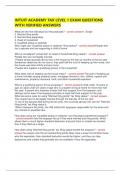
INTUIT ACADEMY TAX LEVEL 1 EXAM QUESTIONS
WITH VERIFIED ANSWERS
What are the five individual tax filing statuses? - correct answer1. Single
2. Married filing jointly
3. Married filing separately
4. Head of household
5. Qualified widow or widower
Who might use "Qualified widow or widower" filing status? - correct answerPeople who
lost a spouse and are supporting a child at home
Who is considered "unmarried" for head of household filing status? - correct answer-
People who are not legally married
-People whose spouses did not live in the house for the last six months of the tax year
(temporary absences do not count), they paid half the cost of keeping up the house, and
the house was their child's primary home.
-People who support a qualifying person in the household
What does cost of keeping up the house mean? - correct answerThe cost of keeping up
a home includes paying property taxes, mortgage interest or rent, utilities, repairs and
maintenance, property insurance, food, and other household expenses
Who is a qualifying person for tax purposes? - correct answerA child under 19 years of
age; an adult under 24 years of age who is a student living at home for more than half
the year; A parent who receives at least half their support from the taxpayer; and
siblings and in-laws if the taxpayer provides at least half their support for the year.
What are some rules for using "Married filing jointly" tax filing status? - correct answer-
The couple have to be legally married through the last day of the tax year
-If one of the spouse died during the tax year, the surviving spouse can use the "Married
filing jointly" tax filing status b
-When taxpayers file jointly, the IRS holds both taxpayers responsible for the taxes and
any interest or penalties due
How does using the "Qualified widow or widower" tax filing status benefit the taxpayer?
- correct answerIt lets the taxpayer file as if they were married and filing jointly, which
allows them a much higher standard deduction and puts them in a better tax bracket
then if they filed as a single.
How does using "Married filing jointly" tax filing status benefit the taxpayer? - correct
answerTax payers who file as married filing jointly likely have a lower tax bill then those
who file separately; their standard deduction would be higher; and they can take
deductions and credits that generally are not available if they file separately.
WITH VERIFIED ANSWERS
What are the five individual tax filing statuses? - correct answer1. Single
2. Married filing jointly
3. Married filing separately
4. Head of household
5. Qualified widow or widower
Who might use "Qualified widow or widower" filing status? - correct answerPeople who
lost a spouse and are supporting a child at home
Who is considered "unmarried" for head of household filing status? - correct answer-
People who are not legally married
-People whose spouses did not live in the house for the last six months of the tax year
(temporary absences do not count), they paid half the cost of keeping up the house, and
the house was their child's primary home.
-People who support a qualifying person in the household
What does cost of keeping up the house mean? - correct answerThe cost of keeping up
a home includes paying property taxes, mortgage interest or rent, utilities, repairs and
maintenance, property insurance, food, and other household expenses
Who is a qualifying person for tax purposes? - correct answerA child under 19 years of
age; an adult under 24 years of age who is a student living at home for more than half
the year; A parent who receives at least half their support from the taxpayer; and
siblings and in-laws if the taxpayer provides at least half their support for the year.
What are some rules for using "Married filing jointly" tax filing status? - correct answer-
The couple have to be legally married through the last day of the tax year
-If one of the spouse died during the tax year, the surviving spouse can use the "Married
filing jointly" tax filing status b
-When taxpayers file jointly, the IRS holds both taxpayers responsible for the taxes and
any interest or penalties due
How does using the "Qualified widow or widower" tax filing status benefit the taxpayer?
- correct answerIt lets the taxpayer file as if they were married and filing jointly, which
allows them a much higher standard deduction and puts them in a better tax bracket
then if they filed as a single.
How does using "Married filing jointly" tax filing status benefit the taxpayer? - correct
answerTax payers who file as married filing jointly likely have a lower tax bill then those
who file separately; their standard deduction would be higher; and they can take
deductions and credits that generally are not available if they file separately.