Herbicide Application and Safety Guidelines
Verified Quizzes + Top-Scoring Assignments | A+
Guaranteed
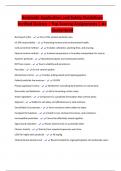
Burning of sulfur - One of the earliest pesticide uses.
US EPA responsibility - Protecting humans and environmental health.
Cultural control method - Includes cultivation, planting time, and pruning.
Physical control method - Involves temperature or humidity manipulation for insects.
Systemic pesticide - Absorbed by plants and translocated within.
DDT ban reason - Due to stability and persistence.
Piscicides - Do not control spiders.
Mechanical control - Includes pulling weeds and trapping gophers.
Federal pesticide law overseer - US EPA
Private applicator license - Needed for controlling bark beetles on owned land.
Desiccants and Defoliants - Aid in harvesting certain crops.
Active ingredient - Component in a pesticide formulation that controls pests.
Adjuvant - Added to aid safety and effectiveness in tank mixtures.
Emulsifiable Concentrates - Form emulsions when added to water.
Fumigant formulations - Limited to soil, enclosed structures, and containers.
Incompatible pesticides - Cannot be effectively mixed together.
Signal word indication - Shows toxicity level on a pesticide label.
Chronic toxicity - Toxicity from repeated exposures over time.
LD50 for highly toxic pesticide - 46 mg/kg
Cholinesterase baseline test - Recommended for organophosphate and carbamate users.
, Cholinesterase - Baseline enzyme level for pesticide applicators.
Exposure - Primary hazard to pesticide applicators.
Remove contaminated clothing - Initial action for skin or clothing pesticide exposure.
Pesticide labels - Contain poisoning treatment info; crucial for medical attention.
Skin exposure - Not the quickest route for pesticide exposure.
Respirator approval - Required from NIOSH for pesticide use.
Gloves and boots material - Recommended as unlined rubber for pesticide handling.
Contaminated clothing washing - Separate wash from family laundry; use hot water.
Back siphoning prevention - Methods include anti-backflow valve and hose level.
Disposal of rinsate - Reuse in future spray or dilute for same crop application.
Nozzle clogging - Stop spraying, clean nozzle in untreated area with a brush.
Pesticide storage area - Should not be well-lit by direct sunlight.
Pesticide storage - Exclusively in original containers.
Disposal of registered pesticide - Use as directed on the label for best disposal.
Empty container cleaning - Rinse three times with water and collect rinsewater.
Pesticide transportation - Prohibited in the passenger compartment.
Pesticide application records - Maintained for a minimum of 2 years.
Pesticide degradation - Beneficial for reducing residue in the environment.
Water table - Upper level of water-saturated zone in soil.
Pesticides reaching groundwater - Through leaching; properties affect contamination.
Surface water contamination - Can lead to groundwater contamination.
Groundwater contamination prevention - Avoid disposing near wells, prevent back
siphoning, delay in heavy rain.
Drift minimization - Monitor weather, adjust spray systems to prevent drift.
Bee poisoning prevention - Avoid dust formulations for bee safety.
Verified Quizzes + Top-Scoring Assignments | A+
Guaranteed
Burning of sulfur - One of the earliest pesticide uses.
US EPA responsibility - Protecting humans and environmental health.
Cultural control method - Includes cultivation, planting time, and pruning.
Physical control method - Involves temperature or humidity manipulation for insects.
Systemic pesticide - Absorbed by plants and translocated within.
DDT ban reason - Due to stability and persistence.
Piscicides - Do not control spiders.
Mechanical control - Includes pulling weeds and trapping gophers.
Federal pesticide law overseer - US EPA
Private applicator license - Needed for controlling bark beetles on owned land.
Desiccants and Defoliants - Aid in harvesting certain crops.
Active ingredient - Component in a pesticide formulation that controls pests.
Adjuvant - Added to aid safety and effectiveness in tank mixtures.
Emulsifiable Concentrates - Form emulsions when added to water.
Fumigant formulations - Limited to soil, enclosed structures, and containers.
Incompatible pesticides - Cannot be effectively mixed together.
Signal word indication - Shows toxicity level on a pesticide label.
Chronic toxicity - Toxicity from repeated exposures over time.
LD50 for highly toxic pesticide - 46 mg/kg
Cholinesterase baseline test - Recommended for organophosphate and carbamate users.
, Cholinesterase - Baseline enzyme level for pesticide applicators.
Exposure - Primary hazard to pesticide applicators.
Remove contaminated clothing - Initial action for skin or clothing pesticide exposure.
Pesticide labels - Contain poisoning treatment info; crucial for medical attention.
Skin exposure - Not the quickest route for pesticide exposure.
Respirator approval - Required from NIOSH for pesticide use.
Gloves and boots material - Recommended as unlined rubber for pesticide handling.
Contaminated clothing washing - Separate wash from family laundry; use hot water.
Back siphoning prevention - Methods include anti-backflow valve and hose level.
Disposal of rinsate - Reuse in future spray or dilute for same crop application.
Nozzle clogging - Stop spraying, clean nozzle in untreated area with a brush.
Pesticide storage area - Should not be well-lit by direct sunlight.
Pesticide storage - Exclusively in original containers.
Disposal of registered pesticide - Use as directed on the label for best disposal.
Empty container cleaning - Rinse three times with water and collect rinsewater.
Pesticide transportation - Prohibited in the passenger compartment.
Pesticide application records - Maintained for a minimum of 2 years.
Pesticide degradation - Beneficial for reducing residue in the environment.
Water table - Upper level of water-saturated zone in soil.
Pesticides reaching groundwater - Through leaching; properties affect contamination.
Surface water contamination - Can lead to groundwater contamination.
Groundwater contamination prevention - Avoid disposing near wells, prevent back
siphoning, delay in heavy rain.
Drift minimization - Monitor weather, adjust spray systems to prevent drift.
Bee poisoning prevention - Avoid dust formulations for bee safety.