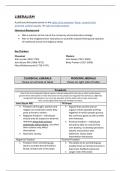
LIBERALISM
A political philosophy based on the rights of the individual, liberty, consent of the
governed, political equality, the right to private property.
Historical Background
Was a reaction to the rule of the monarchy and aristocratic privilege
Part of ‘the enlightenment’ (transition to scientific-based thinking and rejection
of traditional social and religious ideas)
Key Thinkers
Classical Modern
John Locke (1632-1704) John Rawls (1921-2002)
John Stuart Mill (1806-1873) Betty Freidan (1921-2006)
Mary Wollstonecraft (1759-1797)
CLASSICAL LIBERALS MODERN LIBERALS
Views on left side of table Views on right side of table
Freedom
One of the most important liberal values. Liberals objected to the way in which authoritarian
governments attempted to make decisions for the people and regulate their behaviour, but they
recognised that freedom can never be absolute and the state had to make some laws.
John Locke argued that laws are needed to protect.
John Stuart Mill TH Green
Freedom of thought, speech and Argued that society was an
religion are essential unless they organic whole (people working
pose a threat to others. together) in which people pursue
Negative freedom – individuals the common good as well as their
should only be subject to external own interests.
restraint when their actions Positive freedom – individuals
potentially affect others, not when should be able to control their
their actions only affect own destiny, to develop personal
themselves talents and achieve self-
Atomistic society fulfilment. Some state
intervention necessary
Negative Freedom Positive Freedom
Freedom from something (eg. The ability to do something (eg.
laws to combat discrimination) enable those on limited income to
Small, limited role of the state lead mote fulfilled existence)
Larger role of the state
, Human Nature
Liberal Value 2 – Individualism:
Individuals should be left as free as possible, to pursue their own self-interest.
Liberals are sceptical of claims that individual freedom should be sacrificed for the collective
‘common good’ (ie. terrorism and online privacy/ID Cards)
BOTH AGREE THAT HUMAN NATURE IS INDIVIDUALISTIC BUT THEY DISAGREE HOW
THIS INDIVIDUALISM IS DEFINED/TYPE…
Believe in egotistical individualism - Agree with classical that we are
People are primarily concerned with individualistic by our nature but
pursuing their own self-interest, self- disagree over what type.
seeking and self-reliant. Believe in developmental
To achieve this, need to be as free as individualism (what the person could
possible from state interference. become with the help of society (ie.
Therefore, a limited state the enabling state) )
Minimises the importance of society, o This is a key division as it
sees it as little more than a collection informs their views on other
of individuals. areas such as state (larger
Locke enabling)/economy etc.
o Believe state needs to help the
Want free market system to allow individual in the economy
freedom to flourish Plays down the pursuit of self-interest
and has been used to justify support
for some state intervention in society
to help the disadvantaged.
Desire to create a society where we
can all grow and flourish.
Friedan talks about the rights of women
WA Rawls talks about the enabling state
in equality and economic perspective.
Negative freedom (freedom from Positive freedom (freedom to do
interference/state intervention) – eg. not something) – eg. right to access to
limiting freedom of speech/property food/education, obligates state to
right. People should only be restricted provide education. more conscious of
where there is a risk of them threatening social injustice and favour some external
the freedom of others. intervention by the state to counter this.
Rawls – inequalities can only be justified
when they benefit the poorest
Humans are rational individuals
Liberal Value 3 - Rationalism
Individuals should be free to exercise their judgement about their own interests without being guided
by external authorities such as the state or the church.
People won’t always make correct decisions but it is better for them to take responsibility for
themselves rather than instruction from above
Both agree: Rationalism – humans are rational and guided by self interest
A political philosophy based on the rights of the individual, liberty, consent of the
governed, political equality, the right to private property.
Historical Background
Was a reaction to the rule of the monarchy and aristocratic privilege
Part of ‘the enlightenment’ (transition to scientific-based thinking and rejection
of traditional social and religious ideas)
Key Thinkers
Classical Modern
John Locke (1632-1704) John Rawls (1921-2002)
John Stuart Mill (1806-1873) Betty Freidan (1921-2006)
Mary Wollstonecraft (1759-1797)
CLASSICAL LIBERALS MODERN LIBERALS
Views on left side of table Views on right side of table
Freedom
One of the most important liberal values. Liberals objected to the way in which authoritarian
governments attempted to make decisions for the people and regulate their behaviour, but they
recognised that freedom can never be absolute and the state had to make some laws.
John Locke argued that laws are needed to protect.
John Stuart Mill TH Green
Freedom of thought, speech and Argued that society was an
religion are essential unless they organic whole (people working
pose a threat to others. together) in which people pursue
Negative freedom – individuals the common good as well as their
should only be subject to external own interests.
restraint when their actions Positive freedom – individuals
potentially affect others, not when should be able to control their
their actions only affect own destiny, to develop personal
themselves talents and achieve self-
Atomistic society fulfilment. Some state
intervention necessary
Negative Freedom Positive Freedom
Freedom from something (eg. The ability to do something (eg.
laws to combat discrimination) enable those on limited income to
Small, limited role of the state lead mote fulfilled existence)
Larger role of the state
, Human Nature
Liberal Value 2 – Individualism:
Individuals should be left as free as possible, to pursue their own self-interest.
Liberals are sceptical of claims that individual freedom should be sacrificed for the collective
‘common good’ (ie. terrorism and online privacy/ID Cards)
BOTH AGREE THAT HUMAN NATURE IS INDIVIDUALISTIC BUT THEY DISAGREE HOW
THIS INDIVIDUALISM IS DEFINED/TYPE…
Believe in egotistical individualism - Agree with classical that we are
People are primarily concerned with individualistic by our nature but
pursuing their own self-interest, self- disagree over what type.
seeking and self-reliant. Believe in developmental
To achieve this, need to be as free as individualism (what the person could
possible from state interference. become with the help of society (ie.
Therefore, a limited state the enabling state) )
Minimises the importance of society, o This is a key division as it
sees it as little more than a collection informs their views on other
of individuals. areas such as state (larger
Locke enabling)/economy etc.
o Believe state needs to help the
Want free market system to allow individual in the economy
freedom to flourish Plays down the pursuit of self-interest
and has been used to justify support
for some state intervention in society
to help the disadvantaged.
Desire to create a society where we
can all grow and flourish.
Friedan talks about the rights of women
WA Rawls talks about the enabling state
in equality and economic perspective.
Negative freedom (freedom from Positive freedom (freedom to do
interference/state intervention) – eg. not something) – eg. right to access to
limiting freedom of speech/property food/education, obligates state to
right. People should only be restricted provide education. more conscious of
where there is a risk of them threatening social injustice and favour some external
the freedom of others. intervention by the state to counter this.
Rawls – inequalities can only be justified
when they benefit the poorest
Humans are rational individuals
Liberal Value 3 - Rationalism
Individuals should be free to exercise their judgement about their own interests without being guided
by external authorities such as the state or the church.
People won’t always make correct decisions but it is better for them to take responsibility for
themselves rather than instruction from above
Both agree: Rationalism – humans are rational and guided by self interest