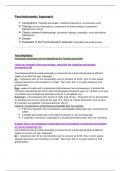
Psychodynamic Approach
❖ Assumptions (Tripartite personality, childhood experience, unconscious mind)
❖ Therapy (Link to Assumptions, components of dream analysis, dreamwork,
effectiveness, ethics)
❖ Classic research (Methodology, procedure, findings, evaluation, social and ethical
implications)
❖ Debate
❖ Evaluation of the Psychodynamic Approach (Strengths and weaknesses)
Assumptions
Assumption: Behaviour can be explained by the Tripartite personality
Using an example from psychology, describe the tripartite personality
assumption [4]
Freud believed that the adult personality is structured into 3 parts that develop at different
stages of our lives (id, ego, superego).
ID→ impulsive part of our personality and is present at birth. Has 2 main goals:
seeking pleasure and avoidance of pain. The main aim is to gain pleasure and
gratification.
Ego-> aware of reality and it understands that behaviour has consequences. It controls the
conscious and rational part of the mind and developed around the age of 2. Function is to work
out realistic ways of balancing demands of the ID in acceptable way.
Superego→ encompasses the sense of right and wrong - final part of our personality
to develop and occurs around the age of 4. Aims to civilise behaviour and ensure
it’s socially acceptable. Counterbalances the Id
However, it could lead to a domineering personality type, for example:
➔ If the ID is dominant, this could lead to a psychopathic personality type, where they are
selfish
➔ A healthy personality type is the balance between id, ego and superego
➔ If superego is dominant, could lead to a neurotic personality which they are controlling.
Explain how a psychologist could apply the assumption of tripartite personality
to human behaviour [5]
Freud believed that the adult personality is structured into 3 parts that develop at different
stages of our lives (id, ego, superego).
ID→ impulsive part of our personality and is present at birth. Has 2 main goals:
seeking pleasure and avoidance of pain. The main aim is to gain pleasure and
gratification.
, Ego-> aware of reality and operates via the reality principle, it understands that behaviour has
consequences. It controls the conscious and rational part of the mind and developed around the
age of 2. Function is to work out realistic ways of balancing demands of the ID in acceptable
way.
Superego→ encompasses the sense of right and wrong - final part of our personality
to develop and occurs around the age of 4. Aims to civilise behaviour and ensure
it’s socially acceptable. Counterbalances the Id.
This can be applied to criminal behaviour. According to Freud, criminals are ruled by their id and
their superego is suppressed. Criminals often have a lack of remorse and seek immediate
pleasure. This is true in the case of psychopaths- Eysenck further supports the role of
personality as he recognized those who score high on E,N & P are likely to develop criminality.
Assumption: Behaviour can be explained by influence of childhood experiences
Using examples from psychology, Describe the childhood influences assumption.
[4]
Freud believed that childhood experiences shape our adult personality and that psychological
development in children occurs through psychosexual stages. Problems at any stage means
they are fixated (stuck) at the body part on that stage. There are 5 stages: i will describe 3 of
them
➔ Oral stage (0-18 months): the source of pleasure is the mouth and key events are
breast feeding etc. The outcome is that frustration leads to an oral aggression (sarcastic
etc).
➔ Anal stage (18 months-3 years): Source of pleasure is the anus and key events are
potty training. Frustration leads to an anal-retentive character (stubborn etc).
Overindulgences lead to anal expulsive character.
➔ Phallic stage (3-5 years): source of pleasure is genitals and key events is the oedipus
complex leads to superego and gender identity. May have problems with sexuality and
difficulty building relationships.
One example from psychology is that Freud believed fixations at the oral stage could lead to an
eating disorder, or addiction.
→ fixation at anal stage could lead to an anal personality type
→ fixation at phallic stage could lead to confused sexuality and difficulty maintaining
relationships
Explain how a psychologist could apply the assumption of childhood influences
to human behaviour [5]
Freud believed that childhood experiences shape our adult personality and that psychological
development in children occurs through psychosexual stages. Problems at any stage means
they are fixated (stuck) at the body part on that stage. There are 5 stages, i will describe 3 of
them:
➔ Oral stage (0-18 months): the source of pleasure is the mouth and key events are
breast etc. The outcome is that frustration leads to an oral aggression (sarcastic etc).
❖ Assumptions (Tripartite personality, childhood experience, unconscious mind)
❖ Therapy (Link to Assumptions, components of dream analysis, dreamwork,
effectiveness, ethics)
❖ Classic research (Methodology, procedure, findings, evaluation, social and ethical
implications)
❖ Debate
❖ Evaluation of the Psychodynamic Approach (Strengths and weaknesses)
Assumptions
Assumption: Behaviour can be explained by the Tripartite personality
Using an example from psychology, describe the tripartite personality
assumption [4]
Freud believed that the adult personality is structured into 3 parts that develop at different
stages of our lives (id, ego, superego).
ID→ impulsive part of our personality and is present at birth. Has 2 main goals:
seeking pleasure and avoidance of pain. The main aim is to gain pleasure and
gratification.
Ego-> aware of reality and it understands that behaviour has consequences. It controls the
conscious and rational part of the mind and developed around the age of 2. Function is to work
out realistic ways of balancing demands of the ID in acceptable way.
Superego→ encompasses the sense of right and wrong - final part of our personality
to develop and occurs around the age of 4. Aims to civilise behaviour and ensure
it’s socially acceptable. Counterbalances the Id
However, it could lead to a domineering personality type, for example:
➔ If the ID is dominant, this could lead to a psychopathic personality type, where they are
selfish
➔ A healthy personality type is the balance between id, ego and superego
➔ If superego is dominant, could lead to a neurotic personality which they are controlling.
Explain how a psychologist could apply the assumption of tripartite personality
to human behaviour [5]
Freud believed that the adult personality is structured into 3 parts that develop at different
stages of our lives (id, ego, superego).
ID→ impulsive part of our personality and is present at birth. Has 2 main goals:
seeking pleasure and avoidance of pain. The main aim is to gain pleasure and
gratification.
, Ego-> aware of reality and operates via the reality principle, it understands that behaviour has
consequences. It controls the conscious and rational part of the mind and developed around the
age of 2. Function is to work out realistic ways of balancing demands of the ID in acceptable
way.
Superego→ encompasses the sense of right and wrong - final part of our personality
to develop and occurs around the age of 4. Aims to civilise behaviour and ensure
it’s socially acceptable. Counterbalances the Id.
This can be applied to criminal behaviour. According to Freud, criminals are ruled by their id and
their superego is suppressed. Criminals often have a lack of remorse and seek immediate
pleasure. This is true in the case of psychopaths- Eysenck further supports the role of
personality as he recognized those who score high on E,N & P are likely to develop criminality.
Assumption: Behaviour can be explained by influence of childhood experiences
Using examples from psychology, Describe the childhood influences assumption.
[4]
Freud believed that childhood experiences shape our adult personality and that psychological
development in children occurs through psychosexual stages. Problems at any stage means
they are fixated (stuck) at the body part on that stage. There are 5 stages: i will describe 3 of
them
➔ Oral stage (0-18 months): the source of pleasure is the mouth and key events are
breast feeding etc. The outcome is that frustration leads to an oral aggression (sarcastic
etc).
➔ Anal stage (18 months-3 years): Source of pleasure is the anus and key events are
potty training. Frustration leads to an anal-retentive character (stubborn etc).
Overindulgences lead to anal expulsive character.
➔ Phallic stage (3-5 years): source of pleasure is genitals and key events is the oedipus
complex leads to superego and gender identity. May have problems with sexuality and
difficulty building relationships.
One example from psychology is that Freud believed fixations at the oral stage could lead to an
eating disorder, or addiction.
→ fixation at anal stage could lead to an anal personality type
→ fixation at phallic stage could lead to confused sexuality and difficulty maintaining
relationships
Explain how a psychologist could apply the assumption of childhood influences
to human behaviour [5]
Freud believed that childhood experiences shape our adult personality and that psychological
development in children occurs through psychosexual stages. Problems at any stage means
they are fixated (stuck) at the body part on that stage. There are 5 stages, i will describe 3 of
them:
➔ Oral stage (0-18 months): the source of pleasure is the mouth and key events are
breast etc. The outcome is that frustration leads to an oral aggression (sarcastic etc).