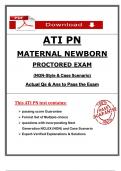
ATI PN
MATERNAL NEWBORN
PROCTORED EXAM
(NGN-Style & Case Scenario)
Actual Qs & Ans to Pass the Exam
This ATI PN test contains:
➢ passing score Guarantee
➢ Format Set of Multiple-choice
➢ questions with incorporating Next
Generation NCLEX (NGN) and Case Scenario
➢ Expert-Verified Explanations & Solutions
,### Question 1
Complications of Phototherapy
Question: A newborn receiving phototherapy for hyperbilirubinemia
has decreased urinary output. What is the most appropriate nursing
intervention?
A. Document as a normal side effect of phototherapy
B. Increase frequency of feeding to promote hydration
C. Stop phototherapy and notify healthcare provider immediately
D. Monitor vital signs every hour
Correct Answer: B. Increase frequency of feeding to promote hydration
Rationale: Phototherapy increases insensible water loss, which may cause
dehydration and decreased urinary output. Increasing feeding frequency
helps prevent dehydration and promotes diuresis. Stopping phototherapy is
only warranted if severe complications arise.
### Question 2
Complications of Pregnancy
Question: A pregnant client at 32 weeks gestation reports frequent
headaches, visual disturbances, and swelling of her face and fingers.
What is the priority nursing action?
A. Advise the client to rest and increase fluid intake
B. Assess blood pressure and notify the healthcare provider immediately
C. Administer acetaminophen for headache relief
D. Encourage light exercise and monitor symptoms
,Correct Answer: B. Assess blood pressure and notify the healthcare
provider immediately
Rationale: These are classic signs of preeclampsia, a serious pregnancy
complication characterized by hypertension and endothelial dysfunction.
Immediate assessment of blood pressure and early provider notification are
crucial to prevent progression to eclampsia or HELLP syndrome.
### Question 3
Adverse Effects of Nifedipine
Question: A pregnant client prescribed nifedipine for preterm labor
reports flushing, headache, and dizziness. What should the nurse do?
A. Explain that these are common side effects and advise safety measures
when standing
B. Instruct the client to stop the medication immediately
C. Notify the healthcare provider for a medication change
D. Monitor for signs of hypertension
Correct Answer: A. Explain that these are common side effects and advise
safety measures when standing
Rationale: Nifedipine commonly causes vasodilation effects such as
flushing, headache, hypotension, and dizziness. Educating about these
side effects and advising slow position changes can prevent falls.
Medication discontinuation should only occur under provider guidance.
,---
### Question 4
Symptoms of Gonorrhea
Question: Which symptoms in a female client should raise suspicion
for gonorrhea infection?
A. Vaginal discharge, abdominal pain, low back pain, irregular/painful
menstrual cycles
B. Fever, chills, and nausea
C. Weight gain and increased appetite
D. Constipation and abdominal distention
Correct Answer: A. Vaginal discharge, abdominal pain, low back pain,
irregular/painful menstrual cycles
Rationale: Gonorrhea often presents with vaginal discharge (which can be
purulent), pelvic or abdominal pain, and irregular menstruation due to
infection and inflammation of the reproductive tract. Early identification and
treatment are important to prevent complications like pelvic inflammatory
disease.
---
### Question 5
Normal Newborn Lab Values
Question: What is the normal platelet count range for a newborn?
,A. 80,000-120,000
B. 150,000-300,000
C. 300,000-450,000
D. 50,000-100,000
Correct Answer: B. 150,000-300,000
Rationale: Newborn platelet counts fall within a similar range to adults
(150,000-300,000). Values outside this range may indicate bleeding or
clotting disorders requiring evaluation.
---
### Question 6
Normal Hemoglobin for Newborn
Question: What is the expected normal hemoglobin range for a
newborn?
A. 10-14 g/dL
B. 14-24 g/dL
C. 6-10 g/dL
D. 24-30 g/dL
Correct Answer: B. 14-24 g/dL
Rationale: Newborns generally have higher hemoglobin levels due to
intrauterine hypoxia and increased red blood cell mass. Values between
14-24 g/dL are considered normal at birth.
,---
### Question 7
Normal Hematocrit for Newborn
Question: The nurse expects a newborn’s normal hematocrit to fall
within what range?
A. 30-40%
B. 44-64%
C. 65-85%
D. 20-30%
Correct Answer: B. 44-64%
Rationale: Hematocrit levels are higher in newborns compared to adults,
reflecting their increased oxygen needs and fetal erythropoiesis, generally
ranging from 44-64%.
---
### Question 8
Normal WBC for Newborn
Question: What is the normal white blood cell count range for a
newborn?
A. 4,000-11,000
B. 9,000-30,000
C. 15,000-45,000
,D. 2,000-6,000
Correct Answer: B. 9,000-30,000
Rationale: Newborns have an elevated WBC count due to the stress of
birth and transition outside the womb; normal range is higher compared to
adults at 9,000-30,000/mm³.
---
### Question 9
Diet Education for Pregnant Women
Question: Which instruction regarding calcium intake should the
nurse give to a pregnant client?
A. Increase calcium intake to at least 2,500 mg per day
B. Limit calcium intake to avoid preterm labor
C. Consume at least 1,000 mg of calcium per day
D. Calcium intake is not essential during pregnancy
Correct Answer: C. Consume at least 1,000 mg of calcium per day
Rationale: Adequate calcium intake (1,000 mg daily) during pregnancy
supports fetal skeletal development and prevents maternal bone
demineralization. The RDA does not require intake as high as 2,500 mg
unless medically indicated.
---
, ### Question 10
Sitz Bath Temperature
Question: What is the appropriate temperature range for a postpartum
sitz bath?
A. 85-90°F
B. 95-99°F
C. 100-105°F
D. 110-115°F
Correct Answer: C. 100-105°F
Rationale: Sitz baths should be warm but not hot to promote healing and
comfort without causing burns or vasodilation side effects. The optimal
range is 100-105°F.
---
### Question 11
Purpose of Amniocentesis
Question: What diagnostic information does an amniocentesis
provide?
A. Determines if baby’s lungs are mature
B. Monitors baby’s heart rate during labor
C. Measures fetal movements
D. Assesses maternal blood glucose level
MATERNAL NEWBORN
PROCTORED EXAM
(NGN-Style & Case Scenario)
Actual Qs & Ans to Pass the Exam
This ATI PN test contains:
➢ passing score Guarantee
➢ Format Set of Multiple-choice
➢ questions with incorporating Next
Generation NCLEX (NGN) and Case Scenario
➢ Expert-Verified Explanations & Solutions
,### Question 1
Complications of Phototherapy
Question: A newborn receiving phototherapy for hyperbilirubinemia
has decreased urinary output. What is the most appropriate nursing
intervention?
A. Document as a normal side effect of phototherapy
B. Increase frequency of feeding to promote hydration
C. Stop phototherapy and notify healthcare provider immediately
D. Monitor vital signs every hour
Correct Answer: B. Increase frequency of feeding to promote hydration
Rationale: Phototherapy increases insensible water loss, which may cause
dehydration and decreased urinary output. Increasing feeding frequency
helps prevent dehydration and promotes diuresis. Stopping phototherapy is
only warranted if severe complications arise.
### Question 2
Complications of Pregnancy
Question: A pregnant client at 32 weeks gestation reports frequent
headaches, visual disturbances, and swelling of her face and fingers.
What is the priority nursing action?
A. Advise the client to rest and increase fluid intake
B. Assess blood pressure and notify the healthcare provider immediately
C. Administer acetaminophen for headache relief
D. Encourage light exercise and monitor symptoms
,Correct Answer: B. Assess blood pressure and notify the healthcare
provider immediately
Rationale: These are classic signs of preeclampsia, a serious pregnancy
complication characterized by hypertension and endothelial dysfunction.
Immediate assessment of blood pressure and early provider notification are
crucial to prevent progression to eclampsia or HELLP syndrome.
### Question 3
Adverse Effects of Nifedipine
Question: A pregnant client prescribed nifedipine for preterm labor
reports flushing, headache, and dizziness. What should the nurse do?
A. Explain that these are common side effects and advise safety measures
when standing
B. Instruct the client to stop the medication immediately
C. Notify the healthcare provider for a medication change
D. Monitor for signs of hypertension
Correct Answer: A. Explain that these are common side effects and advise
safety measures when standing
Rationale: Nifedipine commonly causes vasodilation effects such as
flushing, headache, hypotension, and dizziness. Educating about these
side effects and advising slow position changes can prevent falls.
Medication discontinuation should only occur under provider guidance.
,---
### Question 4
Symptoms of Gonorrhea
Question: Which symptoms in a female client should raise suspicion
for gonorrhea infection?
A. Vaginal discharge, abdominal pain, low back pain, irregular/painful
menstrual cycles
B. Fever, chills, and nausea
C. Weight gain and increased appetite
D. Constipation and abdominal distention
Correct Answer: A. Vaginal discharge, abdominal pain, low back pain,
irregular/painful menstrual cycles
Rationale: Gonorrhea often presents with vaginal discharge (which can be
purulent), pelvic or abdominal pain, and irregular menstruation due to
infection and inflammation of the reproductive tract. Early identification and
treatment are important to prevent complications like pelvic inflammatory
disease.
---
### Question 5
Normal Newborn Lab Values
Question: What is the normal platelet count range for a newborn?
,A. 80,000-120,000
B. 150,000-300,000
C. 300,000-450,000
D. 50,000-100,000
Correct Answer: B. 150,000-300,000
Rationale: Newborn platelet counts fall within a similar range to adults
(150,000-300,000). Values outside this range may indicate bleeding or
clotting disorders requiring evaluation.
---
### Question 6
Normal Hemoglobin for Newborn
Question: What is the expected normal hemoglobin range for a
newborn?
A. 10-14 g/dL
B. 14-24 g/dL
C. 6-10 g/dL
D. 24-30 g/dL
Correct Answer: B. 14-24 g/dL
Rationale: Newborns generally have higher hemoglobin levels due to
intrauterine hypoxia and increased red blood cell mass. Values between
14-24 g/dL are considered normal at birth.
,---
### Question 7
Normal Hematocrit for Newborn
Question: The nurse expects a newborn’s normal hematocrit to fall
within what range?
A. 30-40%
B. 44-64%
C. 65-85%
D. 20-30%
Correct Answer: B. 44-64%
Rationale: Hematocrit levels are higher in newborns compared to adults,
reflecting their increased oxygen needs and fetal erythropoiesis, generally
ranging from 44-64%.
---
### Question 8
Normal WBC for Newborn
Question: What is the normal white blood cell count range for a
newborn?
A. 4,000-11,000
B. 9,000-30,000
C. 15,000-45,000
,D. 2,000-6,000
Correct Answer: B. 9,000-30,000
Rationale: Newborns have an elevated WBC count due to the stress of
birth and transition outside the womb; normal range is higher compared to
adults at 9,000-30,000/mm³.
---
### Question 9
Diet Education for Pregnant Women
Question: Which instruction regarding calcium intake should the
nurse give to a pregnant client?
A. Increase calcium intake to at least 2,500 mg per day
B. Limit calcium intake to avoid preterm labor
C. Consume at least 1,000 mg of calcium per day
D. Calcium intake is not essential during pregnancy
Correct Answer: C. Consume at least 1,000 mg of calcium per day
Rationale: Adequate calcium intake (1,000 mg daily) during pregnancy
supports fetal skeletal development and prevents maternal bone
demineralization. The RDA does not require intake as high as 2,500 mg
unless medically indicated.
---
, ### Question 10
Sitz Bath Temperature
Question: What is the appropriate temperature range for a postpartum
sitz bath?
A. 85-90°F
B. 95-99°F
C. 100-105°F
D. 110-115°F
Correct Answer: C. 100-105°F
Rationale: Sitz baths should be warm but not hot to promote healing and
comfort without causing burns or vasodilation side effects. The optimal
range is 100-105°F.
---
### Question 11
Purpose of Amniocentesis
Question: What diagnostic information does an amniocentesis
provide?
A. Determines if baby’s lungs are mature
B. Monitors baby’s heart rate during labor
C. Measures fetal movements
D. Assesses maternal blood glucose level