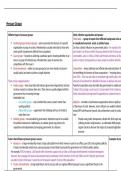
Pressure Groups
Different types of pressure groups: Other collective organisations and groups:
Think tanks – a group of experts from different backgrounds who ar
Sectional groups (interest groups) – seek to promote the interests of a specific to complicated economic, social, or political issues
organisation or group in society. Membership is usually restricted to those who Can have a direct influence on government policy – for example, the
meet specific requirements (affects their occupation) party leader, Ian Duncan Smith, the group aimed to look for new solu
Cause groups – focused on achieving a particular goal or drawing attention to an communities. Later, in 2010, as Work and Pensions secretary, Ian Dun
issue or a group of related issues. Membership is open to anyone who seeks to reduce the dependence of poor people on welfare benefits
sympathises with the issue/s
Social movements – similar to cause groups but are more loosely structured – Corporations – senior politicians and officials take well-paid jobs in th
usually radical and seek to achieve a single objective for benefitting the interests of these corporations – ‘revolving door p
from 2010 – 2016 saw him take on immediate high-profile jobs in the
These can be categorised into: interests of investment firm BlackRock (became an advisor and earne
Insider groups – have close links with relevant government department and rely Powerful corporations may also lobby the government to modify poli
on these contacts to achieve their aims. Their aims are usually aligned with the October 2016, during a social event at Conservative Party Conference
government thus increasing leverage. Drinks Association had expressed its opposition to a planned tax on s
Subdivided into:
- Low-profile groups – rely on behind the scenes contacts rather than Lobbyists – members of professional organisations who are paid by c
seeking publicity of the House of Lords. However, some criticisms are wealthy individu
- High-profile groups – supplement their lobbying with use of media to entrap MPS with financial rewards, the parliamentary code of conduc
make their case view
Outsider groups – not consulted by government, objectives may be far outside - People want greater transparency despite the 2014 legal requ
the political mainstream. Additionally, an outsider group may preserve its - Lobbying remains a big business - an estimated 4000 people a
reputation and independence by keeping government at a distance regular checks to discover the impact of proposed legislation
pressure
Factors that influence pressure groups' success: Examples of pres
Resources – a large membership means a large subscription from which money is used to run offices, pay staff, and organise publicity.
A larger membership would mean a pressure group is more likely to persuade the government as it reflects public opinion.
For example, RSPCA employs 1,600 people with volunteers support and can take up full-page advertisements in national newspapers
However, the Campaign for Nuclear Disarmament had an estimated 110,00 members in the mid-1980s, but the Thatcher government
was able to ignore it because it could rely on the passive support of most of the population
Tactics and leadership – strong leadership is vital to success and can organise different groups to pose a significant threat to the
government.
Different types of pressure groups: Other collective organisations and groups:
Think tanks – a group of experts from different backgrounds who ar
Sectional groups (interest groups) – seek to promote the interests of a specific to complicated economic, social, or political issues
organisation or group in society. Membership is usually restricted to those who Can have a direct influence on government policy – for example, the
meet specific requirements (affects their occupation) party leader, Ian Duncan Smith, the group aimed to look for new solu
Cause groups – focused on achieving a particular goal or drawing attention to an communities. Later, in 2010, as Work and Pensions secretary, Ian Dun
issue or a group of related issues. Membership is open to anyone who seeks to reduce the dependence of poor people on welfare benefits
sympathises with the issue/s
Social movements – similar to cause groups but are more loosely structured – Corporations – senior politicians and officials take well-paid jobs in th
usually radical and seek to achieve a single objective for benefitting the interests of these corporations – ‘revolving door p
from 2010 – 2016 saw him take on immediate high-profile jobs in the
These can be categorised into: interests of investment firm BlackRock (became an advisor and earne
Insider groups – have close links with relevant government department and rely Powerful corporations may also lobby the government to modify poli
on these contacts to achieve their aims. Their aims are usually aligned with the October 2016, during a social event at Conservative Party Conference
government thus increasing leverage. Drinks Association had expressed its opposition to a planned tax on s
Subdivided into:
- Low-profile groups – rely on behind the scenes contacts rather than Lobbyists – members of professional organisations who are paid by c
seeking publicity of the House of Lords. However, some criticisms are wealthy individu
- High-profile groups – supplement their lobbying with use of media to entrap MPS with financial rewards, the parliamentary code of conduc
make their case view
Outsider groups – not consulted by government, objectives may be far outside - People want greater transparency despite the 2014 legal requ
the political mainstream. Additionally, an outsider group may preserve its - Lobbying remains a big business - an estimated 4000 people a
reputation and independence by keeping government at a distance regular checks to discover the impact of proposed legislation
pressure
Factors that influence pressure groups' success: Examples of pres
Resources – a large membership means a large subscription from which money is used to run offices, pay staff, and organise publicity.
A larger membership would mean a pressure group is more likely to persuade the government as it reflects public opinion.
For example, RSPCA employs 1,600 people with volunteers support and can take up full-page advertisements in national newspapers
However, the Campaign for Nuclear Disarmament had an estimated 110,00 members in the mid-1980s, but the Thatcher government
was able to ignore it because it could rely on the passive support of most of the population
Tactics and leadership – strong leadership is vital to success and can organise different groups to pose a significant threat to the
government.