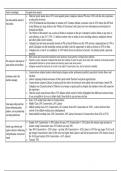
Factor to investigate Key points from research
o Thatcher (party leader since 1975) went against James Callaghan (Labour PM since 1976) with her only experience
the wider political context of as education secretary
the election o 1974-79 Parliament had referendum to remain in EU Common Market, economic crisis in 1976 where the IMF had
to bail Britain out, huge strikes in the ‘Winter of Discontent’ and Labour lost two referendums on devolution for
Scotland and Wales
o The ‘Winter of Discontent’ was a series of strikes in response to the gov’s attempt to enforce limits on pay rises to
curb inflation, on Jan 22nd, 1979, 1.5 million workers were on strike at once including railways, ambulance drivers
and other public sector workers
o Callaghan had not been personally elected as PM as Harold Wilson won the 1974 election, stepping down in 1976 to
which Callaghan won the leadership contest and didn’t take the opportunity to hold an election in 1978 or then
o Callaghan lost a vote of ‘no confidence’ in 1979 which forced an election to be held – he already lacked a personal
mandate
o Both Labour and Conservative manifestos were moderate, giving priority to bringing down inflation
The reasons for and impact of o Thatcher’s policy statement contained little about her intention to more the party more right with a mention of returning recently
nationalised industries to private hands and removing some trade union powers
party policies and manifesto, o Callaghan warned the electorate of a lurch to the right if Conservatives won, but he had little credibility
o Conservatives adopted modern advertising techniques under professional publicity specialists Gordon Reece and
techniques used in the Tim Bell
election campaign o Labour campaign lacked awareness of finer points while Thatcher took photo opportunities
o Conservatives outpaced Labour in opinion polls but when the electorate were asked who would make a better PM,
Callaghan was 20 points ahead of Thatcher on average in opinion polls as despite his mistakes voters still respected
his experience
o Thatcher wisely turned down offers of TV debates which would’ve further highlighted the difference between them,
it was acceptable to do so as a debate hadn’t been held at any previous election
o Saw a 5.2% swing from Labour to Conservatives
Class-based voting and other o Middle Class; 59% Conservative, 24% Labour
factors influencing voting o Skilled working class; 41% Conservative, 41% Labour (from 26% Conservative in 1974) – Labour had lost their
patterns, such as partisanship control of the skilled working class (dealignment)
and voting attachment o Semi/unskilled working class; 34% Conservative, 49% Labour (increase for Conservatives from 22% in 1974)
o Gender; 43% Conservative + 40% Labour for men, 47% Conservative + 35% Labour for women, huge increase in
Gender, age, ethnicity and women voting Conservative since 1974 which was only 39%
region as factors in influencing o Age; 46% Conservative + 35% Labour – up from 34% Conservative + 42% Labour in 1974 for age range 35-54, in all
voting behaviour, turnout and age ranges Conservative’s share of the vote was higher than Labour’s and had increased since 1974 election even in
trends the 18-24 age bracket (42% Conservative + 41% Labour)
o Turnout; 76%
o Thatcher (party leader since 1975) went against James Callaghan (Labour PM since 1976) with her only experience
the wider political context of as education secretary
the election o 1974-79 Parliament had referendum to remain in EU Common Market, economic crisis in 1976 where the IMF had
to bail Britain out, huge strikes in the ‘Winter of Discontent’ and Labour lost two referendums on devolution for
Scotland and Wales
o The ‘Winter of Discontent’ was a series of strikes in response to the gov’s attempt to enforce limits on pay rises to
curb inflation, on Jan 22nd, 1979, 1.5 million workers were on strike at once including railways, ambulance drivers
and other public sector workers
o Callaghan had not been personally elected as PM as Harold Wilson won the 1974 election, stepping down in 1976 to
which Callaghan won the leadership contest and didn’t take the opportunity to hold an election in 1978 or then
o Callaghan lost a vote of ‘no confidence’ in 1979 which forced an election to be held – he already lacked a personal
mandate
o Both Labour and Conservative manifestos were moderate, giving priority to bringing down inflation
The reasons for and impact of o Thatcher’s policy statement contained little about her intention to more the party more right with a mention of returning recently
nationalised industries to private hands and removing some trade union powers
party policies and manifesto, o Callaghan warned the electorate of a lurch to the right if Conservatives won, but he had little credibility
o Conservatives adopted modern advertising techniques under professional publicity specialists Gordon Reece and
techniques used in the Tim Bell
election campaign o Labour campaign lacked awareness of finer points while Thatcher took photo opportunities
o Conservatives outpaced Labour in opinion polls but when the electorate were asked who would make a better PM,
Callaghan was 20 points ahead of Thatcher on average in opinion polls as despite his mistakes voters still respected
his experience
o Thatcher wisely turned down offers of TV debates which would’ve further highlighted the difference between them,
it was acceptable to do so as a debate hadn’t been held at any previous election
o Saw a 5.2% swing from Labour to Conservatives
Class-based voting and other o Middle Class; 59% Conservative, 24% Labour
factors influencing voting o Skilled working class; 41% Conservative, 41% Labour (from 26% Conservative in 1974) – Labour had lost their
patterns, such as partisanship control of the skilled working class (dealignment)
and voting attachment o Semi/unskilled working class; 34% Conservative, 49% Labour (increase for Conservatives from 22% in 1974)
o Gender; 43% Conservative + 40% Labour for men, 47% Conservative + 35% Labour for women, huge increase in
Gender, age, ethnicity and women voting Conservative since 1974 which was only 39%
region as factors in influencing o Age; 46% Conservative + 35% Labour – up from 34% Conservative + 42% Labour in 1974 for age range 35-54, in all
voting behaviour, turnout and age ranges Conservative’s share of the vote was higher than Labour’s and had increased since 1974 election even in
trends the 18-24 age bracket (42% Conservative + 41% Labour)
o Turnout; 76%