The influence of the media
The Role of the Media in Politics and its impact
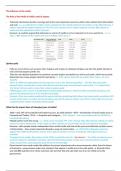
- Television dominates election coverage and is the most important source by which voters obtain their information
and vote– i.e. an estimated 9.6 million voters watched the first debate between the leaders in the 2010 election, 7
million watched the leaders debate on ITV in the 2015 election and 4 million watched a further BBC debate in
which only the opposition leaders took part
- However, it could be argued that television as a form of media is not as important as it once used to be – i.e. in
2017, a BBC debate of the leaders only saw 3 million voters tune in
Opinion polls
- Polls are run by firms such as Ipsos Mori, Populus and YouGov in attempts to figure out how the public intends to
vote and how popular parties are
- They also ask detailed questions for opinions on party leaders and policies as well as exit polls, which inaccurately
determine how many people voted for each party i.e. 1992 opinion polls did not predict John Major’s 21-seat-
majority
- There are different explanations for this outcome such as the ‘boomerang effect’ – the idea that early polls
showed Labour winning thus, voters who did not want this came out and voted conservative + it is argued that
‘shy Tories’ did not want to show their votes in opinion polls
- Polling agents were correct in predicting the 2015 Scottish election in which the SNP overwhelmed Labour and
became the dominant force in the devolved assembly
- However, they inaccurately predicted the general election predicting both Labour and conservative would win 34%
of each of the votes, in reality, the Conservatives won 36.9% whereas Labour won 30.4% as they did not carry out
a representative inquiry excluding retired people
What has the impact been of changing types of media?
- 2000 = only 26% of households had internet access, by 2010 election = 82% + introduction of social media such as
Facebook and Twitter, 2015 = + Snapchat and Instagram – 2015 election – the conservatives spent £100,000 on
Facebook advertising
- Helped parties reach the young – i.e. 2015 survey revealed 79% of 19–24-year-olds relied almost entirely on online
sources to inform themselves + 59% relied on other opinions on social media to discover opinions on politics
- However, older people remain independent from social media and look at the press and television as their source
of information – thus remain important despite a surge of social media – i.e. 2015 Daily Telegraph printed an
appeal from 5000 small business owners not to place economic recovery in jeopardy and to give Cameron a
mandate
- To appeal to the media, New Labour in the 1990s created the idea of a ‘spin doctor’ – Tony Blair recruited a press
secretary (Alastair Campbell) to develop a grid of forthcoming events so that news announcements would be
made around them, portraying the government in the best light
- Governments have made media the platform to present important policy announcements rather than the House
of Commons + governments make sure ministers that appear in media are in line with policy i.e. Kenneth Clark
was told BBC question time chose someone else but they lied and said Clark was ill as not relied on by the
government
The Role of the Media in Politics and its impact
- Television dominates election coverage and is the most important source by which voters obtain their information
and vote– i.e. an estimated 9.6 million voters watched the first debate between the leaders in the 2010 election, 7
million watched the leaders debate on ITV in the 2015 election and 4 million watched a further BBC debate in
which only the opposition leaders took part
- However, it could be argued that television as a form of media is not as important as it once used to be – i.e. in
2017, a BBC debate of the leaders only saw 3 million voters tune in
Opinion polls
- Polls are run by firms such as Ipsos Mori, Populus and YouGov in attempts to figure out how the public intends to
vote and how popular parties are
- They also ask detailed questions for opinions on party leaders and policies as well as exit polls, which inaccurately
determine how many people voted for each party i.e. 1992 opinion polls did not predict John Major’s 21-seat-
majority
- There are different explanations for this outcome such as the ‘boomerang effect’ – the idea that early polls
showed Labour winning thus, voters who did not want this came out and voted conservative + it is argued that
‘shy Tories’ did not want to show their votes in opinion polls
- Polling agents were correct in predicting the 2015 Scottish election in which the SNP overwhelmed Labour and
became the dominant force in the devolved assembly
- However, they inaccurately predicted the general election predicting both Labour and conservative would win 34%
of each of the votes, in reality, the Conservatives won 36.9% whereas Labour won 30.4% as they did not carry out
a representative inquiry excluding retired people
What has the impact been of changing types of media?
- 2000 = only 26% of households had internet access, by 2010 election = 82% + introduction of social media such as
Facebook and Twitter, 2015 = + Snapchat and Instagram – 2015 election – the conservatives spent £100,000 on
Facebook advertising
- Helped parties reach the young – i.e. 2015 survey revealed 79% of 19–24-year-olds relied almost entirely on online
sources to inform themselves + 59% relied on other opinions on social media to discover opinions on politics
- However, older people remain independent from social media and look at the press and television as their source
of information – thus remain important despite a surge of social media – i.e. 2015 Daily Telegraph printed an
appeal from 5000 small business owners not to place economic recovery in jeopardy and to give Cameron a
mandate
- To appeal to the media, New Labour in the 1990s created the idea of a ‘spin doctor’ – Tony Blair recruited a press
secretary (Alastair Campbell) to develop a grid of forthcoming events so that news announcements would be
made around them, portraying the government in the best light
- Governments have made media the platform to present important policy announcements rather than the House
of Commons + governments make sure ministers that appear in media are in line with policy i.e. Kenneth Clark
was told BBC question time chose someone else but they lied and said Clark was ill as not relied on by the
government