BLOK 1.3
Regulation and integration
Case elaborations
, Casus 1
Homeostasis
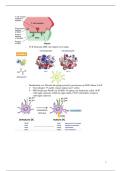
1. Change in the homeostasis level is Control
2 3
noticed centre
2. Stimuli is send to the control centre via
the afferent pathway from the receptor
3. Determines the "set point" it analyses Receptor Effector
the input and makes a fitting output for
it this will get send to the effector via the
efferent pathway
4. The response is then applied on the 4
stimuli that caused the change this can 1 Homeostasis
be positive and negative feedback
Biological clock
BMAL 1 CLOCK 1. Transcription factors BMAL1 and CLOCK get
3
triggered by light hitting receptors in the
eyes in the morning. They will then bind onto
1 the E-box and generate and activate the
CRY
PER clock controlled genes (CCG)
2. The CCG's will start making PER and CRY
Clock 3. These will then block step 1, which causes a
un E-box
genes 2
self regulatory system
HPA - axis
HPA-axis = hypothalamus pituitary gland adrenal axis
Hypothalamus excretes CRH and regulates the anterior lobe of the
pituitary gland (hypofyse) with that. This stimulates the production
of ACTH which on its own stimulates the cortex of the adrenal
gland. This gland will produce cortisol as a result of ACTH. Cortisol
has influence on the hypothalamus and the pituitary gland and will
repress the production of CRH and ACTH is this is a negative
feedback cycle
. The HPA-axis has 2 important functions:
1. Cortisol gives negative feedback on the hypothalamus and
pituitary gland which results in a decreased production of CRH
and ADH.
2. Epinephrine and norepinephrine will be produced in the medulla
of the adrenal gland due to sympathic stimulation and the local
effects of cortisol this then results in a positive feedback cycle
on the pituitary gland
, Acute stress response Slow stress response
Hypothalamus
+
CRH
Pituitary gland Autonomy
nervous system
+ ACTH -
- +
Adrenal cortex
Adrenal medulla
Cortisol Epinephrine (80%)
Norepinephrine (20%)
Repressing of the Raise of the Raised breathing Raised heartrate
immune system glucose rate frequency
Hypothalamus
Influences the endocrine system it self or through the pituitary gland
it also contains the osmosis regulatory centre it plays a crucial role
in survival, temperature regulation, emotions, breeding and
homeostasis.
It consist of 3 parts:
1. Medial part.
2. Lateral part
3. Periventricular part
The hypothalamus receives signals from nerve cells in the brain and nerve cells in the body (peripheral nervous
system). The lateral part sends neural signals to the autonomy nervous system via the medulla oblongata
Paraventricular cells produce CRH and oxytocin, ADH are produced by supra-optic cells
Regulation and integration
Case elaborations
, Casus 1
Homeostasis
1. Change in the homeostasis level is Control
2 3
noticed centre
2. Stimuli is send to the control centre via
the afferent pathway from the receptor
3. Determines the "set point" it analyses Receptor Effector
the input and makes a fitting output for
it this will get send to the effector via the
efferent pathway
4. The response is then applied on the 4
stimuli that caused the change this can 1 Homeostasis
be positive and negative feedback
Biological clock
BMAL 1 CLOCK 1. Transcription factors BMAL1 and CLOCK get
3
triggered by light hitting receptors in the
eyes in the morning. They will then bind onto
1 the E-box and generate and activate the
CRY
PER clock controlled genes (CCG)
2. The CCG's will start making PER and CRY
Clock 3. These will then block step 1, which causes a
un E-box
genes 2
self regulatory system
HPA - axis
HPA-axis = hypothalamus pituitary gland adrenal axis
Hypothalamus excretes CRH and regulates the anterior lobe of the
pituitary gland (hypofyse) with that. This stimulates the production
of ACTH which on its own stimulates the cortex of the adrenal
gland. This gland will produce cortisol as a result of ACTH. Cortisol
has influence on the hypothalamus and the pituitary gland and will
repress the production of CRH and ACTH is this is a negative
feedback cycle
. The HPA-axis has 2 important functions:
1. Cortisol gives negative feedback on the hypothalamus and
pituitary gland which results in a decreased production of CRH
and ADH.
2. Epinephrine and norepinephrine will be produced in the medulla
of the adrenal gland due to sympathic stimulation and the local
effects of cortisol this then results in a positive feedback cycle
on the pituitary gland
, Acute stress response Slow stress response
Hypothalamus
+
CRH
Pituitary gland Autonomy
nervous system
+ ACTH -
- +
Adrenal cortex
Adrenal medulla
Cortisol Epinephrine (80%)
Norepinephrine (20%)
Repressing of the Raise of the Raised breathing Raised heartrate
immune system glucose rate frequency
Hypothalamus
Influences the endocrine system it self or through the pituitary gland
it also contains the osmosis regulatory centre it plays a crucial role
in survival, temperature regulation, emotions, breeding and
homeostasis.
It consist of 3 parts:
1. Medial part.
2. Lateral part
3. Periventricular part
The hypothalamus receives signals from nerve cells in the brain and nerve cells in the body (peripheral nervous
system). The lateral part sends neural signals to the autonomy nervous system via the medulla oblongata
Paraventricular cells produce CRH and oxytocin, ADH are produced by supra-optic cells