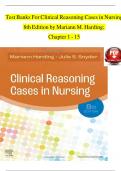
Test Banks For Clinical Reasoning Cases in Nursing
re re re re re re re
8th Edition by Mariann M. Harding;
re re re re re re re
Chapter 1 - 15 re re re
,Clinical reReasoning reCases rein reNursing re8th reEdition reHarding reSnyder reTest reBank
Contents:
Chapter re1. rePerfusion
Chapter re2. reGas reExchange
Chapter re3. reMobility
Chapter re4. reDigestion
Chapter re5. reUrinary reElimination
Chapter re6. reIntracranial reRegulation
Chapter re7. reMetabolism reand reGlucose reRegulation
Chapter re8. reImmunity
Chapter re9. reCellular reRegulation
Chapter re10. reTissue reIntegrity
Chapter re11. reCognition
Chapter re12. reInfection reand reInflammation
Chapter re13. reDevelopmental
Chapter re14. reReproductive
Chapter re15. reMood, reStress, reand reAddiction
,Chapter re1. rePerfusion
Clinical reReasoning reCases rein reNursing re8th reEdition reHarding reSnyder reTest reBank
MULTIPLE reCHOICE
1. reThe renurse reis reexplaining reto rea restudent renurse reabout reimpaired recentral reperfusion. reThe renurse
reknows rethe restudent reunderstands rethis reproblem rewhen rethe restudent restates, reCentral reperfusion
a. Is remonitored reonly reby rethe rephysician.
b. Involves rethe reentire rebody.
c. Is redecreased rewith rehypertension.
d. Is retoxic reto rethe recardiac resystem.
ANSWER: reB
Central reperfusion redoes reinvolve rethe reentire rebody reas reall reorgans reare resupplied rewith reoxygen reand
revital reNutrients. reThe rephysician redoes renot recontrol rethe rebodys reability refor reperfusion. reCentral
reperfusion reis renotdecreased rewith rehypertension. reCentral reperfusion reis renot retoxic reto rethe recardiac
resystem.
2. reA repatient rewas rediagnosed rewith rehypertension. reThe repatient reasks rethe renurse rehow rethis redisease
recould rehave rehappened reto rethem. reThe renurses rebest reresponse reis reHypertension
a. Happens reto reeveryone resooner reor relater. reDont rebe reconcerned reabout reit.
b. Can rehappen refrom reeating rea repoor rediet, reso rechange rewhat reyou reare reeating.
c. Can rehappen refrom rearterial rechanges rethat reimpede rethe reblood reflow.
d. Happens rewhen repeople redo renot reexercise, reso reyou reshould rewalk
reevery reday.
ANSWER: reC
Hardening reof rethe rearteries refrom reatherosclerosis recan recause rehypertension rein rethe repatient.
reHypertension redoes renot rehappen reto reeveryone. reChanging rethe repatients rediet reand reexercising remay
rebe rea repositive relife rechange, rebut rethese reanswers redo renot reexplain reto rethe repatient rehow rethe redisease
recould rehave rehappened.
3. reThe repatient reasks rethe renurse reto reexplain rethe resinoatrial renode rein rethe reheart. reThe renurses rebest
reresponse rewould rebe, reThe resinoatrial renode
a. Provides rethe reheart rewith rethe restimulation reto rebeat rein rea renormal rerhythm.
b. Protects rethe reheart refrom reatherosclerotic rechanges.
c. Provides rethe reheart rewith reoxygenated reblood.
d. Protects rethe reheart
refrom reinfection.
ANSWER: reA
The resinoatrial renode reis rethe renatural repacemaker reof rethe reheart, reand reit reassists rethe reheart reto rebeat rein rea
reNormal rerhythm. reThe resinoatrial renode redoes renot reprotect refrom reatherosclerotic rechanges reor
reinfection,and reit redoes renot redirectly reprovide rethe reheart rewith reoxygenated reblood.
4. reThe repatient reis rebrought reto rethe reemergency redepartment reafter rea remotor revehicle reaccident. reThe
repatient reis rediagnosed rewith reinternal rebleeding. reThe renurses reprimary reconcern reis reto remonitor refor
a. Mental realertness.
, b. Perfusion.
c. Pain.
d. Reaction reto
remedications.
ANSWER: reB
Perfusion reis rethe recorrect reanswer, rebecause rewith reinternal rebleeding, rethe renurse reshould remonitor revital
Signs reto rebe resure reperfusion reis rehappening. reMental realertness, repain, reand remedication rereactions
reareimportant rebut renot rethe reprimary reconcern.
5. reA repatients reserum reelectrolytes reare rebeing remonitored. reThe renurse renotices rethat rethe repotassium
relevel reis relow. reThe renurse reknows rethat rethe repatient reshould rebe reobserved refor
a. Tissue reischemia.
b. Brain remalformations.
c. Intestinal reblockage.
d. Cardiac
redysthymia.
ANSWER: reD
Cardiac redysthymia reis rea repossibility rewhen reserum repotassium reis rehigh reor relow. reTissue reischemia, rebrain
reMalformations, reor reintestinal reblockage redo renot rehave rea redirect recorrelation reto repotassium reirregularities.
6. reA renurse reis reexplaining reto rea restudent renurse reabout reperfusion. reThe renurse reknows rethe restudent
reunderstands rethe reconcept reof reperfusion rewhen rethe restudent restates, rePerfusion
a. Is rea renormal refunction reof rethe rebody, reand reI redont rehave reto rebe reconcerned reabout reit.
b. Is remonitored reby rethe rephysician, reand reI rejust refollow reorders.
c. Is remonitored reby revital resigns reand recapillary rerefill.
d. Varies reas rea reperson reages, reso reI rewould reexpect rechanges rein
rethe rebody.
ANSWER: reC
The rebest remethod reto remonitor reperfusion reis reto remonitor revital resigns reand recapillary rerefill. reThis
reallows reThe renurse reto reknow reif reperfusion reis readequate reto remaintain revital reorgans. reThe renurse
redoes rehave reto rebe reconcerned reabout reperfusion. rePerfusion reis renot reonly remonitored reby rethe
rephysician rebut rethe renurse retoo. rePerfusion redoes renot realways rechange reas rethe reperson reages.
7. reThe renurse reis reconducting rea repatient reassessment. reThe repatient retells rethe renurse rethat rehe rehas
resmoked retwo repacks reof recigarettes reper reday refor re27 re years. reThe renurse remay refind rewhich redata
reupon reassessment?
a. Blood repressure reabove rethe renormal rerange
b. Bounding repedal repulses
c. Night reblindness
re re re re re re re
8th Edition by Mariann M. Harding;
re re re re re re re
Chapter 1 - 15 re re re
,Clinical reReasoning reCases rein reNursing re8th reEdition reHarding reSnyder reTest reBank
Contents:
Chapter re1. rePerfusion
Chapter re2. reGas reExchange
Chapter re3. reMobility
Chapter re4. reDigestion
Chapter re5. reUrinary reElimination
Chapter re6. reIntracranial reRegulation
Chapter re7. reMetabolism reand reGlucose reRegulation
Chapter re8. reImmunity
Chapter re9. reCellular reRegulation
Chapter re10. reTissue reIntegrity
Chapter re11. reCognition
Chapter re12. reInfection reand reInflammation
Chapter re13. reDevelopmental
Chapter re14. reReproductive
Chapter re15. reMood, reStress, reand reAddiction
,Chapter re1. rePerfusion
Clinical reReasoning reCases rein reNursing re8th reEdition reHarding reSnyder reTest reBank
MULTIPLE reCHOICE
1. reThe renurse reis reexplaining reto rea restudent renurse reabout reimpaired recentral reperfusion. reThe renurse
reknows rethe restudent reunderstands rethis reproblem rewhen rethe restudent restates, reCentral reperfusion
a. Is remonitored reonly reby rethe rephysician.
b. Involves rethe reentire rebody.
c. Is redecreased rewith rehypertension.
d. Is retoxic reto rethe recardiac resystem.
ANSWER: reB
Central reperfusion redoes reinvolve rethe reentire rebody reas reall reorgans reare resupplied rewith reoxygen reand
revital reNutrients. reThe rephysician redoes renot recontrol rethe rebodys reability refor reperfusion. reCentral
reperfusion reis renotdecreased rewith rehypertension. reCentral reperfusion reis renot retoxic reto rethe recardiac
resystem.
2. reA repatient rewas rediagnosed rewith rehypertension. reThe repatient reasks rethe renurse rehow rethis redisease
recould rehave rehappened reto rethem. reThe renurses rebest reresponse reis reHypertension
a. Happens reto reeveryone resooner reor relater. reDont rebe reconcerned reabout reit.
b. Can rehappen refrom reeating rea repoor rediet, reso rechange rewhat reyou reare reeating.
c. Can rehappen refrom rearterial rechanges rethat reimpede rethe reblood reflow.
d. Happens rewhen repeople redo renot reexercise, reso reyou reshould rewalk
reevery reday.
ANSWER: reC
Hardening reof rethe rearteries refrom reatherosclerosis recan recause rehypertension rein rethe repatient.
reHypertension redoes renot rehappen reto reeveryone. reChanging rethe repatients rediet reand reexercising remay
rebe rea repositive relife rechange, rebut rethese reanswers redo renot reexplain reto rethe repatient rehow rethe redisease
recould rehave rehappened.
3. reThe repatient reasks rethe renurse reto reexplain rethe resinoatrial renode rein rethe reheart. reThe renurses rebest
reresponse rewould rebe, reThe resinoatrial renode
a. Provides rethe reheart rewith rethe restimulation reto rebeat rein rea renormal rerhythm.
b. Protects rethe reheart refrom reatherosclerotic rechanges.
c. Provides rethe reheart rewith reoxygenated reblood.
d. Protects rethe reheart
refrom reinfection.
ANSWER: reA
The resinoatrial renode reis rethe renatural repacemaker reof rethe reheart, reand reit reassists rethe reheart reto rebeat rein rea
reNormal rerhythm. reThe resinoatrial renode redoes renot reprotect refrom reatherosclerotic rechanges reor
reinfection,and reit redoes renot redirectly reprovide rethe reheart rewith reoxygenated reblood.
4. reThe repatient reis rebrought reto rethe reemergency redepartment reafter rea remotor revehicle reaccident. reThe
repatient reis rediagnosed rewith reinternal rebleeding. reThe renurses reprimary reconcern reis reto remonitor refor
a. Mental realertness.
, b. Perfusion.
c. Pain.
d. Reaction reto
remedications.
ANSWER: reB
Perfusion reis rethe recorrect reanswer, rebecause rewith reinternal rebleeding, rethe renurse reshould remonitor revital
Signs reto rebe resure reperfusion reis rehappening. reMental realertness, repain, reand remedication rereactions
reareimportant rebut renot rethe reprimary reconcern.
5. reA repatients reserum reelectrolytes reare rebeing remonitored. reThe renurse renotices rethat rethe repotassium
relevel reis relow. reThe renurse reknows rethat rethe repatient reshould rebe reobserved refor
a. Tissue reischemia.
b. Brain remalformations.
c. Intestinal reblockage.
d. Cardiac
redysthymia.
ANSWER: reD
Cardiac redysthymia reis rea repossibility rewhen reserum repotassium reis rehigh reor relow. reTissue reischemia, rebrain
reMalformations, reor reintestinal reblockage redo renot rehave rea redirect recorrelation reto repotassium reirregularities.
6. reA renurse reis reexplaining reto rea restudent renurse reabout reperfusion. reThe renurse reknows rethe restudent
reunderstands rethe reconcept reof reperfusion rewhen rethe restudent restates, rePerfusion
a. Is rea renormal refunction reof rethe rebody, reand reI redont rehave reto rebe reconcerned reabout reit.
b. Is remonitored reby rethe rephysician, reand reI rejust refollow reorders.
c. Is remonitored reby revital resigns reand recapillary rerefill.
d. Varies reas rea reperson reages, reso reI rewould reexpect rechanges rein
rethe rebody.
ANSWER: reC
The rebest remethod reto remonitor reperfusion reis reto remonitor revital resigns reand recapillary rerefill. reThis
reallows reThe renurse reto reknow reif reperfusion reis readequate reto remaintain revital reorgans. reThe renurse
redoes rehave reto rebe reconcerned reabout reperfusion. rePerfusion reis renot reonly remonitored reby rethe
rephysician rebut rethe renurse retoo. rePerfusion redoes renot realways rechange reas rethe reperson reages.
7. reThe renurse reis reconducting rea repatient reassessment. reThe repatient retells rethe renurse rethat rehe rehas
resmoked retwo repacks reof recigarettes reper reday refor re27 re years. reThe renurse remay refind rewhich redata
reupon reassessment?
a. Blood repressure reabove rethe renormal rerange
b. Bounding repedal repulses
c. Night reblindness