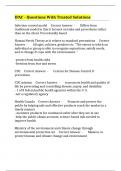
IPAC - Questions With Trusted Solutions
Infection control model Correct Answer - Differs from
traditional model in that it focuses on tasks and procedures rather
than on the client. Procedurally based
Human Needs Theory as it relates to standard precautions Correct
Answer - All ages, cultures, genders etc. "The extent to which an
individual or group is able to recognize aspirations, satisfy needs,
and to change & cope with the environment. "
-protect from health risks
-freedom from fear and stress
CDC Correct Answer - Centres for Disease Control &
prevention
CDC mission Correct Answer - to promote health and quality of
life by preventing and controlling disease, injury, and disability
- 1 of 8 federal public health agencies within the U. S.
-not a regulatory agency
Health Canada Correct Answer - Promote and protect the
public by helping safe and effective products reach the market in a
timely manner
- monitors products for continued softer after they are in use
-help the public obtain accurate, science-based info needed to
improve health
Ministry of the environment and climate change through
environmental protection act Correct Answer - Mission: to
protect human and climate change and environment
, Areas of the regulatory authority that affect infection control
include:
-regulation of medical & chemical waste
-registration of chemical germicides used for healthcare
risk assessment Correct Answer - Determine the interventions
that are required to prevent the transmission of infection
Procedures involving exposure to blood, bodily fluids and secretion,
mucous membranes and non-intact skin require the use of
appropriate personal protective equipment PPE
standard of care Correct Answer - level of care that a
reasonably prudent practitioner would exercise
The minimum level acceptable in all aspects of client care
chain of infection Correct Answer - infectious agent, reservoir,
portal of exit, mode of transmission, portal of entry, susceptible host
infectious agent Correct Answer - bacteria, viruses, fungi,
parasites
reservoir Correct Answer - Dirty surfaces & equipment,
people, water, animals/insects, soil
portal of exit Correct Answer - Open wounds/ skin, splatter of
bodily fluids, aerosols
mode of transmission Correct Answer - Contact (direct or
indirect), ingestion, inhalation
portal of entry Correct Answer - Broken skin/ incisions,
respiratory track, mucosa membranes, catheters and tubes
Infection control model Correct Answer - Differs from
traditional model in that it focuses on tasks and procedures rather
than on the client. Procedurally based
Human Needs Theory as it relates to standard precautions Correct
Answer - All ages, cultures, genders etc. "The extent to which an
individual or group is able to recognize aspirations, satisfy needs,
and to change & cope with the environment. "
-protect from health risks
-freedom from fear and stress
CDC Correct Answer - Centres for Disease Control &
prevention
CDC mission Correct Answer - to promote health and quality of
life by preventing and controlling disease, injury, and disability
- 1 of 8 federal public health agencies within the U. S.
-not a regulatory agency
Health Canada Correct Answer - Promote and protect the
public by helping safe and effective products reach the market in a
timely manner
- monitors products for continued softer after they are in use
-help the public obtain accurate, science-based info needed to
improve health
Ministry of the environment and climate change through
environmental protection act Correct Answer - Mission: to
protect human and climate change and environment
, Areas of the regulatory authority that affect infection control
include:
-regulation of medical & chemical waste
-registration of chemical germicides used for healthcare
risk assessment Correct Answer - Determine the interventions
that are required to prevent the transmission of infection
Procedures involving exposure to blood, bodily fluids and secretion,
mucous membranes and non-intact skin require the use of
appropriate personal protective equipment PPE
standard of care Correct Answer - level of care that a
reasonably prudent practitioner would exercise
The minimum level acceptable in all aspects of client care
chain of infection Correct Answer - infectious agent, reservoir,
portal of exit, mode of transmission, portal of entry, susceptible host
infectious agent Correct Answer - bacteria, viruses, fungi,
parasites
reservoir Correct Answer - Dirty surfaces & equipment,
people, water, animals/insects, soil
portal of exit Correct Answer - Open wounds/ skin, splatter of
bodily fluids, aerosols
mode of transmission Correct Answer - Contact (direct or
indirect), ingestion, inhalation
portal of entry Correct Answer - Broken skin/ incisions,
respiratory track, mucosa membranes, catheters and tubes