Maternity/Newborn ATI PRACTICE
QUESTIONS AND VERIFIED ANSWERS
2025/2026 LATEST
UPDATE|GUARANTEED PASS|
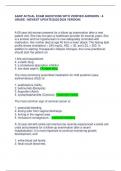
Amniocentesis - ANS>> An amniocentesis is used to determine lung maturity,
detect congenital anomalies, and diagnose fetal hemolytic disease.
Cordocentesis - ANS>> A cordocentesis is used to identify fetal blood type and
RBC when there is a risk of isoimmune hemolytic anemia.
Kleihauer-Betke test - ANS>> The Kleihauer-Betke test is used to determine the
amount of fetal blood in the maternal circulation when there is a risk of Rh-
isoimmunization.
A positive contraction stress test indicates that further evaluation of the fetus is
necessary. - ANS>> A biophysical profile will provide further evaluation with a
real-time ultrasound.
Side effects of combined oral contraceptives - ANS>> The nurse should instruct
the client that depression is a common adverse effect of combined oral
contraceptives. Other common adverse effects of the medication include
amenorrhea, weight gain, headache, nausea, breakthrough bleeding, and breast
tenderness.
A nurse is assessing four newborns. Which of the following findings should the
nurse report to the provider?
a. A newborn who is 26 hr old and has erythema toxicum on his face
b. A newborn who is 32 hr old and has not passed a meconium stool
c. A newborn who is 12 hr old and has pink-tinged urine
d. A newborn who is 18 hr old and has an axillary temperature of 37.7° C (99.9° F)
- ANS>> Answer:
d. A newborn who is 18 hr old and has an axillary temperature of 37.7° C (99.9° F)
,An axillary temperature greater than 37.5° C (99.5° F) is above the expected
reference range for a newborn and can be an indication of sepsis. Therefore, the
nurse should report this finding to the provider.
Explanation:
Erythema toxicum is a transient rash that can appear anywhere on a newborn's
body during the first 24 to 72 hr following birth and can last up to 3 weeks. This
finding requires no treatment.
A newborn should pass the first meconium stool within the first 24 to 48 hr
following birth. Failure to pass a meconium stool can indicate a bowel obstruction
or congenital disorder. This finding is within the expected reference range.
Pink-tinged urine is an indication of uric acid crystals and is an expected finding
for a newborn during the first week following birth.
side effects of magnesium sulfate - ANS>> - Hypotension
- Sedation
- Confusion
- N/V
- Bradycardia
- Pruritis
- Arrhythmias
- Decreased deep tendon reflexes
- Respiratory depression/paralysis
- Drowsiness
- Muscle weakness
- Complete heart block
- When used immediately prior to delivery it can cause fetal hypoxia, asphyxia,
arrhythmias and possible fetal intracranial bleeding
How much folic acid should a pregnant person take daily? - ANS>> A client who
is pregnant should increase folic acid intake to 600 mcg daily. Folic acid assists
with preventing neural tube birth defects.
Caloric intake for a pregnant person? - ANS>> A client who is pregnant should
increase caloric intake by 340 cal during the second trimester and by 452 cal
during the third trimester.
, How much protein should a pregnant patient eat per day? - ANS>> A client who is
pregnant should increase protein intake to 71 g each day during the second and
third trimesters.
Manifestations of hypoglycemia in the newborn - ANS>> Newborns who are large
for gestational age are at risk for hypoglycemia.
S/s of hypoglycemia in a newborn include: respiratory distress, abnormal cry,
jitteriness, lethargy, poor feeding, apnea, and seizures.
Order for bathing newborn - ANS>> The nurse should demonstrate how to bathe a
newborn by using a head to toe, clean to dirty, approach.
Therefore, the nurse should first wipe the newborn's eyes from the inner canthus
outward using plain water.
The nurse should then wash the newborn's neck by lifting the newborn's chin.
Next, the nurse should cleanse the skin around the umbilical cord stump followed
by washing the newborn's legs and feet.
The last step of the bath should be to clean the newborn's diaper area.
A nurse is assessing a newborn who was born at 26 weeks of gestation using the
New Ballard scale. Which of the following findings should the nurse expect?
a. Minimal arm recoil
b. Popliteal angle of 90°
c. Creases over the entire foot sole
d. Raised areolas with 3 to 4 mm buds - ANS>> a. Minimal arm recoil
The nurse should expect a newborn who was born at 26 weeks of gestation to have
decreased muscular tone, or minimal arm recoil.
How much water should a pregnant patient drink daily? - ANS>> A client who is
pregnant should consume 3 L of water each day.
A nurse is performing a physical assessment of a newborn upon admission to the
nursery. Which of the following manifestations should the nurse expect? SATA
a. Yellow sclera
b. Acrocyanosis
c. Posterior fontanel larger than the anterior fontanel
QUESTIONS AND VERIFIED ANSWERS
2025/2026 LATEST
UPDATE|GUARANTEED PASS|
Amniocentesis - ANS>> An amniocentesis is used to determine lung maturity,
detect congenital anomalies, and diagnose fetal hemolytic disease.
Cordocentesis - ANS>> A cordocentesis is used to identify fetal blood type and
RBC when there is a risk of isoimmune hemolytic anemia.
Kleihauer-Betke test - ANS>> The Kleihauer-Betke test is used to determine the
amount of fetal blood in the maternal circulation when there is a risk of Rh-
isoimmunization.
A positive contraction stress test indicates that further evaluation of the fetus is
necessary. - ANS>> A biophysical profile will provide further evaluation with a
real-time ultrasound.
Side effects of combined oral contraceptives - ANS>> The nurse should instruct
the client that depression is a common adverse effect of combined oral
contraceptives. Other common adverse effects of the medication include
amenorrhea, weight gain, headache, nausea, breakthrough bleeding, and breast
tenderness.
A nurse is assessing four newborns. Which of the following findings should the
nurse report to the provider?
a. A newborn who is 26 hr old and has erythema toxicum on his face
b. A newborn who is 32 hr old and has not passed a meconium stool
c. A newborn who is 12 hr old and has pink-tinged urine
d. A newborn who is 18 hr old and has an axillary temperature of 37.7° C (99.9° F)
- ANS>> Answer:
d. A newborn who is 18 hr old and has an axillary temperature of 37.7° C (99.9° F)
,An axillary temperature greater than 37.5° C (99.5° F) is above the expected
reference range for a newborn and can be an indication of sepsis. Therefore, the
nurse should report this finding to the provider.
Explanation:
Erythema toxicum is a transient rash that can appear anywhere on a newborn's
body during the first 24 to 72 hr following birth and can last up to 3 weeks. This
finding requires no treatment.
A newborn should pass the first meconium stool within the first 24 to 48 hr
following birth. Failure to pass a meconium stool can indicate a bowel obstruction
or congenital disorder. This finding is within the expected reference range.
Pink-tinged urine is an indication of uric acid crystals and is an expected finding
for a newborn during the first week following birth.
side effects of magnesium sulfate - ANS>> - Hypotension
- Sedation
- Confusion
- N/V
- Bradycardia
- Pruritis
- Arrhythmias
- Decreased deep tendon reflexes
- Respiratory depression/paralysis
- Drowsiness
- Muscle weakness
- Complete heart block
- When used immediately prior to delivery it can cause fetal hypoxia, asphyxia,
arrhythmias and possible fetal intracranial bleeding
How much folic acid should a pregnant person take daily? - ANS>> A client who
is pregnant should increase folic acid intake to 600 mcg daily. Folic acid assists
with preventing neural tube birth defects.
Caloric intake for a pregnant person? - ANS>> A client who is pregnant should
increase caloric intake by 340 cal during the second trimester and by 452 cal
during the third trimester.
, How much protein should a pregnant patient eat per day? - ANS>> A client who is
pregnant should increase protein intake to 71 g each day during the second and
third trimesters.
Manifestations of hypoglycemia in the newborn - ANS>> Newborns who are large
for gestational age are at risk for hypoglycemia.
S/s of hypoglycemia in a newborn include: respiratory distress, abnormal cry,
jitteriness, lethargy, poor feeding, apnea, and seizures.
Order for bathing newborn - ANS>> The nurse should demonstrate how to bathe a
newborn by using a head to toe, clean to dirty, approach.
Therefore, the nurse should first wipe the newborn's eyes from the inner canthus
outward using plain water.
The nurse should then wash the newborn's neck by lifting the newborn's chin.
Next, the nurse should cleanse the skin around the umbilical cord stump followed
by washing the newborn's legs and feet.
The last step of the bath should be to clean the newborn's diaper area.
A nurse is assessing a newborn who was born at 26 weeks of gestation using the
New Ballard scale. Which of the following findings should the nurse expect?
a. Minimal arm recoil
b. Popliteal angle of 90°
c. Creases over the entire foot sole
d. Raised areolas with 3 to 4 mm buds - ANS>> a. Minimal arm recoil
The nurse should expect a newborn who was born at 26 weeks of gestation to have
decreased muscular tone, or minimal arm recoil.
How much water should a pregnant patient drink daily? - ANS>> A client who is
pregnant should consume 3 L of water each day.
A nurse is performing a physical assessment of a newborn upon admission to the
nursery. Which of the following manifestations should the nurse expect? SATA
a. Yellow sclera
b. Acrocyanosis
c. Posterior fontanel larger than the anterior fontanel