,PRO4801 Assignment 1 (COMPLETE ANSWERS) 2025
- DUE 30 April 2025; 100% TRUSTED Complete,
trusted solutions and explanations.
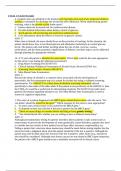
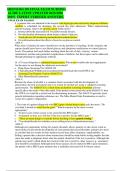
1.1 Obtain a macro perspective of the PRO4801 module. Explain the
framework of this module (the 6 topics and 20 study units in the study
guide)
The PRO4801 module is about understanding project management
within the broader discipline of operations management. Operations
management typically deals with continuous processes and systems, but
projects are temporary, goal-oriented operations designed to bring
about change, innovation, or improvement. Therefore, this module
teaches you how to manage projects effectively while aligning them
with operational goals and constraints.
The framework of the module is organized into 6 main topics, which
are subdivided into 20 study units. Here's how the structure looks and
how each part fits into the operations management context:
Topic 1: The Nature of Projects and Project Management
This topic introduces the foundational concepts of what a project is and
how project management differs from routine operational work. Projects
are defined as temporary efforts undertaken to create unique products,
services, or results, whereas operations are ongoing and repetitive. The
study units within this topic explore the characteristics of projects, their
life cycles, and their strategic importance within an organization. From
an operations management viewpoint, understanding this distinction is
vital because it allows managers to recognize when a task should be
managed as a project rather than through standard operational processes.
This foundation ensures that organizations can effectively implement
change, innovation, or improvement through structured, goal-oriented
efforts.
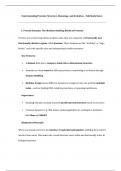
, Topic 2: Project Organisation and the Role of Stakeholders
This topic focuses on how projects are structured within organizations
and how the roles of various stakeholders influence project success. It
examines different organizational structures — such as functional,
matrix, and projectised forms — and how each affects communication,
authority, and resource allocation. Additionally, it emphasizes the
importance of stakeholder identification, engagement, and management
throughout the project. In an operations management context, this topic
is critical because it ensures that project activities are well integrated
with existing operational systems, departments, and workflows. Proper
stakeholder alignment helps avoid conflicts and ensures smoother
execution and acceptance of project deliverables.
Topic 3: Project Planning and Scheduling
In this topic, the focus shifts to detailed project planning and scheduling,
which are essential tools for effective execution and control. Study units
cover the development of project plans using methods like the Work
Breakdown Structure (WBS), Critical Path Method (CPM), Program
Evaluation and Review Technique (PERT), and Gantt charts. These
tools help break down complex projects into manageable components
and schedule them efficiently to ensure timely delivery. From an
operations management perspective, this topic is vital because it
facilitates optimal use of resources, prevents bottlenecks, and aligns
project timelines with broader operational goals. It ensures that project
activities are synchronized with the organization’s ongoing processes
and production schedules.
- DUE 30 April 2025; 100% TRUSTED Complete,
trusted solutions and explanations.
1.1 Obtain a macro perspective of the PRO4801 module. Explain the
framework of this module (the 6 topics and 20 study units in the study
guide)
The PRO4801 module is about understanding project management
within the broader discipline of operations management. Operations
management typically deals with continuous processes and systems, but
projects are temporary, goal-oriented operations designed to bring
about change, innovation, or improvement. Therefore, this module
teaches you how to manage projects effectively while aligning them
with operational goals and constraints.
The framework of the module is organized into 6 main topics, which
are subdivided into 20 study units. Here's how the structure looks and
how each part fits into the operations management context:
Topic 1: The Nature of Projects and Project Management
This topic introduces the foundational concepts of what a project is and
how project management differs from routine operational work. Projects
are defined as temporary efforts undertaken to create unique products,
services, or results, whereas operations are ongoing and repetitive. The
study units within this topic explore the characteristics of projects, their
life cycles, and their strategic importance within an organization. From
an operations management viewpoint, understanding this distinction is
vital because it allows managers to recognize when a task should be
managed as a project rather than through standard operational processes.
This foundation ensures that organizations can effectively implement
change, innovation, or improvement through structured, goal-oriented
efforts.
, Topic 2: Project Organisation and the Role of Stakeholders
This topic focuses on how projects are structured within organizations
and how the roles of various stakeholders influence project success. It
examines different organizational structures — such as functional,
matrix, and projectised forms — and how each affects communication,
authority, and resource allocation. Additionally, it emphasizes the
importance of stakeholder identification, engagement, and management
throughout the project. In an operations management context, this topic
is critical because it ensures that project activities are well integrated
with existing operational systems, departments, and workflows. Proper
stakeholder alignment helps avoid conflicts and ensures smoother
execution and acceptance of project deliverables.
Topic 3: Project Planning and Scheduling
In this topic, the focus shifts to detailed project planning and scheduling,
which are essential tools for effective execution and control. Study units
cover the development of project plans using methods like the Work
Breakdown Structure (WBS), Critical Path Method (CPM), Program
Evaluation and Review Technique (PERT), and Gantt charts. These
tools help break down complex projects into manageable components
and schedule them efficiently to ensure timely delivery. From an
operations management perspective, this topic is vital because it
facilitates optimal use of resources, prevents bottlenecks, and aligns
project timelines with broader operational goals. It ensures that project
activities are synchronized with the organization’s ongoing processes
and production schedules.