Psychology 352
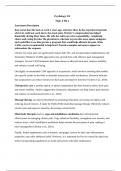
Topic 4 DQ 1
Assessment Description
Ken Garoo hurt his back at work 2 years ago, and since then, he has experienced periods
where he could not work due to low-back pain. Worker’s compensation has helped
financially during those times. His wife has taken on extra responsibility, completing
chores and caring for him. His physician is reluctant to prescribe more opiate analgesics
and would like to see him get into a program that would help alleviate his pain. What
CAMs can be recommended to help Ken? Provide examples and source support to
substantiate the response.
Chronic low-back pain can significantly impact daily life, and incorporating Complementary and
Alternative Medicine (CAM) approaches may provide Ken with effective pain management
strategies. Several CAM treatments have been shown to alleviate back pain, improve mobility,
and enhance overall well-being.
One highly recommended CAM approach is acupuncture, which involves inserting thin needles
into specific points on the body to stimulate natural pain relief mechanisms. Research indicates
that acupuncture can reduce chronic low-back pain and improve function (Vickers et al., 2018).
Chiropractic care is another option, as spinal manipulation has been found to relieve back pain
and restore mobility. Studies suggest that chiropractic adjustments can help reduce pain intensity
and reliance on medication (Goertz et al., 2018).
Massage therapy can also be beneficial by promoting relaxation, increasing circulation, and
reducing muscle tension. A study by Field (2016) found that massage therapy effectively reduces
chronic pain and improves mood by decreasing cortisol levels.
Mind-body therapies such as yoga and mindfulness meditation have demonstrated
effectiveness in managing chronic pain. Yoga enhances flexibility, strengthens core muscles, and
reduces stress, while mindfulness meditation helps reframe the perception of pain, making it
more manageable (Cherkin et al., 2016).
Finally, herbal supplements such as turmeric and ginger, known for their anti-inflammatory
properties, may offer additional relief. However, it is important for Ken to consult his physician
before incorporating supplements to avoid interactions with other medications.
Topic 4 DQ 1
Assessment Description
Ken Garoo hurt his back at work 2 years ago, and since then, he has experienced periods
where he could not work due to low-back pain. Worker’s compensation has helped
financially during those times. His wife has taken on extra responsibility, completing
chores and caring for him. His physician is reluctant to prescribe more opiate analgesics
and would like to see him get into a program that would help alleviate his pain. What
CAMs can be recommended to help Ken? Provide examples and source support to
substantiate the response.
Chronic low-back pain can significantly impact daily life, and incorporating Complementary and
Alternative Medicine (CAM) approaches may provide Ken with effective pain management
strategies. Several CAM treatments have been shown to alleviate back pain, improve mobility,
and enhance overall well-being.
One highly recommended CAM approach is acupuncture, which involves inserting thin needles
into specific points on the body to stimulate natural pain relief mechanisms. Research indicates
that acupuncture can reduce chronic low-back pain and improve function (Vickers et al., 2018).
Chiropractic care is another option, as spinal manipulation has been found to relieve back pain
and restore mobility. Studies suggest that chiropractic adjustments can help reduce pain intensity
and reliance on medication (Goertz et al., 2018).
Massage therapy can also be beneficial by promoting relaxation, increasing circulation, and
reducing muscle tension. A study by Field (2016) found that massage therapy effectively reduces
chronic pain and improves mood by decreasing cortisol levels.
Mind-body therapies such as yoga and mindfulness meditation have demonstrated
effectiveness in managing chronic pain. Yoga enhances flexibility, strengthens core muscles, and
reduces stress, while mindfulness meditation helps reframe the perception of pain, making it
more manageable (Cherkin et al., 2016).
Finally, herbal supplements such as turmeric and ginger, known for their anti-inflammatory
properties, may offer additional relief. However, it is important for Ken to consult his physician
before incorporating supplements to avoid interactions with other medications.