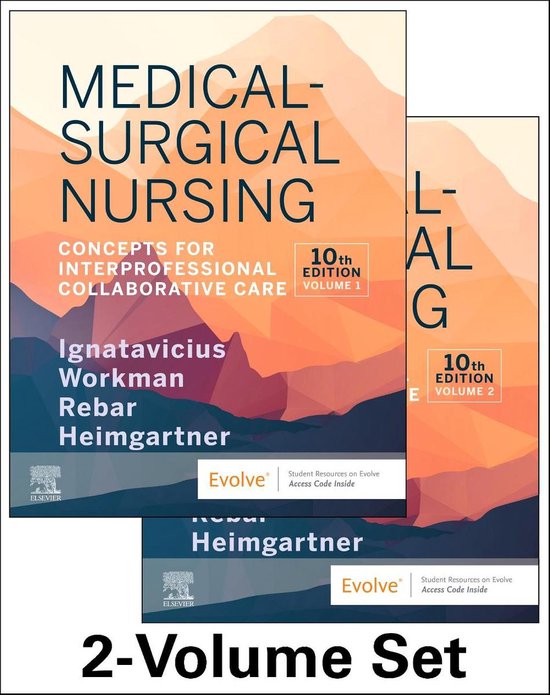
TEST BANK OF MEDICAL SURGICAL NURSING
IGNATAVICIUS 7TH EDITION BY DONNA D.
IGNATAVICIUS, M. LINDA WORKMAN FULL TEST
BANK ALL CHAPTERS INCLUDED|| LATEST AND
COMPLETE UPDATE 2025 GRADED A+
,1|Page
TEST BANK OF MEDICAL SURGICAL NURSING
IGNATAVICIUS 7TH EDITION BY DONNA D.
IGNATAVICIUS, M. LINDA WORKMAN FULL TEST
BANK ALL CHAPTERS INCLUDED|| LATEST AND
COMPLETE UPDATE 2025 GRADED A+
ANSWERS KEY AT THE END OF EVERY CHAPTER KEY
CHAPTER 01: INTRODUCTION TO MEDICAL-SURGICAL NURSING
TEST BANK
MULTIPLE CHOICE
1. Which action demonstrates that the nurse understands the purpose of the Rapid Response
Team?
a. Monitoring the client for changes in postoperative status such as wound infection
b. Documenting all changes observed in the client and maintaining a postoperative flow sheet
✅ c. Notifying the physician of the client’s change in blood pressure from 140 to 88 mm Hg
systolic
d. Notifying the physician of the client’s increase in restlessness after medication change
Rationale: The Rapid Response Team (RRT) is activated when a patient shows signs of acute
clinical deterioration. A sudden drop in systolic blood pressure (e.g., from 140 to 88 mm Hg) is a
critical change that warrants immediate intervention.
2. The Joint Commission focuses on safety in health care. Which action by the nurse reflects The
Joint Commission’s main objective?
a. Performing range-of-motion exercises on the client three times each day
b. Ensuring that the client is eating 100% of the meals served to him or her
✅ c. Assessing the client’s respirations when administering opioids
d. Delegating to the nursing assistant to give the client a complete bath daily
,2|Page
Rationale: The Joint Commission emphasizes patient safety and prevention of harm. Monitoring
respirations before administering opioids is essential to avoid respiratory depression, a known
risk of opioid use.
3. Which action by the nurse shows an understanding of the principle of self-determination?
✅ a. Allowing a postoperative client to decide to take medication with fruit juice rather than
water
b. Allowing a teenager to decide not to go to a clinic when there is evidence that she is having
profuse vaginal bleeding
c. Allowing a parent to decide not to proceed with a lifesaving operation for a 12-year-old client
d. Allowing an older client with dementia to decide not to take cardiac medication throughout the
shift
Rationale: Self-determination supports client autonomy in choices that do not pose serious harm.
Choosing a preferred liquid for medication administration respects personal preference without
jeopardizing safety.
4. The nurse is initiating a series of teaching sessions with an older client. What is the nurse’s
highest-priority, client-centered action before beginning the session?
a. Ensure that the client’s family is present and will participate.
✅ b. Make certain that the client is wearing his glasses.
c. Have printed handouts ready to use during the session.
d. Schedule the session for early evening after the client’s meal.
Rationale: Ensuring the client can see (or hear, if applicable) is vital for effective learning.
Vision impairments are common in older adults and should be addressed before education
begins.
5. Which action best demonstrates the nurse using client-centered care when planning a menu for
a Vietnamese client who is newly diagnosed with diabetes?
✅ a. Asking the client what food he or she would eat on a standard diabetic menu
b. Asking family members to make selections for the client from a diabetic menu
, 3|Page
c. Ordering a typical diabetic meal for the client and planning diet teaching
d. Researching the Vietnamese culture before discussing diabetic meal planning
Rationale: Client-centered care involves direct communication with the client to accommodate
individual preferences and cultural values. Asking the client respects autonomy and supports
culturally competent care.
6. The Institute for Healthcare Improvement (IHI) identified interventions to save client lives.
Which actions are within the scope of nursing practice to improve quality of care?
a. Insert a central line to give intravenous fluid to a dehydrated client
✅ b. Use sterile technique when changing dressings on a new surgical site
c. Intubate a client whose oxygen saturation is 92%
d. Prescribe aspirin for a client who presents with an acute myocardial infarction
Rationale: Using sterile technique helps prevent infections, a major focus of IHI interventions.
Inserting central lines, intubation, and prescribing medications are not within the standard RN
scope of practice.
7. Which action by the nurse demonstrates the best practice for nursing documentation on a
computerized record?
a. Deleting all documentation errors on the computerized record
b. Using red font to denote all significant events that have occurred
c. Waiting until the end of the shift to record a summary of information
✅ d. Documenting assessment data at the point of care
Rationale: Real-time documentation ensures accuracy, reduces omissions, and supports
communication among health care providers.
8. A client is scheduled for a mastectomy. As she is about to receive the preoperative medication,
she tells the nurse that she does not want to have her breast removed but wants a lumpectomy.
Which response indicates that the nurse is acting as a client advocate?
IGNATAVICIUS 7TH EDITION BY DONNA D.
IGNATAVICIUS, M. LINDA WORKMAN FULL TEST
BANK ALL CHAPTERS INCLUDED|| LATEST AND
COMPLETE UPDATE 2025 GRADED A+
,1|Page
TEST BANK OF MEDICAL SURGICAL NURSING
IGNATAVICIUS 7TH EDITION BY DONNA D.
IGNATAVICIUS, M. LINDA WORKMAN FULL TEST
BANK ALL CHAPTERS INCLUDED|| LATEST AND
COMPLETE UPDATE 2025 GRADED A+
ANSWERS KEY AT THE END OF EVERY CHAPTER KEY
CHAPTER 01: INTRODUCTION TO MEDICAL-SURGICAL NURSING
TEST BANK
MULTIPLE CHOICE
1. Which action demonstrates that the nurse understands the purpose of the Rapid Response
Team?
a. Monitoring the client for changes in postoperative status such as wound infection
b. Documenting all changes observed in the client and maintaining a postoperative flow sheet
✅ c. Notifying the physician of the client’s change in blood pressure from 140 to 88 mm Hg
systolic
d. Notifying the physician of the client’s increase in restlessness after medication change
Rationale: The Rapid Response Team (RRT) is activated when a patient shows signs of acute
clinical deterioration. A sudden drop in systolic blood pressure (e.g., from 140 to 88 mm Hg) is a
critical change that warrants immediate intervention.
2. The Joint Commission focuses on safety in health care. Which action by the nurse reflects The
Joint Commission’s main objective?
a. Performing range-of-motion exercises on the client three times each day
b. Ensuring that the client is eating 100% of the meals served to him or her
✅ c. Assessing the client’s respirations when administering opioids
d. Delegating to the nursing assistant to give the client a complete bath daily
,2|Page
Rationale: The Joint Commission emphasizes patient safety and prevention of harm. Monitoring
respirations before administering opioids is essential to avoid respiratory depression, a known
risk of opioid use.
3. Which action by the nurse shows an understanding of the principle of self-determination?
✅ a. Allowing a postoperative client to decide to take medication with fruit juice rather than
water
b. Allowing a teenager to decide not to go to a clinic when there is evidence that she is having
profuse vaginal bleeding
c. Allowing a parent to decide not to proceed with a lifesaving operation for a 12-year-old client
d. Allowing an older client with dementia to decide not to take cardiac medication throughout the
shift
Rationale: Self-determination supports client autonomy in choices that do not pose serious harm.
Choosing a preferred liquid for medication administration respects personal preference without
jeopardizing safety.
4. The nurse is initiating a series of teaching sessions with an older client. What is the nurse’s
highest-priority, client-centered action before beginning the session?
a. Ensure that the client’s family is present and will participate.
✅ b. Make certain that the client is wearing his glasses.
c. Have printed handouts ready to use during the session.
d. Schedule the session for early evening after the client’s meal.
Rationale: Ensuring the client can see (or hear, if applicable) is vital for effective learning.
Vision impairments are common in older adults and should be addressed before education
begins.
5. Which action best demonstrates the nurse using client-centered care when planning a menu for
a Vietnamese client who is newly diagnosed with diabetes?
✅ a. Asking the client what food he or she would eat on a standard diabetic menu
b. Asking family members to make selections for the client from a diabetic menu
, 3|Page
c. Ordering a typical diabetic meal for the client and planning diet teaching
d. Researching the Vietnamese culture before discussing diabetic meal planning
Rationale: Client-centered care involves direct communication with the client to accommodate
individual preferences and cultural values. Asking the client respects autonomy and supports
culturally competent care.
6. The Institute for Healthcare Improvement (IHI) identified interventions to save client lives.
Which actions are within the scope of nursing practice to improve quality of care?
a. Insert a central line to give intravenous fluid to a dehydrated client
✅ b. Use sterile technique when changing dressings on a new surgical site
c. Intubate a client whose oxygen saturation is 92%
d. Prescribe aspirin for a client who presents with an acute myocardial infarction
Rationale: Using sterile technique helps prevent infections, a major focus of IHI interventions.
Inserting central lines, intubation, and prescribing medications are not within the standard RN
scope of practice.
7. Which action by the nurse demonstrates the best practice for nursing documentation on a
computerized record?
a. Deleting all documentation errors on the computerized record
b. Using red font to denote all significant events that have occurred
c. Waiting until the end of the shift to record a summary of information
✅ d. Documenting assessment data at the point of care
Rationale: Real-time documentation ensures accuracy, reduces omissions, and supports
communication among health care providers.
8. A client is scheduled for a mastectomy. As she is about to receive the preoperative medication,
she tells the nurse that she does not want to have her breast removed but wants a lumpectomy.
Which response indicates that the nurse is acting as a client advocate?