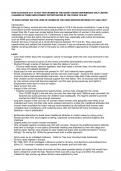
• How far do you agree that the most signi cant social development in the years
1924–64 was the expansion of educational opportunities?
Introduction
I disagree that the most signi cant social development in the years 1924-64 was the expansion of
educational opportunities - it was the provisions of full employment , as well as social job bene ts
Social development = improved peoples lives
Most signi cant = the one that was most successful, the biggest achievement as well as
maintaining this - not just an isolated burst of productivity
The expansion of educational opportunities, although they improved, were not successful
between 1924-53 as there was not 100% literacy, and not enough children aged 12-17 were
gaining a proper higher education, and between 53-64 were unpopular and only helped
opportunity for the elite
Paragraph 1
- the expansion of educational opportunities were not the most signi cant in the years 1924-53,
as they were not the most successful compared to full employment in those years
- Stalin launched a war on illiteracy, recruiting 3 million volunteers to educate workers and
peasants - at this point, only half of the USSR were literate, and of those it was mostly men and
people from urban areas
- This was undermined by his other policies - during collectivisation, 40% of teachers were
attacked as they were seen to be associated with the government
- Teacher’s weren’t properly supplied, and there were no perks such as school lunches to o er
peasants who needed their children to work
- Nevertheless - by 1939, over 94% of peasants were literate . Although this was an
improvement from the 55% , only 90% of women could read compared to 97% of men, and
there was also no focus on full educational development of students
- By 1953, 100% of kids aged 8-12 gained their full primary achievement, and the number of
university had increased by 800%, with 1.5 million students, and also 1.5 million in higher
education. Doubtless these are achievements compared to less then 1/4 million in higher
education, and even less beyond then pre-Stalin
- However, only 7% of the child population completed their secondary education. Costs for
higher education remained, and even though scholarships were o ered these usually went to
kids of party members as part of a reward scheme = hard for rural students / women to get into
proper education
- Therefore, although educational opportunities certainly expanded under Stalin, the population
was still not fully literate and access to education was substandard compared to other nations
Paragraph 2
- in contrast, the most signi cant social development in the years 1924-53 was the provision of
full employment
- The ve year plans led to full employment and job security, which improved the lives of workers
- Plentiful employment opportunities and ussr rst country to have full employment in peacetime
- Number of hired workers rose from 12 to 27 million
- Medals and incentives (piecework)
- Works got access to bene ts through their job - factory and farm canteens, signi cant increase
in healthcare provision eg vaccine
- Huge growth of cities eg Magnitogorsk led to movement of countryside to cities
- As it a ected everyone - anyone who wanted a stable and reliable job with bene ts able to get
one, and it was continued and inclusive
Paragraph 3
- educational provisions and opportunities under Khrushchev were unsuccessful and only
increased elitism in the system
- He made education compulsory, restructured education so it was farmer vocationally, and
created special schools for the academically gifted
- These were unpopular - parents wanted their children to get an academic, not vocational
training.
fi ff fi fi fi fifi ff fi fifi ff fi
1924–64 was the expansion of educational opportunities?
Introduction
I disagree that the most signi cant social development in the years 1924-64 was the expansion of
educational opportunities - it was the provisions of full employment , as well as social job bene ts
Social development = improved peoples lives
Most signi cant = the one that was most successful, the biggest achievement as well as
maintaining this - not just an isolated burst of productivity
The expansion of educational opportunities, although they improved, were not successful
between 1924-53 as there was not 100% literacy, and not enough children aged 12-17 were
gaining a proper higher education, and between 53-64 were unpopular and only helped
opportunity for the elite
Paragraph 1
- the expansion of educational opportunities were not the most signi cant in the years 1924-53,
as they were not the most successful compared to full employment in those years
- Stalin launched a war on illiteracy, recruiting 3 million volunteers to educate workers and
peasants - at this point, only half of the USSR were literate, and of those it was mostly men and
people from urban areas
- This was undermined by his other policies - during collectivisation, 40% of teachers were
attacked as they were seen to be associated with the government
- Teacher’s weren’t properly supplied, and there were no perks such as school lunches to o er
peasants who needed their children to work
- Nevertheless - by 1939, over 94% of peasants were literate . Although this was an
improvement from the 55% , only 90% of women could read compared to 97% of men, and
there was also no focus on full educational development of students
- By 1953, 100% of kids aged 8-12 gained their full primary achievement, and the number of
university had increased by 800%, with 1.5 million students, and also 1.5 million in higher
education. Doubtless these are achievements compared to less then 1/4 million in higher
education, and even less beyond then pre-Stalin
- However, only 7% of the child population completed their secondary education. Costs for
higher education remained, and even though scholarships were o ered these usually went to
kids of party members as part of a reward scheme = hard for rural students / women to get into
proper education
- Therefore, although educational opportunities certainly expanded under Stalin, the population
was still not fully literate and access to education was substandard compared to other nations
Paragraph 2
- in contrast, the most signi cant social development in the years 1924-53 was the provision of
full employment
- The ve year plans led to full employment and job security, which improved the lives of workers
- Plentiful employment opportunities and ussr rst country to have full employment in peacetime
- Number of hired workers rose from 12 to 27 million
- Medals and incentives (piecework)
- Works got access to bene ts through their job - factory and farm canteens, signi cant increase
in healthcare provision eg vaccine
- Huge growth of cities eg Magnitogorsk led to movement of countryside to cities
- As it a ected everyone - anyone who wanted a stable and reliable job with bene ts able to get
one, and it was continued and inclusive
Paragraph 3
- educational provisions and opportunities under Khrushchev were unsuccessful and only
increased elitism in the system
- He made education compulsory, restructured education so it was farmer vocationally, and
created special schools for the academically gifted
- These were unpopular - parents wanted their children to get an academic, not vocational
training.
fi ff fi fi fi fifi ff fi fifi ff fi