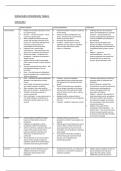
IDEOLOGIES COMPARISON TABLES
SOCIALISM
REVOLUTIONARY SOCIAL DEMOCRACY THIRD WAY
Human Nature People are naturally motivated to work Financial incentive is needed to motivate Challenge the view that collective
for common good human beings action and individualism are mutually
Marxism – common humanity – moral Humans are both individualistic and exclusive – society should work
concern for greater good social – therefore they need material towards social goals but should leave
When capitalism has been destroyed awards to promote them room for ambition and aspiration of
people will naturally work hard as the Downplay the importance of class the individual
success of a community will depend on Crosland – criticises Marx’s view on Rejects class-based politics and
everyone’s work and sense of capitalism and says they are outdated – focuses on politics of inclusion (e.g.
responsibility for least fortunate class no longer determines values, through advocating social equality for
Capitalism has created a false culture, or aspiration marginalised ethnic groups, women
consciousness – when destroyed, man etc)
will work in cooperation and harmony Giddens – argues for
Strictly two classes – proletariat and communitarianism – sees 21’st
bourgeoise – individual circumstance is century being post class saying that
shaped by class communities are the main way
Divisions lead to conflict and hostility humans’ group themselves now
which causes humans to reject common
humanity
Class has corrupted human nature – will
fuel dialectical change in form of
revolution
Marx – man has become individualistic
because capitalism has corrupted them –
‘false consciousness’
State Marx – capitalism promotes exploitation, Crosland – reformed capitalism Top-down intervention in social and
alienation, and oppression of lower prescribed by Keynes would guarantee economic affairs is ineffective and
classes full employment and steady economic inefficient
Such a belief of achieving communism growth Sees the state as a neutral force
was a belief rooted in revolution Thanks to Keynesian econ, capitalism It should focus on social investment in
After revolution, the state would be was no longer vulnerable to the boom- infrastructure and education to
taken over by workers – dictatorship of P and-bust cycle and could not be relied improve job opportunities and
Transfer from private property to upon to finance a richer, fairer, and less encourage self-reliance
common ownership divided society Giddens – argues for the rejection of
Marc and Engels – a new economy and a Equality could be achieved within a state intervention and an acceptance
new state forged by revolution were capitalist economy that was managed by of the free market in the economy
essential if socialist values were to be the state He emphasises equality of outcome;
secured Crosland – abolition of grammar schools the sole purpose of the state should
be social investment
Giddens encouraged further
privatisation and deregulation – ‘go
with the flow’ – this was the best way
to foster economic growth, gov tax
revenues and therefore gov spending
in the name of equality
Society Society divided into different classes Crosland’s views on society were
based on relationship to means of grounded in a belief in social justice and
production equality
Capitalism is exploitative and the Ultimate goal of social democracy was to
bourgeoise profits from proletariat create society in which everyone had
Seeks to overthrow capitalist system and equal opportunity and access to basic
replace with socialist society that is necessities such as healthcare, education
based on collective ownership and and housing
democratic control of means of Government intervention needed to
production achieve these goals and state should
This would lead to more equal society play key role in regulating and
where workers would no longer be redistributing wealth
exploited, and the fruits of their labour
would be shared among all members
Economy Capitalism must be abolished and are Crosland advocates the use of Keynesian Giddens argues capitalism should not
willing to advocate for revolution economics as a method for socialists to just be tolerated, but embraced
followed by ‘Dictatorship of the moderate capitalism Argues that free marker creates
proletariat’ wealth that can then be used on
, Marx and Engels – the defeat of socialist projects such as improving the
capitalism was the next dialectical stage NHS
in society’s advancement Only through a privatised and
Argue for ‘equality of the outcome’ as deregulated econ can enough taxation
the only answer to problems created by be raised to support the weakest in
socialism soc
As part of a post-capitalist system there Giddens - fundamental nature of the
should be no private ownership economy had changed and that
Marx and Engels – PO was made possible governments in the ‘post-Fordist’
due to exploitation of the P by the B – economy should seek to arm citizens
they believed that abolition of private to play a role in the new economy
property would be achieved through a
dictatorship of p
Removing the last vestiges of capitalist
state and creating a classless society
Collectivism Marx and Engels want workforces to More modern form of collectivism, yet is Accelerated the impotence of
own all of industry collectively and all still committed collectivism within socialism
agencies of societies to be communal Atlee’s government sanctioned a mixed Giddens accepted the primacy of
Collective ownership of property would economy, with what Crosland called individualism over collectivism
end class conflicts state-managed capitalism that coexisted He rejected the state- managed
with the free market but saw key state capitalism of social democracy and
industries nationalised under state argued for the benefits of the free-
control and worker’s organised trade market economy and individual
unions entrepreneurship
Crosland was suspicious of collectivism
espoused by Marxists as he felt it
threatened individual freedom
Collectivist goals should be promoted
through progressive taxation, welfare
and public services – mixed economy
which Keynes suggested
Common Humanity State is a device of class oppression – the Emphasise equality of opportunity and Equality of opportunity
political state will always reflect and how people should have a fair chance to Giddens – state should intervene in
preach interests of property-owning succeed within a capitalist society – thus education to ensure everyone has an
classes CH is secured as humans are all equal equal start to life – ‘social investment’
Take more revolutionary tactics in order and co-dependent on each other as well Challenged the view that collective
to overthrow the state and political as the state action and individualism are mutually
systems Crosland – scrap grammar schools as exclusive – society should work
Marx – class consciousness, P will realise selective education wrong towards social goals but that should
their oppression and will work together Financial incentive is needed to promote leave room for ambition and
to create a society where the state is not common humanity aspiration of the individua
needed Humans both individualistic and social –
People are naturally motivated to work therefore they need material awards to
for common good promote them
Marxism – common humanity – moral
concern for greater good
When capitalism destroyed, people
would work to benefit the community
Equality Believe in total equality whereby private Reduction of inequality through Equality of opportunity – Giddens
property is abolished and the progressive taxation and welfare believes that instead of intervening
state/society distributes everything Do not wish to destroy capitalism but directly into economy, state should
according to needs only limit and tame it intervene in education to make
There is common ownership – where Slightly blurs the desire for equality of capitalism fairer – social investment
means of production are owned outcome and equality of opportunity Communitarianism – 21st century is
commonly so everyone benefits from Crosland – scrap grammar schools as post- class and communities are now
wealth of society they do not give students from different fundamental
Reject equality of opportunity, backgrounds the same educational Welfare state is flawed as it creates a
suggesting it does not address the experience dependency culture where the poorest
fundamental inequalities created by Demand-side economics/Keynesianism – do-little work
capitalism Crosland found that the gov can only
Marx – ‘from each according to his make society equal through widespread
ability, to each according to his needs’ – state intervention in economy
as everyone contributes to society,
everyone should have their needs
satisfied in society
Social Class Sees class as a division between capital Talk more about differences in Recognise the existence of social class,
(bourgeoise) and labour (proletariat) opportunity and wealth between the but do not believe in class struggle or
These two classes will always come into middle and working classes – stressed the abolition of capitalism
conflict as they want two opposite the need to reduce the differences Advocate for a more market-
outcomes (more profit and higher Advocate policies that aim to create orientated and pragmatic approach to
wages) more equal society through social and economic issues
SOCIALISM
REVOLUTIONARY SOCIAL DEMOCRACY THIRD WAY
Human Nature People are naturally motivated to work Financial incentive is needed to motivate Challenge the view that collective
for common good human beings action and individualism are mutually
Marxism – common humanity – moral Humans are both individualistic and exclusive – society should work
concern for greater good social – therefore they need material towards social goals but should leave
When capitalism has been destroyed awards to promote them room for ambition and aspiration of
people will naturally work hard as the Downplay the importance of class the individual
success of a community will depend on Crosland – criticises Marx’s view on Rejects class-based politics and
everyone’s work and sense of capitalism and says they are outdated – focuses on politics of inclusion (e.g.
responsibility for least fortunate class no longer determines values, through advocating social equality for
Capitalism has created a false culture, or aspiration marginalised ethnic groups, women
consciousness – when destroyed, man etc)
will work in cooperation and harmony Giddens – argues for
Strictly two classes – proletariat and communitarianism – sees 21’st
bourgeoise – individual circumstance is century being post class saying that
shaped by class communities are the main way
Divisions lead to conflict and hostility humans’ group themselves now
which causes humans to reject common
humanity
Class has corrupted human nature – will
fuel dialectical change in form of
revolution
Marx – man has become individualistic
because capitalism has corrupted them –
‘false consciousness’
State Marx – capitalism promotes exploitation, Crosland – reformed capitalism Top-down intervention in social and
alienation, and oppression of lower prescribed by Keynes would guarantee economic affairs is ineffective and
classes full employment and steady economic inefficient
Such a belief of achieving communism growth Sees the state as a neutral force
was a belief rooted in revolution Thanks to Keynesian econ, capitalism It should focus on social investment in
After revolution, the state would be was no longer vulnerable to the boom- infrastructure and education to
taken over by workers – dictatorship of P and-bust cycle and could not be relied improve job opportunities and
Transfer from private property to upon to finance a richer, fairer, and less encourage self-reliance
common ownership divided society Giddens – argues for the rejection of
Marc and Engels – a new economy and a Equality could be achieved within a state intervention and an acceptance
new state forged by revolution were capitalist economy that was managed by of the free market in the economy
essential if socialist values were to be the state He emphasises equality of outcome;
secured Crosland – abolition of grammar schools the sole purpose of the state should
be social investment
Giddens encouraged further
privatisation and deregulation – ‘go
with the flow’ – this was the best way
to foster economic growth, gov tax
revenues and therefore gov spending
in the name of equality
Society Society divided into different classes Crosland’s views on society were
based on relationship to means of grounded in a belief in social justice and
production equality
Capitalism is exploitative and the Ultimate goal of social democracy was to
bourgeoise profits from proletariat create society in which everyone had
Seeks to overthrow capitalist system and equal opportunity and access to basic
replace with socialist society that is necessities such as healthcare, education
based on collective ownership and and housing
democratic control of means of Government intervention needed to
production achieve these goals and state should
This would lead to more equal society play key role in regulating and
where workers would no longer be redistributing wealth
exploited, and the fruits of their labour
would be shared among all members
Economy Capitalism must be abolished and are Crosland advocates the use of Keynesian Giddens argues capitalism should not
willing to advocate for revolution economics as a method for socialists to just be tolerated, but embraced
followed by ‘Dictatorship of the moderate capitalism Argues that free marker creates
proletariat’ wealth that can then be used on
, Marx and Engels – the defeat of socialist projects such as improving the
capitalism was the next dialectical stage NHS
in society’s advancement Only through a privatised and
Argue for ‘equality of the outcome’ as deregulated econ can enough taxation
the only answer to problems created by be raised to support the weakest in
socialism soc
As part of a post-capitalist system there Giddens - fundamental nature of the
should be no private ownership economy had changed and that
Marx and Engels – PO was made possible governments in the ‘post-Fordist’
due to exploitation of the P by the B – economy should seek to arm citizens
they believed that abolition of private to play a role in the new economy
property would be achieved through a
dictatorship of p
Removing the last vestiges of capitalist
state and creating a classless society
Collectivism Marx and Engels want workforces to More modern form of collectivism, yet is Accelerated the impotence of
own all of industry collectively and all still committed collectivism within socialism
agencies of societies to be communal Atlee’s government sanctioned a mixed Giddens accepted the primacy of
Collective ownership of property would economy, with what Crosland called individualism over collectivism
end class conflicts state-managed capitalism that coexisted He rejected the state- managed
with the free market but saw key state capitalism of social democracy and
industries nationalised under state argued for the benefits of the free-
control and worker’s organised trade market economy and individual
unions entrepreneurship
Crosland was suspicious of collectivism
espoused by Marxists as he felt it
threatened individual freedom
Collectivist goals should be promoted
through progressive taxation, welfare
and public services – mixed economy
which Keynes suggested
Common Humanity State is a device of class oppression – the Emphasise equality of opportunity and Equality of opportunity
political state will always reflect and how people should have a fair chance to Giddens – state should intervene in
preach interests of property-owning succeed within a capitalist society – thus education to ensure everyone has an
classes CH is secured as humans are all equal equal start to life – ‘social investment’
Take more revolutionary tactics in order and co-dependent on each other as well Challenged the view that collective
to overthrow the state and political as the state action and individualism are mutually
systems Crosland – scrap grammar schools as exclusive – society should work
Marx – class consciousness, P will realise selective education wrong towards social goals but that should
their oppression and will work together Financial incentive is needed to promote leave room for ambition and
to create a society where the state is not common humanity aspiration of the individua
needed Humans both individualistic and social –
People are naturally motivated to work therefore they need material awards to
for common good promote them
Marxism – common humanity – moral
concern for greater good
When capitalism destroyed, people
would work to benefit the community
Equality Believe in total equality whereby private Reduction of inequality through Equality of opportunity – Giddens
property is abolished and the progressive taxation and welfare believes that instead of intervening
state/society distributes everything Do not wish to destroy capitalism but directly into economy, state should
according to needs only limit and tame it intervene in education to make
There is common ownership – where Slightly blurs the desire for equality of capitalism fairer – social investment
means of production are owned outcome and equality of opportunity Communitarianism – 21st century is
commonly so everyone benefits from Crosland – scrap grammar schools as post- class and communities are now
wealth of society they do not give students from different fundamental
Reject equality of opportunity, backgrounds the same educational Welfare state is flawed as it creates a
suggesting it does not address the experience dependency culture where the poorest
fundamental inequalities created by Demand-side economics/Keynesianism – do-little work
capitalism Crosland found that the gov can only
Marx – ‘from each according to his make society equal through widespread
ability, to each according to his needs’ – state intervention in economy
as everyone contributes to society,
everyone should have their needs
satisfied in society
Social Class Sees class as a division between capital Talk more about differences in Recognise the existence of social class,
(bourgeoise) and labour (proletariat) opportunity and wealth between the but do not believe in class struggle or
These two classes will always come into middle and working classes – stressed the abolition of capitalism
conflict as they want two opposite the need to reduce the differences Advocate for a more market-
outcomes (more profit and higher Advocate policies that aim to create orientated and pragmatic approach to
wages) more equal society through social and economic issues