MBA 706 Exam 1 Saleh
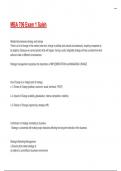
Relationship between strategy and change
There is a lot of change in the market (new tech, change in political and cultural circumstances), requiring companies to
be adaptive. Because we cannot predict what will happen, having a solid, adaptable strategy will help us determine what
actions to take in different circumstances.
Strategic management recognizes the importance of IMPLEMENTATION and MANAGING CHANGE
How Change is an integral part of strategy
o 1. Drivers of Change (political, economic, social, technical - PEST)
o 2. Impact of Change (volatility, globalization, intense competition, redefine)
o 3. Results of Change (opportunity, strategic drift)
Contribution of strategic marketing to business
· Strategy is concerned with making major decisions affecting the long-term direction of the business
Strategic Marketing Management
o Ensuring that market strategy is:
a) relative to current/future business environment
,b) sustainable
c) generating optional benefits to both the org and customers
d) correctly implemented
Concept of marketing
· The concept of marketing is inherently simple - business success through a process of understanding and meeting
customer needs
· Defines how the organization interacts with its marketplace
· Marketing involves many activities: Advertising, Branding, Pricing, Research, Personal Selling
Focus of strategic business decisions
· The purpose of strategy is to simplify managerial decision making when it comes to marketing decisions
· Business definition: what business we are in (Marketing Myopia)
· Core competencies: what do we well / what’s sustainable / competitive advantages / resources needed
· Integrating functional areas within the organization: coordinating marketing with other departments
· Consistency of approach and focus
Types of change
· Cyclical: repetitive, predictable (seasonal, variance with economic fluctuations)
· Evolutionary: fundamental shift, sudden or gradual
, Balanced scorecard for measuring success
· financial / non-financial measures of success
· 1. Financial measures: how firm is perceived by stakeholders
· 2. Customers: how customers view firm
· 3. Internal activities: identify key areas which deliver customer satisfaction
· 4. Innovation & learning
· Becomes the basis for evaluating strategy
Purpose of marketing strategy
· Achieving a superior competitive position within a defined market
o 1. Segmentation: break the market into groups
o 2. Targeting: select market segments
o 3. Positioning: establish a distinctive superior position
· Marketing defines how the organization interacts with its marketplace
Relationship between strategy and change
There is a lot of change in the market (new tech, change in political and cultural circumstances), requiring companies to
be adaptive. Because we cannot predict what will happen, having a solid, adaptable strategy will help us determine what
actions to take in different circumstances.
Strategic management recognizes the importance of IMPLEMENTATION and MANAGING CHANGE
How Change is an integral part of strategy
o 1. Drivers of Change (political, economic, social, technical - PEST)
o 2. Impact of Change (volatility, globalization, intense competition, redefine)
o 3. Results of Change (opportunity, strategic drift)
Contribution of strategic marketing to business
· Strategy is concerned with making major decisions affecting the long-term direction of the business
Strategic Marketing Management
o Ensuring that market strategy is:
a) relative to current/future business environment
,b) sustainable
c) generating optional benefits to both the org and customers
d) correctly implemented
Concept of marketing
· The concept of marketing is inherently simple - business success through a process of understanding and meeting
customer needs
· Defines how the organization interacts with its marketplace
· Marketing involves many activities: Advertising, Branding, Pricing, Research, Personal Selling
Focus of strategic business decisions
· The purpose of strategy is to simplify managerial decision making when it comes to marketing decisions
· Business definition: what business we are in (Marketing Myopia)
· Core competencies: what do we well / what’s sustainable / competitive advantages / resources needed
· Integrating functional areas within the organization: coordinating marketing with other departments
· Consistency of approach and focus
Types of change
· Cyclical: repetitive, predictable (seasonal, variance with economic fluctuations)
· Evolutionary: fundamental shift, sudden or gradual
, Balanced scorecard for measuring success
· financial / non-financial measures of success
· 1. Financial measures: how firm is perceived by stakeholders
· 2. Customers: how customers view firm
· 3. Internal activities: identify key areas which deliver customer satisfaction
· 4. Innovation & learning
· Becomes the basis for evaluating strategy
Purpose of marketing strategy
· Achieving a superior competitive position within a defined market
o 1. Segmentation: break the market into groups
o 2. Targeting: select market segments
o 3. Positioning: establish a distinctive superior position
· Marketing defines how the organization interacts with its marketplace