Chapter 12: Provincial Income Assistance Programs
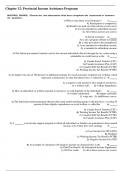
MULTIPLE CHOICE. Choose the one alternative that best completes the statement or answers
the question.
1) What is true about social insurance? 1)
A) Participation is compulsory.
B) Benefits are paid out when adverse events occur.
C) It is not intended to redistribute income.
D) All of these answers are correct.
2) Social assistance 2)
A) is not a program offered in Canada.
B) is only provided to the unemployed.
C) is not intended to redistribute income.
D) is intended to redistribute income.
3) The federal government transfers cash to low-income individuals directly through the tax system using a
refundable tax credit known as the 3)
A) Canada Social Transfer (CST).
B) Canada Assistance Plan (CAP).
C)Canada Child Tax Benefit (CCTB).
D) Working Income Tax Benefit (WTIB).
4) An implicit tax rate of 100 percent on additional earnings for social assistance recipients not working, which
represents a disincentive to enter the labour force, is referred to as 4)
A) a negative work incentive. B) a negative income tax.
C) a welfare wall. D) welfare dependence.
5) How an individual on welfare responds to incentives to work depends on the individual's 5)
A) welfare entitlement. B) budget constraint.
C) wage rate. D) indifference curves.
6) The federal government program that provides open-ended matching grants to the provinces, covering 50
percent of their eligible expenditures on social welfare, is called the 6)
A)
Canada Social Transfer (CST).
B) Working Income Tax Benefit (WTIB).
C) Canada Child Tax Benefit (CCTB).
D) Canada Assistance Plan (CAP).
7) A is an income support program in which all individuals or families are guaranteed a basic annual
income, even if they have zero earnings. 7)
A)
Low Income Cut-Off (LICO)
B) Workfare
C) Working Income Tax Benefit (WTIB)
D) Negative Income Tax (NIT)
8) An example of a program with negative income tax characteristics is the 8)
A) Child Tax Benefit. B) Guaranteed Income Supplement.
C) GST tax credit. D) all of these answers are correct.
MULTIPLE CHOICE. Choose the one alternative that best completes the statement or answers
the question.
1) What is true about social insurance? 1)
A) Participation is compulsory.
B) Benefits are paid out when adverse events occur.
C) It is not intended to redistribute income.
D) All of these answers are correct.
2) Social assistance 2)
A) is not a program offered in Canada.
B) is only provided to the unemployed.
C) is not intended to redistribute income.
D) is intended to redistribute income.
3) The federal government transfers cash to low-income individuals directly through the tax system using a
refundable tax credit known as the 3)
A) Canada Social Transfer (CST).
B) Canada Assistance Plan (CAP).
C)Canada Child Tax Benefit (CCTB).
D) Working Income Tax Benefit (WTIB).
4) An implicit tax rate of 100 percent on additional earnings for social assistance recipients not working, which
represents a disincentive to enter the labour force, is referred to as 4)
A) a negative work incentive. B) a negative income tax.
C) a welfare wall. D) welfare dependence.
5) How an individual on welfare responds to incentives to work depends on the individual's 5)
A) welfare entitlement. B) budget constraint.
C) wage rate. D) indifference curves.
6) The federal government program that provides open-ended matching grants to the provinces, covering 50
percent of their eligible expenditures on social welfare, is called the 6)
A)
Canada Social Transfer (CST).
B) Working Income Tax Benefit (WTIB).
C) Canada Child Tax Benefit (CCTB).
D) Canada Assistance Plan (CAP).
7) A is an income support program in which all individuals or families are guaranteed a basic annual
income, even if they have zero earnings. 7)
A)
Low Income Cut-Off (LICO)
B) Workfare
C) Working Income Tax Benefit (WTIB)
D) Negative Income Tax (NIT)
8) An example of a program with negative income tax characteristics is the 8)
A) Child Tax Benefit. B) Guaranteed Income Supplement.
C) GST tax credit. D) all of these answers are correct.