Chapter 1 What is science?
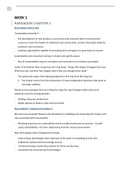
We are not asking for a mere list of the activities that are usually called
‘science’. Rather we are asking what common feature all the things on that
list share, i.e. what it is that makes something a science. Surely science is
just the attempt to understand, explain, and predict the world we live in
but is it the whole story? The distinguishing features of science lie in the
particular methods scientists use to investigate the world. Another
important feature of science is the construction of theories. One of the
main tasks of philosophy of science is to understand how techniques such
as experimentation, observation, and theory construction have enabled
scientists to unravel so many of nature’s secrets.
The origins of modern science lie in a period of rapid scientific
development that occurred in Europe between about 1500 and 1750,
which we now refer to as the scientific revolution. In earlier periods the
dominant worldview was Aristotelianism, named after the ancient Greek
philosopher Aristotle, who put forward detailed theories in physics,
biology, astronomy, and cosmology. The first crucial step in the
development of the modern scientific worldview was the Copernican
revolution. In 1542 the Polish astronomer Nicolas Copernicus (1473–1543)
published a book attacking the geocentric model of the universe, which
placed the stationary earth at the centre of the universe with the planets
and the sun in orbit around it (he came with a heliocentric model with sun
in middle).
Copernicus’ innovation did not merely lead to a better astronomy.
Indirectly, it led to the development of modern physics, through the work
of Johannes Kepler (1571–1630) and Galileo Galilei (1564–1642). Kepler
discovered that the planets do not move in circular orbits around the sun,
as Copernicus thought, but rather in ellipses. This was his ‘first law’ of
planetary motion; his second and third laws specify the speeds at which
the planets orbit the sun. Taken together, Kepler’s laws provided a
successful planetary theory, solving problems that had confounded
astronomers for centuries. Galileo’s most enduring contribution, however,
lay not in astronomy but in mechanics, where he refuted the Aristotelian
theory that heavier bodies fall faster than lighter ones and law of free fall.
Galileo is generally regarded as the first modern physicist. He was the first
to show that the language of mathematics could be used to describe the
behaviour of material objects. Another innovative aspect was Galileo’s
emphasis on testing hypotheses experimentally.
The French philosopher-scientist René Descartes (1596–1650) developed a
radical new ‘mechanical philosophy’, according to which the physical world
consists of inert particles of matter interacting and colliding with one
,another (which promised to explain all observable phenomena in this
way).
The scientific revolution culminated (uitmonden) in the work of Isaac
Newton (1643–1727), whose masterpiece, Mathematical Principles of
Natural Philosophy, was published in 1687. Newton’s three laws of motion
and his famous principle of universal gravitation. According to this
principle, everybody in the universe exerts a gravitational attraction on
every other body; the strength of the attraction between two bodies
depends on the product of their masses, and on the distance between
them squared. The laws of motion then specify how this gravitational force
affects the bodies’ motions. Scientists accepted Newton’s conception as
essentially correct; what remained to be done was to fill in the details
(attempts to extend the model to more situations).
Confidence in the Newtonian picture was shattered in the early years of
the 20th century, thanks to two revolutionary new developments in
physics: relativity theory (Einstein) and quantum mechanics (the theory
doesn’t work for very big of very small objects and speeds).
In biology, the event that stands out is Charles Darwin’s discovery of the
theory of evolution by natural selection, published in The Origin of Species
in 1859. Darwin argued that contemporary species have actually evolved
from ancestral ones, through a process known as natural selection. If this
project of adaptation over a large number of generations it can cause one
species to evolve into a wholly new one.
In 1953 Watson and Crick discovered the structure of DNA, the hereditary
material that makes up the genes in the cells of living creatures. Their
discovery opened up an exciting new area of biological research known as
molecular biology, which studies the molecular basis of biological
phenomena. In 2003, the decade-long attempt to provide a molecular-level
description of the complete set of genes in a human being, known as the
Human Genome Project, was finally completed; the implications for
medicine and biotechnology have only begun to be explored.
More resources have been devoted to scientific research in the last sixty
years than ever before. The social sciences, such as economics,
anthropology, and sociology, also flourished in the 20th century, though
some believe they lag behind the natural sciences in terms of
sophistication and predictive power (so use same methods or not?).
The principal task of philosophy of science is to analyse the methods of
enquiry used in the sciences. Philosophical reflection can uncover
assumptions that are implicit in scientific enquiry. Why assume that future
, repetitions of the experiment will yield the same result? How do we know
this is true? The scientist is unlikely to spend much time puzzling over this.
Karl Popper, an influential 20th-century philosopher of science, thought
that the fundamental feature of a scientific theory is that it should be
falsifiable. Popper thought that some supposedly scientific theories did
not satisfy this condition and thus did not deserve to be called science at
all; they were merely pseudo-science (for example Freud’s psychoanalytic
theory or Marx’s theory of history - industrialized societies capitalism
socialism ultimately to communism). But many philosophers regard
Popper’s criterion as overly simplistic. Popper criticized Freudians and
Marxists for explaining away any data which appeared to conflict with their
theories, rather than accepting that the theories had been refuted. But this
sometimes has led to important scientific discoveries like Adams in
England and Leverrier discovery of another planet. They began with a
theory—Newton’s theory of gravity—which made an incorrect prediction
about Uranus’ orbit. Rather than concluding that Newton’s theory must be
wrong, they stuck by the theory and attempted to explain away the
conflicting observations by postulating a new planet.
Also, it is worth remembering that virtually every scientific theory conflicts
with some observations—finding a theory that fits all the data perfectly is
extremely difficult. After all, science is a heterogeneous activity,
encompassing a wide range of disciplines and theories. It may be that they
share some fixed set of features which define what it is to be a science,
but it may not.
Chapter 2 Statistical inference
Scientists often tell us things about the world that we would not otherwise
have believed. But how did scientists reach these unlikely sounding
conclusions? The answer, of course, is that scientists arrived at these
beliefs by a process of reasoning or inference. Logicians make an
important distinction between deductive and inductive inference, or
deduction and induction for short.
- All Frenchmen like red wine
- Pierre is a Frenchman
Therefore, Pierre likes red wine
The two statements above the line are called the premises of the
inference, while the statement below the line is called the conclusion. This
is a deductive inference because it has the following property: if the
premises are true, then the conclusion must be true too. What makes the
inference deductive is the existence of an appropriate relation between
premises and conclusion, namely that the truth of the premises
guarantees the truth of the conclusion.
We are not asking for a mere list of the activities that are usually called
‘science’. Rather we are asking what common feature all the things on that
list share, i.e. what it is that makes something a science. Surely science is
just the attempt to understand, explain, and predict the world we live in
but is it the whole story? The distinguishing features of science lie in the
particular methods scientists use to investigate the world. Another
important feature of science is the construction of theories. One of the
main tasks of philosophy of science is to understand how techniques such
as experimentation, observation, and theory construction have enabled
scientists to unravel so many of nature’s secrets.
The origins of modern science lie in a period of rapid scientific
development that occurred in Europe between about 1500 and 1750,
which we now refer to as the scientific revolution. In earlier periods the
dominant worldview was Aristotelianism, named after the ancient Greek
philosopher Aristotle, who put forward detailed theories in physics,
biology, astronomy, and cosmology. The first crucial step in the
development of the modern scientific worldview was the Copernican
revolution. In 1542 the Polish astronomer Nicolas Copernicus (1473–1543)
published a book attacking the geocentric model of the universe, which
placed the stationary earth at the centre of the universe with the planets
and the sun in orbit around it (he came with a heliocentric model with sun
in middle).
Copernicus’ innovation did not merely lead to a better astronomy.
Indirectly, it led to the development of modern physics, through the work
of Johannes Kepler (1571–1630) and Galileo Galilei (1564–1642). Kepler
discovered that the planets do not move in circular orbits around the sun,
as Copernicus thought, but rather in ellipses. This was his ‘first law’ of
planetary motion; his second and third laws specify the speeds at which
the planets orbit the sun. Taken together, Kepler’s laws provided a
successful planetary theory, solving problems that had confounded
astronomers for centuries. Galileo’s most enduring contribution, however,
lay not in astronomy but in mechanics, where he refuted the Aristotelian
theory that heavier bodies fall faster than lighter ones and law of free fall.
Galileo is generally regarded as the first modern physicist. He was the first
to show that the language of mathematics could be used to describe the
behaviour of material objects. Another innovative aspect was Galileo’s
emphasis on testing hypotheses experimentally.
The French philosopher-scientist René Descartes (1596–1650) developed a
radical new ‘mechanical philosophy’, according to which the physical world
consists of inert particles of matter interacting and colliding with one
,another (which promised to explain all observable phenomena in this
way).
The scientific revolution culminated (uitmonden) in the work of Isaac
Newton (1643–1727), whose masterpiece, Mathematical Principles of
Natural Philosophy, was published in 1687. Newton’s three laws of motion
and his famous principle of universal gravitation. According to this
principle, everybody in the universe exerts a gravitational attraction on
every other body; the strength of the attraction between two bodies
depends on the product of their masses, and on the distance between
them squared. The laws of motion then specify how this gravitational force
affects the bodies’ motions. Scientists accepted Newton’s conception as
essentially correct; what remained to be done was to fill in the details
(attempts to extend the model to more situations).
Confidence in the Newtonian picture was shattered in the early years of
the 20th century, thanks to two revolutionary new developments in
physics: relativity theory (Einstein) and quantum mechanics (the theory
doesn’t work for very big of very small objects and speeds).
In biology, the event that stands out is Charles Darwin’s discovery of the
theory of evolution by natural selection, published in The Origin of Species
in 1859. Darwin argued that contemporary species have actually evolved
from ancestral ones, through a process known as natural selection. If this
project of adaptation over a large number of generations it can cause one
species to evolve into a wholly new one.
In 1953 Watson and Crick discovered the structure of DNA, the hereditary
material that makes up the genes in the cells of living creatures. Their
discovery opened up an exciting new area of biological research known as
molecular biology, which studies the molecular basis of biological
phenomena. In 2003, the decade-long attempt to provide a molecular-level
description of the complete set of genes in a human being, known as the
Human Genome Project, was finally completed; the implications for
medicine and biotechnology have only begun to be explored.
More resources have been devoted to scientific research in the last sixty
years than ever before. The social sciences, such as economics,
anthropology, and sociology, also flourished in the 20th century, though
some believe they lag behind the natural sciences in terms of
sophistication and predictive power (so use same methods or not?).
The principal task of philosophy of science is to analyse the methods of
enquiry used in the sciences. Philosophical reflection can uncover
assumptions that are implicit in scientific enquiry. Why assume that future
, repetitions of the experiment will yield the same result? How do we know
this is true? The scientist is unlikely to spend much time puzzling over this.
Karl Popper, an influential 20th-century philosopher of science, thought
that the fundamental feature of a scientific theory is that it should be
falsifiable. Popper thought that some supposedly scientific theories did
not satisfy this condition and thus did not deserve to be called science at
all; they were merely pseudo-science (for example Freud’s psychoanalytic
theory or Marx’s theory of history - industrialized societies capitalism
socialism ultimately to communism). But many philosophers regard
Popper’s criterion as overly simplistic. Popper criticized Freudians and
Marxists for explaining away any data which appeared to conflict with their
theories, rather than accepting that the theories had been refuted. But this
sometimes has led to important scientific discoveries like Adams in
England and Leverrier discovery of another planet. They began with a
theory—Newton’s theory of gravity—which made an incorrect prediction
about Uranus’ orbit. Rather than concluding that Newton’s theory must be
wrong, they stuck by the theory and attempted to explain away the
conflicting observations by postulating a new planet.
Also, it is worth remembering that virtually every scientific theory conflicts
with some observations—finding a theory that fits all the data perfectly is
extremely difficult. After all, science is a heterogeneous activity,
encompassing a wide range of disciplines and theories. It may be that they
share some fixed set of features which define what it is to be a science,
but it may not.
Chapter 2 Statistical inference
Scientists often tell us things about the world that we would not otherwise
have believed. But how did scientists reach these unlikely sounding
conclusions? The answer, of course, is that scientists arrived at these
beliefs by a process of reasoning or inference. Logicians make an
important distinction between deductive and inductive inference, or
deduction and induction for short.
- All Frenchmen like red wine
- Pierre is a Frenchman
Therefore, Pierre likes red wine
The two statements above the line are called the premises of the
inference, while the statement below the line is called the conclusion. This
is a deductive inference because it has the following property: if the
premises are true, then the conclusion must be true too. What makes the
inference deductive is the existence of an appropriate relation between
premises and conclusion, namely that the truth of the premises
guarantees the truth of the conclusion.