EVCC MICRO EXAM 3 QUESTIONS & ANSWERS INCLUDED 2025
✔✔
✔✔
✔✔
✔✔
✔✔
✔✔
, ✔✔
✔✔
✔✔
✔✔
, ✔✔
✔✔
✔✔
✔✔
✔✔
✔✔
✔✔
✔✔
✔✔
, ✔✔
✔✔
✔✔
✔✔
, ✔✔
✔✔
✔✔


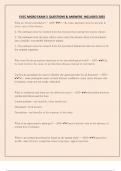
EVCC MICRO EXAM 3 QUESTIONS & ANSWERS INCLUDED 2025 What are Koch's postulates? - ANS-1. The same pathogen must be present in every case of the disease. 2. The pathogen must be isolated from the diseased host and grown in pure culture. 3. The pathogen from the pure culture must cause the disease when it is inoculated into a healthy, susceptible laboratory animal. 4. The pathogen must be isolated from the inoculated animal and must be shown to be the original organism. Why were Kochs postulates important in the microbiological world? - ANS-Can be used to prove the cause of an infectious disease instead of correlation Can Kochs postulates be used to identify the agent/microbe for all diseases? - ANS-No- some pathogens cause several disease conditions, some cause disease only in humans, some are not easily cultivated What is symbiosis and what are the different types? - ANS-relationship between normal microbiota and the host. Commensalism- one benefits, other unaffected Mutualism- both benefit Parasitism- one benefits at the expense of the other What is an opportunistic pathogen? - ANS-causes disease only in the absence of normal host resistance Where can normal microbiota be found on the human body? - ANS-

Discover high-quality study materials crafted for students across various subjects, including Nursing, Mathematics, Psychology, and Biology. Our resources feature comprehensive guides, updated exam solutions, and reliable notes designed to enhance your learning experience. Achieve your academic goals with materials that inspire confidence. #Don't Forget To Leave A Great Review!

Calidad en la que puedes confiar: escrito por estudiantes que aprobaron y evaluado por otros que han usado estos resúmenes.
¡No te preocupes! Puedes elegir directamente otro documento que se ajuste mejor a lo que buscas.
Sin suscripción, sin compromisos. Paga como estés acostumbrado con tarjeta de crédito y descarga tu documento PDF inmediatamente.

“Comprado, descargado y aprobado. Así de fácil puede ser.”