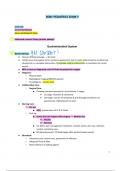
3600: PEDIATRICS EXAM 3
Jones List
Jones Final Review
Jones mentioned in class
Informed consent from parents always!
Gastrointestinal System
Rectal Atresia: get consent ↑
● Closure of rectal passage → No stool
● Initially anus may appear to be normal in appearance, but it is later determined as an abnormal
situation & is a complete obstruction. Immediate surgical intervention is mandatory for rectal
atresia.
● NPO as soon as diagnosed, start IV fluids to prepare for surgery
● Diagnosis:
○ Physical exam
○ Radiological imaging/MRI/Ultrasound
○ IV pyelogram - urinary tract
● Collaborative Care:
○ Surgical Care:
■ Creating new anal opening for rectal atresia: 2 stages
● 1st stage: resection & colostomy
● 2nd stage: closure of colostomy & pull through procedures w/
anastomosis of blind pouch to anus.
● Nursing Care:
○ Pre-op:
■ NPO, maintenance of IV & IV fluids
○ Post-op:
■ Issues that can happen after surgery → Monitor for:
● Fistulas
● Stricture
■ VS, I&O’s, pain management, hydration, monitor stools, skin care, infection
control, colostomy care.
■ NG decompression, PO feeds begin after positive bowel sounds.
● Education:
○ Colostomy care, wound care, prevention of infection
○ Adequate fluids & fiber
○ Stool softeners or bulking agents
1
,Hypertrophic Pyloric Stenosis:
● Thickening of the pyloric sphincter, causing an obstruction of the pyloric canal.
● More common in caucasian population, males, especially firstborns.
● S/S:
○ Pattern of normal feedings & then new onset of non-bilious vomiting. Projectile
vomiting may occur right after being fed. The baby might want to eat again.
■ Non-bilious → obstruction
○ Weight loss
○ Dehydration HSV =
vomit
projectile
a
○ Constipation
○ Olive shaped mass
○ Visible reverse peristalsis in LUQ
● Diagnosis:
○ Palpating pyloric mass (olived-shaped) in RUQ
○ Ultrasound usually confirms pyloric stenosis
○ Confirmation by upper GI series demonstrates “string sign: which is caused by barium
passing through narrowed pylorus
■ Complications After Barium Swallow:
● Constipation → white poop
● Collaborative Care:
○ Surgical Care:
■ Pyloromyotomy- laparoscopic procedure w/
endoscope
○ Nursing Care:
■ Pre-op history, assessment, NPO, NG tube, assess for
dehydration. If present, surgery is later to correct
electrolyte imbalance.
■ Post-op: maintain IV fluids, monitor VS, I&O’s, pain management
■ Reintroduce PO feeds 6 hours after surgery:
● Incremental Increase → to see if they can tolerate it
● (Do not wait for bowel sounds)
● 1st Pedialyte 15 mL Q2h for 2 feeds, if tolerated,
○ Then ½ strength formula (or breast milk) 15 mL X 2 feeds
○ Then 30mL X 2 feeds
○ Then 45 mL x 2 feeds
○ Finally 60 mL for 2 feeds
● If a baby vomits, they stay at that level until they can tolerate 2 feeds.
● Education:
○ Care if incision & observation for signs of infection– change diapers frequently.
○ Observe infants response to feedings, as some vomiting may still occur within first 48
hours post-op
○ Vomiting beyond 48 hours must be reported to the child's surgeon!
2
, mÉnIinmales nativeamericans mom
mÉvéco'm 354s
Cleft Lip & Cleft Palate:
● Birth defect characterize by incomplete formation of lip or roof of mouth (asians get this mostly)
● S/S:
○ Unilateral or bilateral cleft lip
○ Can occur w/ or w/o a cleft of thard and/or soft palate
○ Both or either of palates can have cleft w/o lip affected
○ Uvula can also contain cleft
● Nursing Care:
○ Maintaining nutrition
○ Breastfeeding possible but may be interrupted for period
of time based on need for surgical repair
At ○ Bottle feeding is initiated w/ a special nipple that is longer than a regular nipple to help
prevent aspiration. Has a reservoir to regulate the flow of formula. (Haberman feeder)
○ Feed in an upright position to decrease incidence of regurgitation.
● Surgical Care:
Surgery ○ Surgical repair of CL is typically done at 3 months of age
○ Cleft palates are usually repaired before 18 months
ate ■ To be able to talk correctly
○ Closure of lip defects precedes correction of palate
■ Performed when pts are 2-3 months of age
Eing ■ Z-plasty to minimize retraction of scar
○ Protect suture line w/ logan bow or other methods
○ No-No’s
■ Elbow restraints → worn 24/7
● Education:
DOHtside ○ Cleft palate – position in upright position. Use bottle w/ one-way flow valve.
○ Cleft lip – use nipple w/ wide base, squeeze cheeks together during feeding
leone ○ Apply petroleum jelly to operative site as directed
○ Feeding w/ syringe or dropper in upright position
■ 60 cc syringe called Terumo
○ Avoid use of pacifiers
○ NOTHING IN MOUTH after surgery → no pacifiers
Intussusception:
● Part of intestine fold into section next to it, causing an obstruction
● Normally occurs before the age of 2
● S/S:
○ Acute abdominal pain caused by spasm of telescoping bowel
○ Pain mimics “colicky” infants
○ Infants may pull their legs up to chest
○ “Currant-jelly” stools
abdominal pain
seizures diazepm
:
3
AG : consult hemodialysis
calicum : 8
, ■ Mucous mixed w/ blood, stool
■ Possibly diarrheal in nature w/ blood
○ Fever, vomiting, weight loss (b/c can not go poop)
○ Dehydration , lethargy
○ Classic Symptomatic Triad:
■ Paroxysmal, episodic abdominal pain w/ vomiting every 5 to 30 minutes
■ Screaming & drawing up legs w/ periods of calm, sleeping or lethargy between
episodes
■ Stool, possibly diarrheal in nature, w/ blood
● Diagnosis:
○ Based on history of characteristic symptoms & physical findings during examination
○ Presence of sausage-shaped mass in URG (Dance’s sign)
○ 1st Air Enema
○ 2nd Normal Saline Enema
○ 3rd surgery (reduction or bowel resection)
○ Abdominal ultrasound confirms diagnosis in most cases
● Collaborative Care:
○ Medical-barium or air enema – reducing rates 65-90%
○ Surgical reduction if air or barium does not work
○ Nursing Care:
■ Pre-op: NG tube, NPO, IV
■ Post-op: hydration, pain management, infection precautions
■ Watch for signs of perforation, shock, monitor VS
■ Monitor for passage of normal, brown stool → intussusception has resolved
■ If patient stools before surgery, call MD → b/c it got fixed w/o surgery
● Education:
○ Care of incision; Observation for signs of infection
○ Teach feeding, dehydration & pain management
Failure to Thrive (FTT):
● Description of a condition that usually occurs in infancy & is characterized by failure of infant to
achieve age-appropriate wight gain
● Child cannot take in enough nutrition to adequately meet standard growth & weight expectation
● We will give them higher calorie formulas, we want them to feed & that parents are educated
correctly on nutrition.
● Identified criteria that is used to determine FTT:
pertensive
○ Weight for length less than 10%
○ Weight for age & sex less than 4% → Reportable 4%
○ Length for chronological age & sex less than 5%
○ BMI for chronological age less than 5%
● Labs will show decrease in prealbumin → Used to see if enough nutrition is in diet
4
Jones List
Jones Final Review
Jones mentioned in class
Informed consent from parents always!
Gastrointestinal System
Rectal Atresia: get consent ↑
● Closure of rectal passage → No stool
● Initially anus may appear to be normal in appearance, but it is later determined as an abnormal
situation & is a complete obstruction. Immediate surgical intervention is mandatory for rectal
atresia.
● NPO as soon as diagnosed, start IV fluids to prepare for surgery
● Diagnosis:
○ Physical exam
○ Radiological imaging/MRI/Ultrasound
○ IV pyelogram - urinary tract
● Collaborative Care:
○ Surgical Care:
■ Creating new anal opening for rectal atresia: 2 stages
● 1st stage: resection & colostomy
● 2nd stage: closure of colostomy & pull through procedures w/
anastomosis of blind pouch to anus.
● Nursing Care:
○ Pre-op:
■ NPO, maintenance of IV & IV fluids
○ Post-op:
■ Issues that can happen after surgery → Monitor for:
● Fistulas
● Stricture
■ VS, I&O’s, pain management, hydration, monitor stools, skin care, infection
control, colostomy care.
■ NG decompression, PO feeds begin after positive bowel sounds.
● Education:
○ Colostomy care, wound care, prevention of infection
○ Adequate fluids & fiber
○ Stool softeners or bulking agents
1
,Hypertrophic Pyloric Stenosis:
● Thickening of the pyloric sphincter, causing an obstruction of the pyloric canal.
● More common in caucasian population, males, especially firstborns.
● S/S:
○ Pattern of normal feedings & then new onset of non-bilious vomiting. Projectile
vomiting may occur right after being fed. The baby might want to eat again.
■ Non-bilious → obstruction
○ Weight loss
○ Dehydration HSV =
vomit
projectile
a
○ Constipation
○ Olive shaped mass
○ Visible reverse peristalsis in LUQ
● Diagnosis:
○ Palpating pyloric mass (olived-shaped) in RUQ
○ Ultrasound usually confirms pyloric stenosis
○ Confirmation by upper GI series demonstrates “string sign: which is caused by barium
passing through narrowed pylorus
■ Complications After Barium Swallow:
● Constipation → white poop
● Collaborative Care:
○ Surgical Care:
■ Pyloromyotomy- laparoscopic procedure w/
endoscope
○ Nursing Care:
■ Pre-op history, assessment, NPO, NG tube, assess for
dehydration. If present, surgery is later to correct
electrolyte imbalance.
■ Post-op: maintain IV fluids, monitor VS, I&O’s, pain management
■ Reintroduce PO feeds 6 hours after surgery:
● Incremental Increase → to see if they can tolerate it
● (Do not wait for bowel sounds)
● 1st Pedialyte 15 mL Q2h for 2 feeds, if tolerated,
○ Then ½ strength formula (or breast milk) 15 mL X 2 feeds
○ Then 30mL X 2 feeds
○ Then 45 mL x 2 feeds
○ Finally 60 mL for 2 feeds
● If a baby vomits, they stay at that level until they can tolerate 2 feeds.
● Education:
○ Care if incision & observation for signs of infection– change diapers frequently.
○ Observe infants response to feedings, as some vomiting may still occur within first 48
hours post-op
○ Vomiting beyond 48 hours must be reported to the child's surgeon!
2
, mÉnIinmales nativeamericans mom
mÉvéco'm 354s
Cleft Lip & Cleft Palate:
● Birth defect characterize by incomplete formation of lip or roof of mouth (asians get this mostly)
● S/S:
○ Unilateral or bilateral cleft lip
○ Can occur w/ or w/o a cleft of thard and/or soft palate
○ Both or either of palates can have cleft w/o lip affected
○ Uvula can also contain cleft
● Nursing Care:
○ Maintaining nutrition
○ Breastfeeding possible but may be interrupted for period
of time based on need for surgical repair
At ○ Bottle feeding is initiated w/ a special nipple that is longer than a regular nipple to help
prevent aspiration. Has a reservoir to regulate the flow of formula. (Haberman feeder)
○ Feed in an upright position to decrease incidence of regurgitation.
● Surgical Care:
Surgery ○ Surgical repair of CL is typically done at 3 months of age
○ Cleft palates are usually repaired before 18 months
ate ■ To be able to talk correctly
○ Closure of lip defects precedes correction of palate
■ Performed when pts are 2-3 months of age
Eing ■ Z-plasty to minimize retraction of scar
○ Protect suture line w/ logan bow or other methods
○ No-No’s
■ Elbow restraints → worn 24/7
● Education:
DOHtside ○ Cleft palate – position in upright position. Use bottle w/ one-way flow valve.
○ Cleft lip – use nipple w/ wide base, squeeze cheeks together during feeding
leone ○ Apply petroleum jelly to operative site as directed
○ Feeding w/ syringe or dropper in upright position
■ 60 cc syringe called Terumo
○ Avoid use of pacifiers
○ NOTHING IN MOUTH after surgery → no pacifiers
Intussusception:
● Part of intestine fold into section next to it, causing an obstruction
● Normally occurs before the age of 2
● S/S:
○ Acute abdominal pain caused by spasm of telescoping bowel
○ Pain mimics “colicky” infants
○ Infants may pull their legs up to chest
○ “Currant-jelly” stools
abdominal pain
seizures diazepm
:
3
AG : consult hemodialysis
calicum : 8
, ■ Mucous mixed w/ blood, stool
■ Possibly diarrheal in nature w/ blood
○ Fever, vomiting, weight loss (b/c can not go poop)
○ Dehydration , lethargy
○ Classic Symptomatic Triad:
■ Paroxysmal, episodic abdominal pain w/ vomiting every 5 to 30 minutes
■ Screaming & drawing up legs w/ periods of calm, sleeping or lethargy between
episodes
■ Stool, possibly diarrheal in nature, w/ blood
● Diagnosis:
○ Based on history of characteristic symptoms & physical findings during examination
○ Presence of sausage-shaped mass in URG (Dance’s sign)
○ 1st Air Enema
○ 2nd Normal Saline Enema
○ 3rd surgery (reduction or bowel resection)
○ Abdominal ultrasound confirms diagnosis in most cases
● Collaborative Care:
○ Medical-barium or air enema – reducing rates 65-90%
○ Surgical reduction if air or barium does not work
○ Nursing Care:
■ Pre-op: NG tube, NPO, IV
■ Post-op: hydration, pain management, infection precautions
■ Watch for signs of perforation, shock, monitor VS
■ Monitor for passage of normal, brown stool → intussusception has resolved
■ If patient stools before surgery, call MD → b/c it got fixed w/o surgery
● Education:
○ Care of incision; Observation for signs of infection
○ Teach feeding, dehydration & pain management
Failure to Thrive (FTT):
● Description of a condition that usually occurs in infancy & is characterized by failure of infant to
achieve age-appropriate wight gain
● Child cannot take in enough nutrition to adequately meet standard growth & weight expectation
● We will give them higher calorie formulas, we want them to feed & that parents are educated
correctly on nutrition.
● Identified criteria that is used to determine FTT:
pertensive
○ Weight for length less than 10%
○ Weight for age & sex less than 4% → Reportable 4%
○ Length for chronological age & sex less than 5%
○ BMI for chronological age less than 5%
● Labs will show decrease in prealbumin → Used to see if enough nutrition is in diet
4