BIOL 105 Final Exam
TERMS(142 questions and
answers)
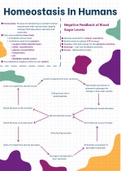
homeostasis (Ch 1)
maintenance of a stable internal environment inside an organism (Blood
pH 7.4)
hypothesis (Ch 1)
1. Ask a question, 2. Do background
research, 3. Construct hypothesis, 4. Test hypothesis by doing
an experiment, 5. Analyze data and draw conclusions, 6. Report results
dependent variable (Ch 1)
independent variable (Ch 1)
control variable (Ch 1)
a substance that has no therapeutic effect, used as a control in testing
new drugs
electrons (Ch 2)
orbit the nucleus of an atom
protons (Ch 2)
in the nucleus with neutrons
atomic number (Ch 2)
number of protons
atomic mass (Ch 2)
number of protons and neutrons in nucleus of an atom
covalent bond (Ch 2)
result when two atoms share electrons
,ionic bond (Ch 2)
form between atoms that have gained or lost electrons (atoms binding
with one another to form molecules and compounds)
polar molecules (Ch 2)
hydrophilic phospholipid molecule
a glycerol head that is polar and hydrophilic - "water loving" that
is exposed to the watery environments inside and outside the cell
non-polar molecules (Ch 2)
hydrophobic phospholipid molecule
a fatty acid tail that is nonpolar and hydrophobic - "water fearing"
that points inward and helps hold the membrane together
acid (Ch 2)
dissociate in water, releasing hydrogen ions
base (Ch 2)
take up hydrogen ions or release hydroxide ions
buffer (Ch 2)
keep pH steady and within normal limits in living organisms
stabilize pH of a solution by taking up excess hyrodgen (H+) or hydroxide
(OH-)
saturated fatty acids (Ch 2)
fatty acids have single bonds, usually solid at room temp
"saturated" with hydrogen atoms (no double bounds in their chemical
strucutre)
unsaturated fatty acids (Ch 2)
have double as well as single bonds in their fatty acid chain which causes
molecule to bend, usually liquid at room temp
their chemical structure contains one or more double bonds
enzymes (Ch 2)
bind their substrates in the active site
, accelerate chemical reactions by lowering the energy activation
(Ea) needed to start the reaction
(biological catalysts that speed up chemical reactions)
ATP (Ch 2)
a high-energy molecule because its bonds are unstable
(all living things use this for energy)
(undergoes hydrolysis to ADP + P - this releases energy used by cells to do
metabolic work)
prokaryotic cells (Ch 3)
Bacteria and Archaea
lack a nucleus, lack membrane bound organelles (these are the earliest
life forms on earth formed)
(one of the major type of cells that makes up all life forms on earth)
eukaryotic cells (Ch 3)
Plants and Animals (and Fungi)
nucleus present, contain membrane-bound organelles (appeared on
earth around 1.8 billion years ago)
(the other major types of cells that make up all life forms on earth)
diffusion (Ch 3)
movement of molecules from a higher to
lower concentration (passive process = no cellular energy required)
osmosis (Ch 3)
diffusion of water molecules across a plasma membrane (selectively
permeable membrane) (passive process = no cellular energy required)
active transport (Ch 3)
energy-dependent, ATP dependent movement against its concentration
gradient (low to high)
nucleus (Ch 3)
houses DNA/chromosomes
(surrounded by a nuclear envelope that contains nuclear pores for
communication and the movement of materials)
TERMS(142 questions and
answers)
homeostasis (Ch 1)
maintenance of a stable internal environment inside an organism (Blood
pH 7.4)
hypothesis (Ch 1)
1. Ask a question, 2. Do background
research, 3. Construct hypothesis, 4. Test hypothesis by doing
an experiment, 5. Analyze data and draw conclusions, 6. Report results
dependent variable (Ch 1)
independent variable (Ch 1)
control variable (Ch 1)
a substance that has no therapeutic effect, used as a control in testing
new drugs
electrons (Ch 2)
orbit the nucleus of an atom
protons (Ch 2)
in the nucleus with neutrons
atomic number (Ch 2)
number of protons
atomic mass (Ch 2)
number of protons and neutrons in nucleus of an atom
covalent bond (Ch 2)
result when two atoms share electrons
,ionic bond (Ch 2)
form between atoms that have gained or lost electrons (atoms binding
with one another to form molecules and compounds)
polar molecules (Ch 2)
hydrophilic phospholipid molecule
a glycerol head that is polar and hydrophilic - "water loving" that
is exposed to the watery environments inside and outside the cell
non-polar molecules (Ch 2)
hydrophobic phospholipid molecule
a fatty acid tail that is nonpolar and hydrophobic - "water fearing"
that points inward and helps hold the membrane together
acid (Ch 2)
dissociate in water, releasing hydrogen ions
base (Ch 2)
take up hydrogen ions or release hydroxide ions
buffer (Ch 2)
keep pH steady and within normal limits in living organisms
stabilize pH of a solution by taking up excess hyrodgen (H+) or hydroxide
(OH-)
saturated fatty acids (Ch 2)
fatty acids have single bonds, usually solid at room temp
"saturated" with hydrogen atoms (no double bounds in their chemical
strucutre)
unsaturated fatty acids (Ch 2)
have double as well as single bonds in their fatty acid chain which causes
molecule to bend, usually liquid at room temp
their chemical structure contains one or more double bonds
enzymes (Ch 2)
bind their substrates in the active site
, accelerate chemical reactions by lowering the energy activation
(Ea) needed to start the reaction
(biological catalysts that speed up chemical reactions)
ATP (Ch 2)
a high-energy molecule because its bonds are unstable
(all living things use this for energy)
(undergoes hydrolysis to ADP + P - this releases energy used by cells to do
metabolic work)
prokaryotic cells (Ch 3)
Bacteria and Archaea
lack a nucleus, lack membrane bound organelles (these are the earliest
life forms on earth formed)
(one of the major type of cells that makes up all life forms on earth)
eukaryotic cells (Ch 3)
Plants and Animals (and Fungi)
nucleus present, contain membrane-bound organelles (appeared on
earth around 1.8 billion years ago)
(the other major types of cells that make up all life forms on earth)
diffusion (Ch 3)
movement of molecules from a higher to
lower concentration (passive process = no cellular energy required)
osmosis (Ch 3)
diffusion of water molecules across a plasma membrane (selectively
permeable membrane) (passive process = no cellular energy required)
active transport (Ch 3)
energy-dependent, ATP dependent movement against its concentration
gradient (low to high)
nucleus (Ch 3)
houses DNA/chromosomes
(surrounded by a nuclear envelope that contains nuclear pores for
communication and the movement of materials)