SFFG 125 First Exam fully
solved & updated (graded A+)
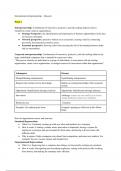
- explaining the process of how a nation transitions from a
'traditional society' to a 'modernized' one.
- Focuses on internal factors than external ones.
- Based on Rostow's model - answer Modernization
- "the increase in the capacity for social transformation"
- answer the problems of economic development, political stability, and
socio-cultural changes - answer Modernization
Whitman Rostow in 1960. - answer Rostow's model
5 economic stages of growth according to Rostow: - answer Traditional
Society, Pre-conditions for Take-Off, Take-Off, Drive to Maturity, and Age of
High Mass Consumption, respectively.
Central Idea of Modernization - answer the dynamic process of a country
which has reflected a need for innovation (Rongqu, A New Thesis on
Modernization, 2009).
Traditional Society - answer Limited technology and static society
Pre-conditions for Take-Off - answer Commercialization of Agriculture
Take-Off - answer Development of industrial sector and focus on
manufacturing
,Drive to Maturity - answer Industrialization and international recognition
begin.
Age of High Mass Consumption - answer Capitalist system is dominant.
- Around 1950s-1960s
- Which became dominant in the post- World War II - answer Modernization
Era
How Modernization help forestry? - answer Helps forestry to deal with the
changing environment and innovations needed to improve and have more
efficient
forest resources.
- The research and development programs and modern technologies of
FPRDI serve as examples on the modernization in forestry.
Strength of Modernization - answer - See clearly the socio-economic
development
- provides structural framework that let us understand social and global
inequality
- provides socio-economic growth blueprint for developing countries
- attracts foreign and non-foreign investors
- values global roles and cooperation
Weaknesses of Modernization - answer Assumes Linear Progress
Ignores External Factors Ignores Cultural Differences
Fails to Address Inequality
Central Idea of Dependency Theory - answer Assumes there's developed
countries taking advantage in terms of cheap labor and resources
exploitation of developing and underdeveloped countries.
, - There's core and peripheral countries (Emeh, 2013)
Explains how advanced nations continue to flourish at the expense of
underdeveloped nation. - answer Dependency
characterized by low real per capita income, widespread poverty, a lower
level of literacy, a shorter life expectancy, and inefficient resource use. -
answer Underdevelopment
Economic Commission for Latin America and the Caribbean (ECLAC)
established the foundations for dependency theory. - answer 1948 but 1949
(official start of acknowledging this theory)
Proponents of Dependency Theory - answer Argentine economist Raul
Prebisch and British economist Hans Singer
The impacted __________ in the global economy is the main contributor to
underdevelopment. - answer nations' periphery
Developing nations spent more money on the ____________ - answer finished
products
Strengths of Dependency Theory - answer - Provides simple explanation of
how developed countries remains rich and how countries in the periphery
remains poor.
- The peripheral areas have the potential to
become semi-peripheral.
- Creation of business
- Chance for a nation to be self sufficient
solved & updated (graded A+)
- explaining the process of how a nation transitions from a
'traditional society' to a 'modernized' one.
- Focuses on internal factors than external ones.
- Based on Rostow's model - answer Modernization
- "the increase in the capacity for social transformation"
- answer the problems of economic development, political stability, and
socio-cultural changes - answer Modernization
Whitman Rostow in 1960. - answer Rostow's model
5 economic stages of growth according to Rostow: - answer Traditional
Society, Pre-conditions for Take-Off, Take-Off, Drive to Maturity, and Age of
High Mass Consumption, respectively.
Central Idea of Modernization - answer the dynamic process of a country
which has reflected a need for innovation (Rongqu, A New Thesis on
Modernization, 2009).
Traditional Society - answer Limited technology and static society
Pre-conditions for Take-Off - answer Commercialization of Agriculture
Take-Off - answer Development of industrial sector and focus on
manufacturing
,Drive to Maturity - answer Industrialization and international recognition
begin.
Age of High Mass Consumption - answer Capitalist system is dominant.
- Around 1950s-1960s
- Which became dominant in the post- World War II - answer Modernization
Era
How Modernization help forestry? - answer Helps forestry to deal with the
changing environment and innovations needed to improve and have more
efficient
forest resources.
- The research and development programs and modern technologies of
FPRDI serve as examples on the modernization in forestry.
Strength of Modernization - answer - See clearly the socio-economic
development
- provides structural framework that let us understand social and global
inequality
- provides socio-economic growth blueprint for developing countries
- attracts foreign and non-foreign investors
- values global roles and cooperation
Weaknesses of Modernization - answer Assumes Linear Progress
Ignores External Factors Ignores Cultural Differences
Fails to Address Inequality
Central Idea of Dependency Theory - answer Assumes there's developed
countries taking advantage in terms of cheap labor and resources
exploitation of developing and underdeveloped countries.
, - There's core and peripheral countries (Emeh, 2013)
Explains how advanced nations continue to flourish at the expense of
underdeveloped nation. - answer Dependency
characterized by low real per capita income, widespread poverty, a lower
level of literacy, a shorter life expectancy, and inefficient resource use. -
answer Underdevelopment
Economic Commission for Latin America and the Caribbean (ECLAC)
established the foundations for dependency theory. - answer 1948 but 1949
(official start of acknowledging this theory)
Proponents of Dependency Theory - answer Argentine economist Raul
Prebisch and British economist Hans Singer
The impacted __________ in the global economy is the main contributor to
underdevelopment. - answer nations' periphery
Developing nations spent more money on the ____________ - answer finished
products
Strengths of Dependency Theory - answer - Provides simple explanation of
how developed countries remains rich and how countries in the periphery
remains poor.
- The peripheral areas have the potential to
become semi-peripheral.
- Creation of business
- Chance for a nation to be self sufficient