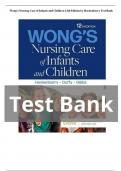
TEST BANK
h1
Essential Health Assessment
h1 h1
Janice M Thompson
h1 h1
1st Edition
h1
,Table of Contents
h1 h1
Chapter 01 Understanding Health Assessment
h1 h1 h1 h1 1
Chapter 02 Interviewing the Patient for the Health History
h1 h1 h1 h1 h1 h1 h1 h1 11
Chapter 03 Taking the Health History
h1 h1 h1 h1 h1 40
Chapter 04 Assessing Nutrition and Anthropometric Measurements
h1 h1 h1 h1 h1 h1 61
Chapter 05 Assessment Techniques
h1 h1 h1 88
Chapter 06 General Survey and Assessing Vital Signs
h1 h1 h1 h1 h1 h1 h1 99
Chapter 07 Assessing Pain
h1 h1 h1 128
Chapter 08 Assessing the Skin, Hair, and Nails
h1 h1 h1 h1 h1 h1 h1 149
Chapter 09 Assessing the Head, Face, Mouth, and Neck
h1 h1 h1 h1 h1 h1 h1 h1 188
Chapter 10 Assessing the Ears
h1 h1 h1 h1 229
Chapter 11 Assessing the Eyes
h1 h1 h1 h1 250
Chapter 12 Assessing the Respiratory System
h1 h1 h1 h1 h1 281
Chapter 13 Assessing the Cardiovascular System
h1 h1 h1 h1 h1 308
Chapter 14 Assessing the Abdomen
h1 h1 h1 h1 335
Chapter 15 Assessing the Peripheral Vascular System and Regional Lymphatic System
h1 h1 h1 h1 h1 h1 h1 h1 h1 h1 363
Chapter 16 Assessing the Musculoskeletal System
h1 h1 h1 h1 h1 391
Chapter 17 Assessing the Neurological System
h1 h1 h1 h1 h1 417
Chapter 18 Assessing the Female Breasts, Axillae, and Reproductive System
h1 h1 h1 h1 h1 h1 h1 h1 h1 451
Chapter 19 Assessing the Male Breasts and Reproductive System
h1 h1 h1 h1 h1 h1 h1 h1 477
Chapter 20 Assessing the Anus and Rectum
h1 h1 h1 h1 h1 h1 501
Chapter 21 Assessing the Newborn
h1 h1 h1 h1 517
Chapter 22 Assessing the Child and Adolescent
h1 h1 h1 h1 h1 h1 555
Chapter 23 Assessing the Pregnant Woman
h1 h1 h1 h1 h1 583
Chapter 24 Assessing the Older Adult
h1 h1 h1 h1 h1 612
, Testh1Bankh1-
Essential Health Assessment, 1st edition (Thompson, 2025)
Chapter 1: Understanding Health Assessment
h1 h1 h1 h1
1. The World Health Organization (WHO) established a global strategy called “Health for All.
h1 h1 h1 h1 h1 h1 h1 h1 h1 h1 h1 h1
” The goal for this strategy is:
h1 h1 h1 h1 h1 h1
1. All individuals to get the same health care throughout their life spans.
h1 h1 h1 h1 h1 h1 h1 h1 h1 h1 h1
2. The government to supply money to care for all the people in the world.
h1 h1 h1 h1 h1 h1 h1 h1 h1 h1 h1 h1 h1
3. Resources for health care to be evenly distributed and accessible.
h1 h1 h1 h1 h1 h1 h1 h1 h1
4. Health-care providers can never deny patients health care. h1 h1 h1 h1 h1 h1 h1
2. Health assessment is a foundational and priority nursing skill. This essential skill requir
h1 h1 h1 h1 h1 h1 h1 h1 h1 h1 h1 h1
es registered nurses (RNs) to:
h1 h1 h1 h1
1. Diagnose and treat patients. h1 h1 h1
2. Identify normal and abnormal findings. h1 h1 h1 h1
3. Refer patients with abnormal findings.
h1 h1 h1 h1
4. Counsel patients with psychosocial needs. h1 h1 h1 h1
3. You are assessing a patient with five gunshot wounds on a trauma unit. There is a police pr
h1 h1 h1 h1 h1 h1 h1 h1 h1 h1 h1 h1 h1 h1 h1 h1 h1
esence outside his door because the patient is a known drug dealer in the community. You know
h1 h1 h1 h1 h1 h1 h1 h1 h1 h1 h1 h1 h1 h1 h1 h1 h
that nurses must treat all patients as persons. This is called:
1 h1 h1 h1 h1 h1 h1 h1 h1 h1 h1
1. Caring.
2. Holistic process. h1
3. Person-centered care (PCC). h1 h1
4. Standards of care. h1 h1
4. The science- h1
based framework updated every 10 years by the U.S. Department of Health and Human Serv
h1 h1 h1 h1 h1 h1 h1 h1 h1 h1 h1 h1 h1 h1
ices that has set national goals and objectives for health promotion and disease prevention
h1 h1 h1 h1 h1 h1 h1 h1 h1 h1 h1 h1 h1 h1
is:
1. Healthy People. h1
2. Healthy People 2020. h1 h1
3. U.S. Preventive Task Force. h1 h1 h1
4. World Health Organization. h1 h1
5. A 38-year-old male has a family history of colon cancer. His father died of colon cancer at age
h1 h1 h1 h1 h1 h1 h1 h1 h1 h1 h1 h1 h1 h1 h1 h1 h1
48. The doctor recommended that this patient have a colonoscopy this year. This is an example of:
h1 h1 h1 h1 h1 h1 h1 h1 h1 h1 h1 h1 h1 h1 h1 h1
1. Primary health prevention. h1 h1
1 | P a g
h1 h1 h1 h1 h
e
, Testh1Bankh1-
Essential Health Assessment, 1st edition (Thompson, 2025)
2. Secondary health prevention. h1 h1
3. Tertiary health prevention. h1 h1
6. A patient in the hospital puts on his call light and tells the person answering that he “thinks h
h1 h1 h1 h1 h1 h1 h1 h1 h1 h1 h1 h1 h1 h1 h1 h1 h1 h1
e is running a fever and has stomach discomfort.” You are the registered nurse in charge. What
h1 h1 h1 h1 h1 h1 h1 h1 h1 h1 h1 h1 h1 h1 h1 h1 h
should you do?
1 h1 h1
1. Ask the medical assistant to go to the patient’s room and assess his complaints.
h1 h1 h1 h1 h1 h1 h1 h1 h1 h1 h1 h1 h1
2. Go check to see if the patient has an order for Tylenol for a fever.
h1 h1 h1 h1 h1 h1 h1 h1 h1 h1 h1 h1 h1 h1
3. Page the resident on call immediately to assess the patient.
h1 h1 h1 h1 h1 h1 h1 h1 h1
4. Go to the patient’s room and assess for fever and the epigastric discomfort.
h1 h1 h1 h1 h1 h1 h1 h1 h1 h1 h1 h1
7. You are leading an interdisciplinary team conference to discuss how to provide better care fo
h1 h1 h1 h1 h1 h1 h1 h1 h1 h1 h1 h1 h1 h1
r a challenging patient who has behavioral problems. There are several areas that need to be pr
h1 h1 h1 h1 h1 h1 h1 h1 h1 h1 h1 h1 h1 h1 h1 h1
oblem solved and new ideas formulated to create an improved plan of care. What cognitive skil
h1 h1 h1 h1 h1 h1 h1 h1 h1 h1 h1 h1 h1 h1 h1
ls are you using?
h1 h1 h1
1. Critical thinking h1
2. Clinical decision making h1 h1
3. Intuitive thinking h1
4. Clinical reasoning h1
8. Best practice assessment techniques and instruments have been validated by:
h1 h1 h1 h1 h1 h1 h1 h1 h1
1. American Nurses Association. h1 h1
2. Code of Ethics for Nurses With Interpretive Statements.
h1 h1 h1 h1 h1 h1 h1
3. Research and evidence-based practice. h1 h1 h1
4. Patient Protection and Affordable Care Act.
h1 h1 h1 h1 h1
9. Health and illness are determined by many factors. What are the determinants of health identifi
h1 h1 h1 h1 h1 h1 h1 h1 h1 h1 h1 h1 h1 h1
ed by the Centers for Disease Control and Prevention (CDC)? Select all that apply.
h1 h1 h1 h1 h1 h1 h1 h1 h1 h1 h1 h1 h1
1. Genetics and biology h1 h1
2. Gender and occupation h1 h1
3. Individual behavior h1
4. Social environment h1
5. Physical environment h1
6. Health services h1
2 | P a g
h1 h1 h1 h1 h
e
h1
Essential Health Assessment
h1 h1
Janice M Thompson
h1 h1
1st Edition
h1
,Table of Contents
h1 h1
Chapter 01 Understanding Health Assessment
h1 h1 h1 h1 1
Chapter 02 Interviewing the Patient for the Health History
h1 h1 h1 h1 h1 h1 h1 h1 11
Chapter 03 Taking the Health History
h1 h1 h1 h1 h1 40
Chapter 04 Assessing Nutrition and Anthropometric Measurements
h1 h1 h1 h1 h1 h1 61
Chapter 05 Assessment Techniques
h1 h1 h1 88
Chapter 06 General Survey and Assessing Vital Signs
h1 h1 h1 h1 h1 h1 h1 99
Chapter 07 Assessing Pain
h1 h1 h1 128
Chapter 08 Assessing the Skin, Hair, and Nails
h1 h1 h1 h1 h1 h1 h1 149
Chapter 09 Assessing the Head, Face, Mouth, and Neck
h1 h1 h1 h1 h1 h1 h1 h1 188
Chapter 10 Assessing the Ears
h1 h1 h1 h1 229
Chapter 11 Assessing the Eyes
h1 h1 h1 h1 250
Chapter 12 Assessing the Respiratory System
h1 h1 h1 h1 h1 281
Chapter 13 Assessing the Cardiovascular System
h1 h1 h1 h1 h1 308
Chapter 14 Assessing the Abdomen
h1 h1 h1 h1 335
Chapter 15 Assessing the Peripheral Vascular System and Regional Lymphatic System
h1 h1 h1 h1 h1 h1 h1 h1 h1 h1 363
Chapter 16 Assessing the Musculoskeletal System
h1 h1 h1 h1 h1 391
Chapter 17 Assessing the Neurological System
h1 h1 h1 h1 h1 417
Chapter 18 Assessing the Female Breasts, Axillae, and Reproductive System
h1 h1 h1 h1 h1 h1 h1 h1 h1 451
Chapter 19 Assessing the Male Breasts and Reproductive System
h1 h1 h1 h1 h1 h1 h1 h1 477
Chapter 20 Assessing the Anus and Rectum
h1 h1 h1 h1 h1 h1 501
Chapter 21 Assessing the Newborn
h1 h1 h1 h1 517
Chapter 22 Assessing the Child and Adolescent
h1 h1 h1 h1 h1 h1 555
Chapter 23 Assessing the Pregnant Woman
h1 h1 h1 h1 h1 583
Chapter 24 Assessing the Older Adult
h1 h1 h1 h1 h1 612
, Testh1Bankh1-
Essential Health Assessment, 1st edition (Thompson, 2025)
Chapter 1: Understanding Health Assessment
h1 h1 h1 h1
1. The World Health Organization (WHO) established a global strategy called “Health for All.
h1 h1 h1 h1 h1 h1 h1 h1 h1 h1 h1 h1
” The goal for this strategy is:
h1 h1 h1 h1 h1 h1
1. All individuals to get the same health care throughout their life spans.
h1 h1 h1 h1 h1 h1 h1 h1 h1 h1 h1
2. The government to supply money to care for all the people in the world.
h1 h1 h1 h1 h1 h1 h1 h1 h1 h1 h1 h1 h1
3. Resources for health care to be evenly distributed and accessible.
h1 h1 h1 h1 h1 h1 h1 h1 h1
4. Health-care providers can never deny patients health care. h1 h1 h1 h1 h1 h1 h1
2. Health assessment is a foundational and priority nursing skill. This essential skill requir
h1 h1 h1 h1 h1 h1 h1 h1 h1 h1 h1 h1
es registered nurses (RNs) to:
h1 h1 h1 h1
1. Diagnose and treat patients. h1 h1 h1
2. Identify normal and abnormal findings. h1 h1 h1 h1
3. Refer patients with abnormal findings.
h1 h1 h1 h1
4. Counsel patients with psychosocial needs. h1 h1 h1 h1
3. You are assessing a patient with five gunshot wounds on a trauma unit. There is a police pr
h1 h1 h1 h1 h1 h1 h1 h1 h1 h1 h1 h1 h1 h1 h1 h1 h1
esence outside his door because the patient is a known drug dealer in the community. You know
h1 h1 h1 h1 h1 h1 h1 h1 h1 h1 h1 h1 h1 h1 h1 h1 h
that nurses must treat all patients as persons. This is called:
1 h1 h1 h1 h1 h1 h1 h1 h1 h1 h1
1. Caring.
2. Holistic process. h1
3. Person-centered care (PCC). h1 h1
4. Standards of care. h1 h1
4. The science- h1
based framework updated every 10 years by the U.S. Department of Health and Human Serv
h1 h1 h1 h1 h1 h1 h1 h1 h1 h1 h1 h1 h1 h1
ices that has set national goals and objectives for health promotion and disease prevention
h1 h1 h1 h1 h1 h1 h1 h1 h1 h1 h1 h1 h1 h1
is:
1. Healthy People. h1
2. Healthy People 2020. h1 h1
3. U.S. Preventive Task Force. h1 h1 h1
4. World Health Organization. h1 h1
5. A 38-year-old male has a family history of colon cancer. His father died of colon cancer at age
h1 h1 h1 h1 h1 h1 h1 h1 h1 h1 h1 h1 h1 h1 h1 h1 h1
48. The doctor recommended that this patient have a colonoscopy this year. This is an example of:
h1 h1 h1 h1 h1 h1 h1 h1 h1 h1 h1 h1 h1 h1 h1 h1
1. Primary health prevention. h1 h1
1 | P a g
h1 h1 h1 h1 h
e
, Testh1Bankh1-
Essential Health Assessment, 1st edition (Thompson, 2025)
2. Secondary health prevention. h1 h1
3. Tertiary health prevention. h1 h1
6. A patient in the hospital puts on his call light and tells the person answering that he “thinks h
h1 h1 h1 h1 h1 h1 h1 h1 h1 h1 h1 h1 h1 h1 h1 h1 h1 h1
e is running a fever and has stomach discomfort.” You are the registered nurse in charge. What
h1 h1 h1 h1 h1 h1 h1 h1 h1 h1 h1 h1 h1 h1 h1 h1 h
should you do?
1 h1 h1
1. Ask the medical assistant to go to the patient’s room and assess his complaints.
h1 h1 h1 h1 h1 h1 h1 h1 h1 h1 h1 h1 h1
2. Go check to see if the patient has an order for Tylenol for a fever.
h1 h1 h1 h1 h1 h1 h1 h1 h1 h1 h1 h1 h1 h1
3. Page the resident on call immediately to assess the patient.
h1 h1 h1 h1 h1 h1 h1 h1 h1
4. Go to the patient’s room and assess for fever and the epigastric discomfort.
h1 h1 h1 h1 h1 h1 h1 h1 h1 h1 h1 h1
7. You are leading an interdisciplinary team conference to discuss how to provide better care fo
h1 h1 h1 h1 h1 h1 h1 h1 h1 h1 h1 h1 h1 h1
r a challenging patient who has behavioral problems. There are several areas that need to be pr
h1 h1 h1 h1 h1 h1 h1 h1 h1 h1 h1 h1 h1 h1 h1 h1
oblem solved and new ideas formulated to create an improved plan of care. What cognitive skil
h1 h1 h1 h1 h1 h1 h1 h1 h1 h1 h1 h1 h1 h1 h1
ls are you using?
h1 h1 h1
1. Critical thinking h1
2. Clinical decision making h1 h1
3. Intuitive thinking h1
4. Clinical reasoning h1
8. Best practice assessment techniques and instruments have been validated by:
h1 h1 h1 h1 h1 h1 h1 h1 h1
1. American Nurses Association. h1 h1
2. Code of Ethics for Nurses With Interpretive Statements.
h1 h1 h1 h1 h1 h1 h1
3. Research and evidence-based practice. h1 h1 h1
4. Patient Protection and Affordable Care Act.
h1 h1 h1 h1 h1
9. Health and illness are determined by many factors. What are the determinants of health identifi
h1 h1 h1 h1 h1 h1 h1 h1 h1 h1 h1 h1 h1 h1
ed by the Centers for Disease Control and Prevention (CDC)? Select all that apply.
h1 h1 h1 h1 h1 h1 h1 h1 h1 h1 h1 h1 h1
1. Genetics and biology h1 h1
2. Gender and occupation h1 h1
3. Individual behavior h1
4. Social environment h1
5. Physical environment h1
6. Health services h1
2 | P a g
h1 h1 h1 h1 h
e