uytrew
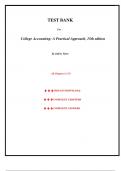
TEST BANK
M
For
PR
College Accounting: A Practical Approach, 15th edition
ES
By Jeffrey Slater
SI
All Chapters (1-25)
VE
INSTANT DOWNLOAD
G
COMPLETE CHAPTERS
R
COMPLETE ANSWERS
AD
ES
uytrew
, uytrew
All Chapters Included
College Accounting, 15e (Slater)
Chapter 1 A c cou n ti n g Concepts and Procedures
All Answers Included
M
Learning Objective 1-1
1) The type of business organization where the owners are NOT personally liable for the business’s debts
is a:
PR
A) corporation
B) partnership
C) sole proprietorship
D) All of the above
Answer: A
Diff: 2
LO: 1-1
ES
AACSB: Reflective Thinking
Learning Outcome: Define accounting terms, accounting concepts and principles
2) The purpose of the accounting process is to provide financial information about:
A) sole proprietorships
B) small businesses
SI
C) large corporations
D) All of these answers are correct
Answer: D
Diff: 1
VE
LO: 1-1
AACSB: Reflective Thinking
Learning Outcome: Define accounting terms, accounting concepts and principles
3) Accounting provides information to:
A) investors
B) government
G
C) managers
D) All of these answers are correct
Answer: D
R
Diff: 2
LO: 1-1
AACSB: Reflective Thinking
Learning Outcome: Define accounting terms, accounting concepts and principles
AD
ES
uytrew
, uytrew
4) Which of the following is a characteristic of a sole proprietorship?
A) Business owned by more than one person.
B) Easy to form.
M
C) Each stockholder acts as an owner of the company.
D) Can continue indefinitely.
Answer: B
Diff: 1
PR
LO: 1-1
AACSB: Reflective Thinking
Learning Outcome: Define accounting terms, accounting concepts and principles
5) A partnership is a business which:
A) is easy to form
ES
B) ends with the death of a partner
C) is owned by more than one person
D) All of these answers are correct
Answer: D
Diff: 1
LO: 1-1
AACSB: Reflective Thinking
SI
Learning Outcome: Define accounting terms, accounting concepts and principles
6) Which is an advantage of a sole proprietorship form of business?
A) There is limited personal risk.
VE
B) The business can continue indefinitely.
C) The owner makes all the decisions.
D) The business is owned by stockholders.
Answer: C
Diff: 1
LO: 1-1
G
AACSB: Reflective Thinking
Learning Outcome: Define accounting terms, accounting concepts and principles
7) Which of the following is NOT a type of business organization?
R
A) Corporation
B) Partnership
C) Sole proprietorship
AD
D) Limited Asset Corporation
Answer: D
Diff: 1
LO: 1-1
AACSB: Reflective Thinking
Learning Outcome: Define accounting terms, accounting concepts and principles
ES
uytrew
, uytrew
8) A corporation:
A) is legally separate from its owners
B) is owned by stockholders
M
C) has limited risk to stockholders
D) All of the above
Answer: D
Diff: 2
PR
LO: 1-1
AACSB: Reflective Thinking
Learning Outcome: Define accounting terms, accounting concepts and principles
9) The basic accounting equation is:
A) Assets + Liabilities = Owner’s Equity
ES
B) Assets = Liabilities - Owner's Equity
C) Assets = Owner’s Equity - Liabilities
D) Assets = Liabilities + Owner's Equity
Answer: D
Diff: 1
LO: 1-1
AACSB: Reflective Thinking
SI
Learning Outcome: Define accounting terms, accounting concepts and principles
10) A law firm would be considered a:
A) merchandise company
VE
B) manufacturer
C) service company
D) retailer
Answer: C
Diff: 1
LO: 1-1
G
AACSB: Reflective Thinking
Learning Outcome: Define accounting terms, accounting concepts and principles
11) GAAP stand for .
R
A) Generally Accepted Accounting Practices
B) General Accounting Accepted Practices
C) Generally Accepted Accounting Principles
AD
D) General Accounting Application Practices
Answer: C
Diff: 1
LO: 1-1
AACSB: Reflective Thinking
Learning Outcome: Define accounting terms, accounting concepts and principles
ES
uytrew
TEST BANK
M
For
PR
College Accounting: A Practical Approach, 15th edition
ES
By Jeffrey Slater
SI
All Chapters (1-25)
VE
INSTANT DOWNLOAD
G
COMPLETE CHAPTERS
R
COMPLETE ANSWERS
AD
ES
uytrew
, uytrew
All Chapters Included
College Accounting, 15e (Slater)
Chapter 1 A c cou n ti n g Concepts and Procedures
All Answers Included
M
Learning Objective 1-1
1) The type of business organization where the owners are NOT personally liable for the business’s debts
is a:
PR
A) corporation
B) partnership
C) sole proprietorship
D) All of the above
Answer: A
Diff: 2
LO: 1-1
ES
AACSB: Reflective Thinking
Learning Outcome: Define accounting terms, accounting concepts and principles
2) The purpose of the accounting process is to provide financial information about:
A) sole proprietorships
B) small businesses
SI
C) large corporations
D) All of these answers are correct
Answer: D
Diff: 1
VE
LO: 1-1
AACSB: Reflective Thinking
Learning Outcome: Define accounting terms, accounting concepts and principles
3) Accounting provides information to:
A) investors
B) government
G
C) managers
D) All of these answers are correct
Answer: D
R
Diff: 2
LO: 1-1
AACSB: Reflective Thinking
Learning Outcome: Define accounting terms, accounting concepts and principles
AD
ES
uytrew
, uytrew
4) Which of the following is a characteristic of a sole proprietorship?
A) Business owned by more than one person.
B) Easy to form.
M
C) Each stockholder acts as an owner of the company.
D) Can continue indefinitely.
Answer: B
Diff: 1
PR
LO: 1-1
AACSB: Reflective Thinking
Learning Outcome: Define accounting terms, accounting concepts and principles
5) A partnership is a business which:
A) is easy to form
ES
B) ends with the death of a partner
C) is owned by more than one person
D) All of these answers are correct
Answer: D
Diff: 1
LO: 1-1
AACSB: Reflective Thinking
SI
Learning Outcome: Define accounting terms, accounting concepts and principles
6) Which is an advantage of a sole proprietorship form of business?
A) There is limited personal risk.
VE
B) The business can continue indefinitely.
C) The owner makes all the decisions.
D) The business is owned by stockholders.
Answer: C
Diff: 1
LO: 1-1
G
AACSB: Reflective Thinking
Learning Outcome: Define accounting terms, accounting concepts and principles
7) Which of the following is NOT a type of business organization?
R
A) Corporation
B) Partnership
C) Sole proprietorship
AD
D) Limited Asset Corporation
Answer: D
Diff: 1
LO: 1-1
AACSB: Reflective Thinking
Learning Outcome: Define accounting terms, accounting concepts and principles
ES
uytrew
, uytrew
8) A corporation:
A) is legally separate from its owners
B) is owned by stockholders
M
C) has limited risk to stockholders
D) All of the above
Answer: D
Diff: 2
PR
LO: 1-1
AACSB: Reflective Thinking
Learning Outcome: Define accounting terms, accounting concepts and principles
9) The basic accounting equation is:
A) Assets + Liabilities = Owner’s Equity
ES
B) Assets = Liabilities - Owner's Equity
C) Assets = Owner’s Equity - Liabilities
D) Assets = Liabilities + Owner's Equity
Answer: D
Diff: 1
LO: 1-1
AACSB: Reflective Thinking
SI
Learning Outcome: Define accounting terms, accounting concepts and principles
10) A law firm would be considered a:
A) merchandise company
VE
B) manufacturer
C) service company
D) retailer
Answer: C
Diff: 1
LO: 1-1
G
AACSB: Reflective Thinking
Learning Outcome: Define accounting terms, accounting concepts and principles
11) GAAP stand for .
R
A) Generally Accepted Accounting Practices
B) General Accounting Accepted Practices
C) Generally Accepted Accounting Principles
AD
D) General Accounting Application Practices
Answer: C
Diff: 1
LO: 1-1
AACSB: Reflective Thinking
Learning Outcome: Define accounting terms, accounting concepts and principles
ES
uytrew