NSG 213 EXAM 3 QUESTIONS AND
ANSWERS WITH VERIFIED SOLUTIONS
NEW UPDATE 2025
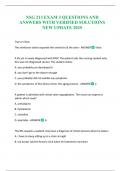
True or False:
The semilunar valves separate the ventricles & the atria - ANSWER False
A 65 y/o is newly diagnosed with MVP. The patient asks the nursing student why
this was not diagnosed sooner. The student states:
A. you probably just developed it
B. you don't go to the doctor enough
C. you probably did not exhibit any symptoms
D. the symptoms of this illness mimic the aging process - ANSWER C
A patient is admitted with mitral valve regurgitation. The nurse can expect to
admin which med?
A. amlodipine
B. hydralazine
C. clonidine
D. ezeimibe - ANSWER A
The RN suspects a patient may have a diagnosis of mitral stenosis when he states:
A. I have to sleep sitting up in a chair at night
B. my doctor said he heard a click when he listened to my heart
,C. I have chest pain every day
D. I can hear my heartbeat in my head sometimes - ANSWER A
A client has a history of rheumatic fever as a child. Prior to having dental work,
what education is key?
A. take aspirin after procedure
B. restrict activity prior to procedure
C. take a prophylactic antibiotic prior to procedure
D. avoid taking any NSAIDs after procedure - ANSWER C
The nurse understands that a patient with a valvular heart disorder should do
which of the following? SATA
A. daily weights
B. take frequent rest periods throughout the day
C. consume fluid intake up to 2500 mL/day
D. eat a diet high in potassium
E. call doc before having a root canal procedure - ANSWER A, B, E
Which electrolyte plays a major role in cardiomyopathy?
A. K
B. Ca
C. Na
D. bicarb - ANSWER C
,The client with infective endocarditis is admitted to the medical department.
Which HCP's order should be implemented first?
A. admin IV antibiotics
B. obtain blood cultures
C. schedule an echo
D. encourage bedrest with bathroom privleges - ANSWER B
blood cultures must be done before administering antibiotics so that an adequate
number of organisms can be obtained to culture & identify
The client is dx with pericarditis. Which are the most common signs/symptoms
the nurse would expect to find when assessing the client?
A. pulsus paradoxus
B. complains of fatigue & arthralgias
C. petechiae & splinter hemorrhages
D. increased chest pain with inspiration - ANSWER D
chest pain is the most common sx of pericarditis, usually has an abrupt onset, & is
aggravated by respiratory movements, changes in body position, & swallowing
The client is dx with acute pericarditis. Which s/sx warrants immediate attention
by the nurse?
A. muffled heart sounds
B. nondistended jugular veins
C. bounding peripheral pulses
D. pericardial friction rub - ANSWER A
, acute pericardial effusion interferes with normal cardiac filling & pumping, causing
venous congestion & decreased CO
The client comes into the ED in severe pain & reports that a pot of boiling hot
water accidentally spilled on his lower legs. The assessment reveals blistered,
mottled red skin, & both feet are edematous. Which depth of burn should the
nurse document?
A. superficial partial thickness
B. deep partial thickness
C. full thickness
D. first degree - ANSWER B
deep partial thickness burns are scalds & flash burns that injure the epidermis,
upper dermis, and portions of the deeper dermis. This causes pain, blistered &
mottled red skin, and edema
The client has full thickness burns to 65% of the body, including the chest area.
After establishing a patent airway, which collaborative intervention is priority for
the client?
A. replace fluids & electrolytes
B. prevent contractures of extremities
C. monitor urine output hourly
D. prepare to assist with an escharotomy - ANSWER A
after airway, the most urgent need is preventing irreversible shock by replacing
fluids & electrolytes
ANSWERS WITH VERIFIED SOLUTIONS
NEW UPDATE 2025
True or False:
The semilunar valves separate the ventricles & the atria - ANSWER False
A 65 y/o is newly diagnosed with MVP. The patient asks the nursing student why
this was not diagnosed sooner. The student states:
A. you probably just developed it
B. you don't go to the doctor enough
C. you probably did not exhibit any symptoms
D. the symptoms of this illness mimic the aging process - ANSWER C
A patient is admitted with mitral valve regurgitation. The nurse can expect to
admin which med?
A. amlodipine
B. hydralazine
C. clonidine
D. ezeimibe - ANSWER A
The RN suspects a patient may have a diagnosis of mitral stenosis when he states:
A. I have to sleep sitting up in a chair at night
B. my doctor said he heard a click when he listened to my heart
,C. I have chest pain every day
D. I can hear my heartbeat in my head sometimes - ANSWER A
A client has a history of rheumatic fever as a child. Prior to having dental work,
what education is key?
A. take aspirin after procedure
B. restrict activity prior to procedure
C. take a prophylactic antibiotic prior to procedure
D. avoid taking any NSAIDs after procedure - ANSWER C
The nurse understands that a patient with a valvular heart disorder should do
which of the following? SATA
A. daily weights
B. take frequent rest periods throughout the day
C. consume fluid intake up to 2500 mL/day
D. eat a diet high in potassium
E. call doc before having a root canal procedure - ANSWER A, B, E
Which electrolyte plays a major role in cardiomyopathy?
A. K
B. Ca
C. Na
D. bicarb - ANSWER C
,The client with infective endocarditis is admitted to the medical department.
Which HCP's order should be implemented first?
A. admin IV antibiotics
B. obtain blood cultures
C. schedule an echo
D. encourage bedrest with bathroom privleges - ANSWER B
blood cultures must be done before administering antibiotics so that an adequate
number of organisms can be obtained to culture & identify
The client is dx with pericarditis. Which are the most common signs/symptoms
the nurse would expect to find when assessing the client?
A. pulsus paradoxus
B. complains of fatigue & arthralgias
C. petechiae & splinter hemorrhages
D. increased chest pain with inspiration - ANSWER D
chest pain is the most common sx of pericarditis, usually has an abrupt onset, & is
aggravated by respiratory movements, changes in body position, & swallowing
The client is dx with acute pericarditis. Which s/sx warrants immediate attention
by the nurse?
A. muffled heart sounds
B. nondistended jugular veins
C. bounding peripheral pulses
D. pericardial friction rub - ANSWER A
, acute pericardial effusion interferes with normal cardiac filling & pumping, causing
venous congestion & decreased CO
The client comes into the ED in severe pain & reports that a pot of boiling hot
water accidentally spilled on his lower legs. The assessment reveals blistered,
mottled red skin, & both feet are edematous. Which depth of burn should the
nurse document?
A. superficial partial thickness
B. deep partial thickness
C. full thickness
D. first degree - ANSWER B
deep partial thickness burns are scalds & flash burns that injure the epidermis,
upper dermis, and portions of the deeper dermis. This causes pain, blistered &
mottled red skin, and edema
The client has full thickness burns to 65% of the body, including the chest area.
After establishing a patent airway, which collaborative intervention is priority for
the client?
A. replace fluids & electrolytes
B. prevent contractures of extremities
C. monitor urine output hourly
D. prepare to assist with an escharotomy - ANSWER A
after airway, the most urgent need is preventing irreversible shock by replacing
fluids & electrolytes