,RSE4801 Assignment 1 (COMPLETE ANSWERS)
2025 - DUE 15 May 2025; 100% TRUSTED
Complete, trusted solutions and explanations.
Multiple choice,assured excellence
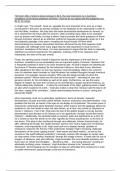
In this unit, you learnt about what it means to become a
researcher in education. Part of this learning entailed
developing understanding of the nature and purposes of
research. Assignment question Given this, you are required to
complete a reflective essay of about 1800 – 2000 words in
which you reflect on what you think (1) makes and/or
constitutes an exceptional educational researcher in a context
like South (Africa), and (2) what do you think will inform and
shape your own becoming of an educational researcher. In
answering these questions, you asking expected to draw from
the following ideas and texts: - Decolonising Methodologies:
Research and Indigenous Peoples (1999) by Linda Tuhiwai
Smith. - Ideas of intervention, curiosity, courage, justice (be it
epistemic, ontological or social), and critique.
Becoming an Exceptional Educational Researcher in South
Africa: A Reflective Exploration
Introduction
Educational research plays a pivotal role in shaping knowledge
systems, informing policy, and addressing social inequalities. In
the South African context, with its history of colonialism and
, apartheid, educational research must serve a transformative
function, deconstructing epistemic injustices and advancing a
decolonial agenda. Exceptional educational researchers in this
landscape must navigate complex sociopolitical terrains with
intellectual rigor, ethical commitment, and a deep sense of
justice.
In this reflective essay, I explore what constitutes an exceptional
educational researcher in South Africa and what will inform my
journey in becoming one. I engage with the ideas of decolonial
methodologies, intervention, curiosity, courage, justice, and
critique, drawing particularly from Linda Tuhiwai Smith’s
Decolonising Methodologies: Research and Indigenous Peoples
(1999). These concepts will serve as a foundation for
understanding the ethical and intellectual responsibilities of a
researcher committed to social change.
What Makes an Exceptional Educational Researcher in South
Africa?
1. Decolonial Methodologies and the Ethics of Research
An exceptional educational researcher in South Africa must
engage critically with knowledge production, particularly in
dismantling Eurocentric epistemologies that have historically
marginalized indigenous and local knowledge systems. Smith
(1999) argues that research has been a tool of colonial power,
reinforcing Western knowledge as the dominant frame of
2025 - DUE 15 May 2025; 100% TRUSTED
Complete, trusted solutions and explanations.
Multiple choice,assured excellence
In this unit, you learnt about what it means to become a
researcher in education. Part of this learning entailed
developing understanding of the nature and purposes of
research. Assignment question Given this, you are required to
complete a reflective essay of about 1800 – 2000 words in
which you reflect on what you think (1) makes and/or
constitutes an exceptional educational researcher in a context
like South (Africa), and (2) what do you think will inform and
shape your own becoming of an educational researcher. In
answering these questions, you asking expected to draw from
the following ideas and texts: - Decolonising Methodologies:
Research and Indigenous Peoples (1999) by Linda Tuhiwai
Smith. - Ideas of intervention, curiosity, courage, justice (be it
epistemic, ontological or social), and critique.
Becoming an Exceptional Educational Researcher in South
Africa: A Reflective Exploration
Introduction
Educational research plays a pivotal role in shaping knowledge
systems, informing policy, and addressing social inequalities. In
the South African context, with its history of colonialism and
, apartheid, educational research must serve a transformative
function, deconstructing epistemic injustices and advancing a
decolonial agenda. Exceptional educational researchers in this
landscape must navigate complex sociopolitical terrains with
intellectual rigor, ethical commitment, and a deep sense of
justice.
In this reflective essay, I explore what constitutes an exceptional
educational researcher in South Africa and what will inform my
journey in becoming one. I engage with the ideas of decolonial
methodologies, intervention, curiosity, courage, justice, and
critique, drawing particularly from Linda Tuhiwai Smith’s
Decolonising Methodologies: Research and Indigenous Peoples
(1999). These concepts will serve as a foundation for
understanding the ethical and intellectual responsibilities of a
researcher committed to social change.
What Makes an Exceptional Educational Researcher in South
Africa?
1. Decolonial Methodologies and the Ethics of Research
An exceptional educational researcher in South Africa must
engage critically with knowledge production, particularly in
dismantling Eurocentric epistemologies that have historically
marginalized indigenous and local knowledge systems. Smith
(1999) argues that research has been a tool of colonial power,
reinforcing Western knowledge as the dominant frame of