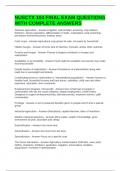
NUSCTX 104 FINAL EXAM QUESTIONS
WITH COMPLETE ANSWERS
Intensive agriculture - Answer-Irrigation, animal labor, terracing, crop rotation,
fertilizers. Dense population, differentiation of skills, materialism, land ownership,
permanent homes/structures, trading, taxes.
Cash crops - Answer-Agricultural crop grown for sale, not eaten by household.
Hidden hunger - Answer-Chronic lack of vitamins, minerals, and/or other nutrients
Poverty and hunger - Answer-Poverty is largest contributor to hunger and
malnutrition
Availability vs Accessibility - Answer-Food might be available, but poverty may make
food inaccessible
Double burden of malnutrition - Answer-Persistence of undernutrition along with
rapid rise in overweight and obesity
Contributing factors to malnutrition in "industrialized populations" - Answer-Access to
healthy food, household income and food prices, subsidies, child care and other
expenses, education, time constraints
Empowerment program: microcredit - Answer-Very small loan to people or
communities who lac the usual collateral, steady employment, credit history.
Designed to support entrepreneurship, alleviate poverty, empower women, uplift
communities
Privilege - Answer-A set of unearned benefits given to people who fit into a special
group
Industrial agriculture - Answer-Delocalized, capital-intensive, labor of machines
Modern industrial practices - Answer-More yields, wealth of knowledge, grow
everywhere all year, abundant and cheap
Extensification - Answer-Use more land
Intensification - Answer-Get more from the land
Specialization - Answer-Focus on a specific crop
The Green Revolution - Answer-Agriculture modernization 1940-60s, more yield,
GMOs, machines, fertilizers, pesticides, irrigation, monoculture, feedlots,
aquaculture. Increase in specialization
, Food waste in US - Answer-Food waste is largest type of waste. Comes from under-
harvest, rejections, home/restaurant waste.
Efforts to reduce food waste - Answer-Local programs/campaigns (composting),
industry goals, commitments, and campaigns (trayless dining, portion control),
personal efforts
GMO - Answer-Genetically modified organisms
GMO benefits - Answer-Pest, disease, herbicide resistance, increased nutritional
value, reduced pesticide use (?)
GMO concerns - Answer-Pesticide/herbicide resistant pests, DNA mutations,
allergenicity, unintended harm to other organisms, monopolies, ethical
considerations, no labeling in US
Industrial Revolution dietary changes - Answer-Agriculture became industry, living
went from rural to urban, shift in meal patterns, "mixed blessings" regarding food
Cultural competency - Answer-The delivery of health services that are respectful of
and responsive to the health beliefs, practices, and cultural and linguistic needs of
diverse populations.
Cultural humility - Answer-The ability of a person to maintain an interpersonal stance
that is open to other ways of life in relation to aspects of cultural identity that are
most important to the person.
Stakeholders in cultural competency - Answer-Funders, plant breeders, nutritional
scientists, governments and policy makers, target communities.
Conditional Cash Transfers (CCT) - Answer-Programs that transfer cash, generally
to poor households on the condition that those households make pre-specified
investments in the human capital of their children.
CCT incentives - Answer-Provides economic incentive to change behavior
regardless of social norms, cost/benefit analysis, individual contexts, etc.
Subsistence strategy - Answer-Decisions made by a group of people for the best
way to procure food in a particular environment
Subsistence strategy: hunter-gatherer - Answer-Paleolithic era --rise of agriculture.
Technology included human energy and simple tools. Small communities, placed
value on sharing, labor divided by age and gender. Migratory patterns, mostly
nomadic.
Diet of foragers - Answer-Varied by ecosystem. Highly correlates with degrees
latitude.
Pedestrian foragers - Answer-Travel by foot, flexible to environmental changes
(aboriginals)
WITH COMPLETE ANSWERS
Intensive agriculture - Answer-Irrigation, animal labor, terracing, crop rotation,
fertilizers. Dense population, differentiation of skills, materialism, land ownership,
permanent homes/structures, trading, taxes.
Cash crops - Answer-Agricultural crop grown for sale, not eaten by household.
Hidden hunger - Answer-Chronic lack of vitamins, minerals, and/or other nutrients
Poverty and hunger - Answer-Poverty is largest contributor to hunger and
malnutrition
Availability vs Accessibility - Answer-Food might be available, but poverty may make
food inaccessible
Double burden of malnutrition - Answer-Persistence of undernutrition along with
rapid rise in overweight and obesity
Contributing factors to malnutrition in "industrialized populations" - Answer-Access to
healthy food, household income and food prices, subsidies, child care and other
expenses, education, time constraints
Empowerment program: microcredit - Answer-Very small loan to people or
communities who lac the usual collateral, steady employment, credit history.
Designed to support entrepreneurship, alleviate poverty, empower women, uplift
communities
Privilege - Answer-A set of unearned benefits given to people who fit into a special
group
Industrial agriculture - Answer-Delocalized, capital-intensive, labor of machines
Modern industrial practices - Answer-More yields, wealth of knowledge, grow
everywhere all year, abundant and cheap
Extensification - Answer-Use more land
Intensification - Answer-Get more from the land
Specialization - Answer-Focus on a specific crop
The Green Revolution - Answer-Agriculture modernization 1940-60s, more yield,
GMOs, machines, fertilizers, pesticides, irrigation, monoculture, feedlots,
aquaculture. Increase in specialization
, Food waste in US - Answer-Food waste is largest type of waste. Comes from under-
harvest, rejections, home/restaurant waste.
Efforts to reduce food waste - Answer-Local programs/campaigns (composting),
industry goals, commitments, and campaigns (trayless dining, portion control),
personal efforts
GMO - Answer-Genetically modified organisms
GMO benefits - Answer-Pest, disease, herbicide resistance, increased nutritional
value, reduced pesticide use (?)
GMO concerns - Answer-Pesticide/herbicide resistant pests, DNA mutations,
allergenicity, unintended harm to other organisms, monopolies, ethical
considerations, no labeling in US
Industrial Revolution dietary changes - Answer-Agriculture became industry, living
went from rural to urban, shift in meal patterns, "mixed blessings" regarding food
Cultural competency - Answer-The delivery of health services that are respectful of
and responsive to the health beliefs, practices, and cultural and linguistic needs of
diverse populations.
Cultural humility - Answer-The ability of a person to maintain an interpersonal stance
that is open to other ways of life in relation to aspects of cultural identity that are
most important to the person.
Stakeholders in cultural competency - Answer-Funders, plant breeders, nutritional
scientists, governments and policy makers, target communities.
Conditional Cash Transfers (CCT) - Answer-Programs that transfer cash, generally
to poor households on the condition that those households make pre-specified
investments in the human capital of their children.
CCT incentives - Answer-Provides economic incentive to change behavior
regardless of social norms, cost/benefit analysis, individual contexts, etc.
Subsistence strategy - Answer-Decisions made by a group of people for the best
way to procure food in a particular environment
Subsistence strategy: hunter-gatherer - Answer-Paleolithic era --rise of agriculture.
Technology included human energy and simple tools. Small communities, placed
value on sharing, labor divided by age and gender. Migratory patterns, mostly
nomadic.
Diet of foragers - Answer-Varied by ecosystem. Highly correlates with degrees
latitude.
Pedestrian foragers - Answer-Travel by foot, flexible to environmental changes
(aboriginals)