100% de satisfacción garantizada Inmediatamente disponible después del pago Tanto en línea como en PDF No estas atado a nada 4.2 TrustPilot
logo-home
Examen

HED4809 Assignment 1 (COMPLETE ANSWERS) 2025

Puntuación
4.8
(4)
Vendido
9
Páginas
21
Grado
A+
Subido en
30-03-2025
Escrito en
2024/2025

HED4809 Assignment 1 (COMPLETE ANSWERS) 2025 - DUE 2025; 100% TRUSTED Complete, trusted solutions and explanations. For assistance, Whats-App 0.6.7-1.7.1-1.7.3.9. Ensure your success with us.. 1. Do you agree that the hidden curriculum primarily serves to uphold existing power structures, as suggested by Conflict Theory? Why or why not? (2) a) Yes, because the hidden curriculum transmits dominant cultural values that reinforce existing social hierarchies. b) No, because the hidden curriculum mainly helps students understand societal norms rather than enforce power dynamics. c) Yes, because the hidden curriculum is intentionally designed to prioritize individual achievement over collective values. d) No, because the hidden curriculum promotes only educational standards without any influence on societal power structures. 2. How would you evaluate the effectiveness of role differentiation in achieving social solidarity versus encouraging individualism in students? (2) a) Role differentiation promotes social solidarity by teaching students to work in groups toward common goals. b) Role differentiation encourages individualism by assigning specific roles that may limit collaborative learning. c) Role differentiation strikes a balance by encouraging students to develop individual skills that contribute to collective goals. d) Role differentiation has no impact on either social solidarity or individualism in educational settings. 3. What criteria would you use to assess whether Robert Dreeben’s concept of achievement is equally applicable to all students, regardless of background? (2) a) Evaluating whether achievement is measured by standardized tests. b) Assessing whether all students, regardless of background, have equal access to resources that support achievement. c) Measuring if students from different backgrounds feel motivated to meet achievement standards. d) Determining if students are primarily assessed on individual merit rather than group work. 4. Can you assess the validity of the interpretivist approach in uncovering the implicit messages of the hidden curriculum in multicultural classrooms? (2) a) The interpretivist approach is limited because it relies solely on quantitative data. b) The interpretivist approach is valid as it focuses on understanding students' perspectives and cultural contexts. c) The interpretivist approach is ineffective because it does not account for the structural factors in education. d) The interpretivist approach is irrelevant as it disregards objective standards in the curriculum. 5. How would you design a curriculum that balances political socialization with critical thinking, using ideas from Functionalism and Conflict Theory? (2) a) By integrating role differentiation that encourages critical analysis of social and political systems. b) By eliminating topics related to political systems to focus on universal education standards. c) By incorporating modules that discourage questioning of existing social structures. d) By emphasizing rote memorization of government systems. 6. Can you propose an alternative model to the hidden curriculum that aligns more closely with Robert Dreeben’s values of independence and specificity? (2) a) A model that emphasizes universal achievement standards without considering individual learning needs. b) A model where students choose personalized learning paths that foster independence while meeting specific learning goals. c) A model that discourages individualized learning in favor of group-based assessments. d) A model that follows a strict, predetermined curriculum that minimizes individual expression. 7. What changes would you make to current educational practices to promote Wilbert Moore’s Stage Theory ideals while addressing issues of assimilation and cultural diversity? (2) a) Introduce culturally relevant examples in each stage to reflect diverse backgrounds. b) Limit curriculum stages to topics that are universally applicable to all students. c) Ensure each educational stage includes a focus on conformity to a dominant cultural perspective. d) Replace Stages Theory with an individualized, unstructured curriculum. 8. How might you construct a new approach to role differentiation that enhances both social solidarity and individual achievement? (2) a) Assign students the same roles to promote uniformity and solidarity. b) Allow students to rotate through different roles, encouraging both teamwork and personal growth. c) Focus exclusively on competitive roles that highlight individual achievements. d) Restrict role differentiation to advanced learners only. 9. How would you assess the impact of political socialization within the curriculum on students’ critical thinking skills? (2) a) Political socialization strengthens critical thinking by encouraging students to unquestioningly accept national values. b) Political socialization weakens critical thinking by promoting conformity over independent analysis. c) Political socialization is neutral, having no effect on critical thinking skills. d) Political socialization has a mixed impact; it encourages understanding of national values but may limit questioning of these values. 10. How would you design an assessment method that evaluates both individual achievement and social solidarity within a multicultural classroom? (2) a) A standardized test that emphasizes content recall for individual assessment. b) Group projects that assign each student an equal role without individual performance measures. c) A portfolio that includes both individual work and contributions to group activities, with feedback on collaboration and individual insight. d) An exam based solely on each student’s understanding of national cultural values. 11. Do you agree that the hidden curriculum primarily serves to uphold existing power structures, as suggested by Conflict Theory? Why or why not? (2) a) Yes, because the hidden curriculum transmits dominant cultural values that reinforce existing social hierarchies. b) No, because the hidden curriculum mainly helps students understand societal norms rather than enforce power dynamics. c) Yes, because the hidden curriculum is intentionally designed to prioritize individual achievement over collective values. d) No, because the hidden curriculum promotes only educational standards without any influence on societal power structures. 12. How would you evaluate the effectiveness of role differentiation in achieving social solidarity versus encouraging individualism in students? (2) a) Role differentiation promotes social solidarity by teaching students to work in groups toward common goals. b) Role differentiation encourages individualism by assigning specific roles that may limit collaborative learning. c) Role differentiation strikes a balance by encouraging students to develop individual skills that contribute to collective goals. d) Role differentiation has no impact on either social solidarity or individualism in educational settings. 13. What criteria would you use to assess whether Robert Dreeben’s concept of achievement is equally applicable to all students, regardless of background? (2) a) Evaluating whether achievement is measured by standardized tests. b) Assessing whether all students, regardless of background, have equal access to resources that support achievement. c) Measuring if students from different backgrounds feel motivated to meet achievement standards. d) Determining if students are primarily assessed on individual merit rather than group work. 14. Can you assess the validity of the interpretivist approach in uncovering the implicit messages of the hidden curriculum in multicultural classrooms? (2) a) The interpretivist approach is limited because it relies solely on quantitative data. b) The interpretivist approach is valid as it focuses on understanding students' perspectives and cultural contexts. c) The interpretivist approach is ineffective because it does not account for the structural factors in education. d) The interpretivist approach is irrelevant as it disregards objective standards in the curriculum. 15. How would you design a curriculum that balances political socialization with critical thinking, using ideas from Functionalism and Conflict Theory? (2) a) By integrating role differentiation that encourages critical analysis of social and political systems. b) By eliminating topics related to political systems to focus on universal education standards. c) By incorporating modules that discourage questioning of existing social structures. d) By emphasizing rote memorization of government systems. 16. Can you propose an alternative model to the hidden curriculum that aligns more closely with Robert Dreeben’s values of independence and specificity? (2) a) A model that emphasizes universal achievement standards without considering individual learning needs. b) A model where students choose personalized learning paths that foster independence while meeting specific learning goals. c) A model that discourages individualized learning in favor of group-based assessments. d) A model that follows a strict, predetermined curriculum that minimizes individual expression. 17. What changes would you make to current educational practices to promote Wilbert Moore’s Stage Theory ideals while addressing issues of assimilation and cultural diversity? (2) a) Introduce culturally relevant examples in each stage to reflect diverse backgrounds. b) Limit curriculum stages to topics that are universally applicable to all students. c) Ensure each educational stage includes a focus on conformity to a dominant cultural perspective. d) Replace Stages Theory with an individualized, unstructured curriculum. 18. How might you construct a new approach to role differentiation that enhances both social solidarity and individual achievement? (2) a) Assign students the same roles to promote uniformity and solidarity. b) Allow students to rotate through different roles, encouraging both teamwork and personal growth. c) Focus exclusively on competitive roles that highlight individual achievements. d) Restrict role differentiation to advanced learners only. 19. How would you assess the impact of political socialization within the curriculum on students’ critical thinking skills? (2) a) Political socialization strengthens critical thinking by encouraging students to unquestioningly accept national values. b) Political socialization weakens critical thinking by promoting conformity over independent analysis. c) Political socialization is neutral, having no effect on critical thinking skills. d) Political socialization has a mixed impact; it encourages understanding of national values but may limit questioning of these values. 20. How would you design an assessment method that evaluates both individual achievement and social solidarity within a multicultural classroom? (2) a) A standardized test that emphasizes content recall for individual assessment. b) Group projects that assign each student an equal role without individual performance measures. c) A portfolio that includes both individual work and contributions to group activities, with feedback on collaboration and individual insight. d) An exam based solely on each student’s understanding of national cultural values.

Mostrar más Leer menos
Institución
Grado


Ups! No podemos cargar tu documento ahora. Inténtalo de nuevo o contacta con soporte.

Libro relacionado

Escuela, estudio y materia

Institución
Grado

Información del documento

Subido en
30 de marzo de 2025
Número de páginas
21
Escrito en
2024/2025
Tipo
Examen
Contiene
Preguntas y respuestas

Temas

Vista previa del contenido

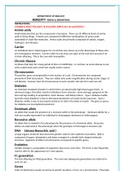
HED4809
Assignment 1 2025
Detailed Solutions, References & Explanations

Unique number:

Due Date: 2025
QUESTION 1

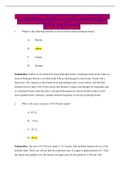
1. Do you agree that the hidden curriculum primarily serves to uphold existing
power structures, as suggested by Conflict Theory?
a) Yes, because the hidden curriculum transmits dominant cultural values
that reinforce existing social hierarchies.
b) No, because the hidden curriculum mainly helps students understand societal
norms rather than enforce power dynamics.
c) Yes, because the hidden curriculum is intentionally designed to prioritize
individual achievement over collective values.
d) No, because the hidden curriculum promotes only educational standards without
any influence on societal power structures.

Explanation: According to Conflict Theory, the hidden curriculum supports the dominance of
powerful groups by reinforcing unequal social hierarchies through informal educational
messages. Terms of use
By making use of this document you agree to:
 Use this document as a guide for learning, comparison and reference purpose,
Terms of use
 Not to duplicate, reproduce and/or misrepresent the contents of this document as your own work,
By making use of this document you agree to:
 Use this document
Fully accept the consequences
solely as a guide forshould you plagiarise
learning, reference,or and
misuse this document.
comparison purposes,
 Ensure originality of your own work, and fully accept the consequences should you plagiarise or misuse this document.
 Comply with all relevant standards, guidelines, regulations, and legislation governing academic and written work.

Disclaimer
Great care has been taken in the preparation of this document; however, the contents are provided "as is" without any express or
implied representations or warranties. The author accepts no responsibility or liability for any actions taken based on the
information contained within this document. This document is intended solely for comparison, research, and reference purposes.
Reproduction, resale, or transmission of any part of this document, in any form or by any means, is strictly prohibited.

$3.07
Accede al documento completo:
Comprado por 9 estudiantes

100% de satisfacción garantizada
Inmediatamente disponible después del pago
Tanto en línea como en PDF
No estas atado a nada

Reseñas de compradores verificados

Se muestran los 4 comentarios
6 meses hace

7 meses hace

8 meses hace

8 meses hace

4.8

4 reseñas

5
3
4
1
3
0
2
0
1
0
Reseñas confiables sobre Stuvia

Todas las reseñas las realizan usuarios reales de Stuvia después de compras verificadas.

Conoce al vendedor

Seller avatar
Los indicadores de reputación están sujetos a la cantidad de artículos vendidos por una tarifa y las reseñas que ha recibido por esos documentos. Hay tres niveles: Bronce, Plata y Oro. Cuanto mayor reputación, más podrás confiar en la calidad del trabajo del vendedor.
EduPal University of South Africa (Unisa)
Seguir Necesitas iniciar sesión para seguir a otros usuarios o asignaturas
Vendido
149181
Miembro desde
7 año
Número de seguidores
35996
Documentos
4337
Última venta
9 horas hace

4.2

13561 reseñas

5
7807
4
2689
3
1791
2
455
1
819

Recientemente visto por ti

Por qué los estudiantes eligen Stuvia

Creado por compañeros estudiantes, verificado por reseñas

Calidad en la que puedes confiar: escrito por estudiantes que aprobaron y evaluado por otros que han usado estos resúmenes.

¿No estás satisfecho? Elige otro documento

¡No te preocupes! Puedes elegir directamente otro documento que se ajuste mejor a lo que buscas.

Paga como quieras, empieza a estudiar al instante

Sin suscripción, sin compromisos. Paga como estés acostumbrado con tarjeta de crédito y descarga tu documento PDF inmediatamente.

Student with book image

“Comprado, descargado y aprobado. Así de fácil puede ser.”

Alisha Student

Preguntas frecuentes