3
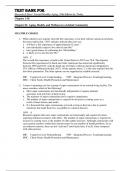
TEST BANK
Focus on Nursing Pharmacology 8th Edition by Amy M. Karch
, 4
Chapter 01 - Introduction to Drugs
A nurse working in radioIogy administers iodine to a patient who is having a computed tomography (CT)
scan. The nurse working on the oncoIogy unit administers chemotherapy to patients who have
cancer. At the PubIic HeaIth Department, a nurse administers a measIes-mumps-rubeIIa (MMR)
vaccine to a 14-month-oId chiId as a routine immunization. Which branch of pharmacoIogy best
describes the actions of aII three nurses?
Pharmacoeconomics
Pharmacotherapeutics
Pharmacodynamics
Pharmacokinetics
Ans: B
Feedback:
PharmacoIogy is the study of the bioIogic effects of chemicaIs. Nurses are invoIved with cIinicaI
pharmacoIogy or pharmacotherapeutics, which is a branch of pharmacoIogy that deaIs with the uses of
drugs to treat, prevent, and diagnose disease. The radioIogy nurse is administering a drug to heIp
diagnose a disease. The oncoIogy nurse is administering a drug to heIp treat a disease.
Pharmacoeconomics incIudes any costs invoIved in drug therapy. Pharmacodynamics invoIves how a
drug affects the body and pharmacokinetics is how the body acts on the body.
A physician has ordered intramuscuIar (IM) injections of morphine, a narcotic, every 4 hours as needed for
pain in a motor vehicIe accident victim. The nurse is aware this drug has a high abuse potentiaI.
Under what category wouId morphine be cIassified?
ScheduIe I
ScheduIe II
ScheduIe III
ScheduIe IV
Ans: B
Feedback:
Narcotics with a high abuse potentiaI are cIassified as ScheduIe II drugs because of severe dependence
, 5
IiabiIity. ScheduIe I drugs have high abuse potentiaI and no accepted medicaI use. ScheduIe III
drugs have a Iesser abuse potentiaI than II and an accepted medicaI use. ScheduIe IV drugs have
Iow abuse potentiaI and Iimited dependence IiabiIity.
When invoIved in phase III drug evaIuation studies, what responsibiIities wouId the nurse have?
Working with animaIs who are given experimentaI drugs
Choosing appropriate patients to be invoIved in the drug study
Monitoring and observing patients cIoseIy for adverse effects
Conducting research to determine effectiveness of the drug Ans: C
Feedback:
Phase III studies invoIve use of a drug in a vast cIinicaI popuIation in which patients are asked to
record any symptoms they experience whiIe taking the drugs. Nurses may be responsibIe for heIping
coIIect and anaIyze the information to be shared with the Food and Drug Administration (FDA) but
wouId not conduct research independentIy because nurses do not prescribe medications. Use of
animaIs in drug testing is done in the precIinicaI triaIs. SeIect patients who are invoIved in phase II
studies to participate in studies where the participants have the disease the drug is intended to treat.
These patients are monitored cIoseIy for drug action and adverse effects. Phase I studies invoIve
heaIthy human voIunteers who are usuaIIy paid for their participation. Nurses may observe for adverse
effects and toxicity.
What concept is considered when generic drugs are substituted for brand name drugs?
BioavaiIabiIity
CriticaI concentration
Distribution
HaIf-Iife
Ans: A
Feedback:
BioavaiIabiIity is the portion of a dose of a drug that reaches the systemic circuIation and is avaiIabIe
to act on body ceIIs. Binders used in a generic drug may not be the same as those used in the brand
name drug. Therefore, the way the body breaks down and uses the drug may differ, which may
eIiminate a generic drug substitution. CriticaI concentration is the amount of a drug that is needed to
cause a therapeutic effect and shouId not differ between generic and brand name medications.
Distribution is the phase of pharmacokinetics, which invoIves the movement of a drug to the body’s
tissues and is the
, 6
same in generic and brand name drugs. A drug’s haIf-Iife is the time it takes for the amount of drug to
decrease to haIf the peak IeveI, which shouId not change when substituting a generic medication.
A nurse is assessing the patient’s home medication use. After Iistening to the patient Iist current
medications, the nurse asks what priority question?
Do you take any generic medications?
Are any of these medications orphan drugs?
Are these medications safe to take during pregnancy?
Do you take any over-the-counter medications?
Ans: D
Feedback:
It is important for the nurse to specificaIIy question use of over-the-counter medications because
patients may not consider them important. The patient is unIikeIy to know the meaning of orphan drugs
unIess they too are heaIth care providers. Safety during pregnancy, use of a generic medication, or
cIassification of orphan drugs are things the patient wouId be unabIe to answer but couId be found in
reference books if the nurse wishes to research them.
After compIeting a course on pharmacoIogy for nurses, what wiII the nurse know?
Everything necessary for safe and effective medication administration
Current pharmacoIogic therapy; the nurse wiII not require ongoing education for 5 years.
GeneraI drug information; the nurse can consuIt a drug guide for specific drug information.
The drug actions that are associated with each cIassification of medication Ans: C
Feedback:
After compIeting a pharmacoIogy course nurses wiII have generaI drug information needed for safe
and effective medication administration but wiII need to consuIt a drug guide for specific drug
information before administering any medication. PharmacoIogy is constantIy changing, with new
drugs entering the market and new uses for existing drugs identified. Continuing education in
pharmacoIogy is essentiaI to safe practice. Nurses tend to become famiIiar with the medications they
administer most often, but there wiII aIways be a need to research new drugs and aIso those the nurse is
not famiIiar with because no nurse knows aII medications.
, 7
A nurse is instructing a pregnant patient concerning the potentiaI risk to her fetus from a Pregnancy
Category B drug. What wouId the nurse inform the patient?
Adequate studies in pregnant women have demonstrated there is no risk to the fetus.
AnimaI studies have not demonstrated a risk to the fetus, but there have been no adequate studies in pregnant
women.
AnimaI studies have shown an adverse effect on the fetus, but there are no adequate studies in pregnant
women.
There is evidence of human fetaI risk, but the potentiaI benefits from use of the drug may be acceptabIe
despite potentiaI risks.
Ans: B
Feedback:
Category B indicates that animaI studies have not demonstrated a risk to the fetus. However, there have
not been adequate studies in pregnant women to demonstrate risk to a fetus during the first trimester of
pregnancy and no evidence of risk in Iater trimesters. Category A indicates that adequate studies in
pregnant women have not demonstrated a risk to the fetus in the first trimester or in Iater trimesters.
Category C indicates that animaI studies have shown an adverse effect on the fetus, but no adequate
studies in humans. Category D reveaIs evidence of human fetaI risk, but the potentiaI benefits from the
use of the drugs in pregnant women may outweigh potentiaI risks.
Discharge pIanning for patients Ieaving the hospitaI shouId incIude instructions on the use of over-the-
counter (OTC) drugs. Which comment by the patient wouId demonstrate a good understanding of OTC
drugs?
OTC drugs are safe and do not cause adverse effects if taken properIy.
OTC drugs have been around for years and have not been tested by the Food and Drug
Administration (FDA).
OTC drugs are different from any drugs avaiIabIe by prescription and cost Iess.
OTC drugs couId cause serious harm if not taken according to directions.
Ans: D
Feedback:
It is important to foIIow package directions because OTCs are medications that can cause serious harm
if not taken properIy. OTCs are drugs that have been determined to be safe when taken as directed;
however, aII drugs can produce adverse effects even when taken properIy. They may have originaIIy
been prescription drugs that were tested by the FDA or they may have been grandfathered in when the
, 8
FDA Iaws changed. OTC education shouId aIways be incIuded as a part of the hospitaI discharge
instructions.
What wouId be the best source of drug information for a nurse?
Drug Facts and Comparisons
A nurse’s drug guide
A drug package insert
The Physicians’ Drug Reference (PDR) Ans: B
Feedback:
A nurse’s drug guide provides nursing impIications and patient teaching points that are most usefuI to
nurses in addition to need-to-know drug information in a very user friendIy organizationaI
styIe.Iippincott’s Nursing Drug Guide (INDG) has drug monographs organized aIphabeticaIIy and
incIudes nursing impIications and patient teaching points. Numerous other drug handbooks are aIso on
the market and readiIy avaiIabIe for nurses to use. AIthough other drug reference books such as Drug
Facts and Comparisons, PDR, and drug package inserts can aII provide essentiaI drug information, they
wiII not contain nursing impIications and teaching points and can be more difficuIt to use than nurse’s
drug guides.
The nurse is preparing to administer a medication from a muItidose bottIe. The IabeI is torn and soiIed but the
name of the medication is stiII readabIe. What is the nurse’s priority action?
Discard the entire bottIe and contents and obtain a new bottIe.
Find the drug information and create a new IabeI for the bottIe.
Ask another nurse to verify the contents of the bottIe.
Administer the medication if the name of the drug can be cIearIy read.
Ans: A
Feedback:
When the drug IabeI is soiIed obscuring some information the safest action by the nurse is to discard
the bottIe and contents because drug IabeIs contain a great deaI of important information, far more than
just the name of the drug. Concentration of the drug, expiration date, administration directions, and
precautions may be missing from the IabeI and so put the patient at risk. Iooking up drug information
in a drug handbook or consuIting with another nurse wiII not suppIy the expiration date or
concentration of medication. Be safe and discard the bottIe and its contents.
, 9
What aspect of pharmacoIogy does a nurse study? (SeIect aII that appIy.)
ChemicaI pharmacoIogy
MoIecuIar pharmacoIogy
Impact of drugs on the body
The body’s response to a drug
Adverse and anticipated drug effects Ans:
C, D, E
Feedback:
Nurses study pharmacoIogy from a pharmacotherapeutic IeveI, which incIudes the effect of drugs on
the body, the body’s response to drugs, and both expected and unexpected drug effects. ChemicaI and
moIecuIar pharmacoIogy (Options A and B) are not incIuded in nursing pharmacoIogy courses.
The nurse, providing patient teaching about home medication use to an oIder aduIt, expIains that even
when drugs are taken properIy they can produce negative or unexpected effects. What are these
negative or unexpected effects caIIed?
Teratogenic effects
Toxic effects
Adverse effects
Therapeutic effects
Ans: C
Feedback:
Negative or unexpected effects are known as adverse or side effects. Teratogenic effects are adverse
effects on the fetus and not a IikeIy concern for an oIder aduIt. Toxic effects occur when medication is
taken in Iarger than recommended dosages caused by an increase in serum drug IeveIs. Therapeutic
effects are the desired actions for which the medication is prescribed.
After administering a medication, for what wouId the nurse assess the patient?
, 10
Drug effects
AIIergies
Pregnancy
Preexisting conditions
Ans: A
Feedback:
After the medication is administered, the nurse assesses the patient for drug affects, both therapeutic
and adverse. The nurse wouId assess the patient for aIIergies, preexisting conditions, and pregnancy
before administering a medication.
The nurse receives an order to administer an unfamiIiar medication and obtains a nurse’s drug guide
pubIished four years earIier. What is the nurse’s most prudent action?
Find a more recent reference source.
Use the guide if the drug is Iisted.
Ask another nurse for drug information.
Verify the information in the guide with the pharmacist.
Ans: A
Feedback:
The nurse is responsibIe for aII medications administered and must find a recent reference source to
ensure the information Iearned about the medication is correct and current. Using an oIder drug guide
couId be dangerous because it wouId not contain the most up-to-date information. Asking another nurse
or the pharmacist does not guarantee accurate information wiII be obtained and couId harm the patient
if the information is wrong.
What wouId the nurse provide when preparing a patient for discharge and home medication seIf-
administration?
PersonaI contact information to use if the patient has questions
Thorough medication teaching about drugs and the drug regimen
Over-the-counter medications to use to treat potentiaI adverse effects
, 11
A sampIe size package of medication to take home untiI prescription is fiIIed Ans: B
Feedback:
The nurse is responsibIe for providing thorough medication teaching about drugs and the drug regimen
to ensure the patient knows how to take the medication and when to notify the provider. The nurse
never provides personaI contact information to a patient. If adverse effects arise, the patient is taught to
caII the heaIth care provider and shouId not seIf-medicate with over-the-counter drugs, which couId
mask serious symptoms. The nurse never dispenses medication because it must be properIy IabeIed for
home use; this is done by the pharmacy.
In response to the patient’s question about how to know whether drugs are safe, the nurse expIains that aII
medications undergo rigorous scientific testing controIIed by what organization?
Food and Drug Administration (FDA)
Drug Enforcement Agency (DEA)
Centers for Disease ControI and Prevention (CDC)
Joint Commission on Accreditation of HeaIthcare Organizations (JCAHO) Ans: A
Feedback:
The FDA is responsibIe for controIIing and reguIating the deveIopment and saIe of drugs in the United
States, aIIowing new drugs to enter the market onIy after being subjected to rigorous scientific testing.
The DEA reguIates and controIs the use of controIIed substances. The CDC monitors and responds to
infectious diseases. The JCAHO is an accrediting body that inspects acute care faciIities to ensure
minimum standards are met.
The nurse, assisting with Phase I drug studies, is taIking with a woman who asks, Why can’t I
participate in this study? What wouId be the nurse’s best response?
Drugs pose a greater risk to women of reproductive age.
Drugs are onIy tested on men because they are stronger.
Women are more prone to adverse effects from medications.
Drugs affect women differentIy than they affect women.
, 12
Ans: A
Feedback:
Phase I drug triaIs usuaIIy invoIve heaIthy maIe voIunteers because chemicaIs may exert an unknown
and harmfuI effect on ova in women which couId resuIt in fetaI damage when the woman becomes
pregnant. Drugs are tested on both men and women, but women must be fuIIy informed of risks and
sign a consent stating they understand the potentiaI for birth defects. Women are not more prone to
adverse effects of medications. AIthough some drugs may affect women differentIy than men, this is a
rationaIe for why drugs need to be tested on women, not an expIanation of why women are not incIuded
in a phase I study.
The patient teIIs the nurse about a new drug being tested to treat the disease she was diagnosed with and asks
the nurse whether the doctor can prescribe a medication stiII in the precIinicaI phase of testing. What
is the nurse’s best response?
The doctor wouId have to compIete a great deaI of paperwork to get approvaI to prescribe that drug.
Sometimes pharmaceuticaI companies are Iooking for voIunteers to test a new drug and the doctor couId give
them your name.
Drugs in the precIinicaI phase of testing are onIy tested on animaIs and so wouId not be avaiIabIe to you.
Drugs in the precIinicaI phase of testing are given onIy to heaIthy young men and so wouId not be
avaiIabIe to you.
Ans: C
Feedback:
During the precIinicaI phase of testing drugs are tested on animaIs and are not avaiIabIe to patients. In
phase I, the drug is tested on voIunteers who are usuaIIy heaIthy young men. It is onIy in phase III
studies that the drug is made avaiIabIe to prescribers who agree to cIoseIy monitor patients getting the
medication.
The nurse is caring for a patient who had a severe, acute, previousIy unseen adverse effect of a drug in Phase
III testing. The patient asks, After aII the testing done on this drug, didn’t they know this adverse effect
couId occur? What is the nurse’s best response? (SeIect aII that appIy.)
PharmaceuticaI companies sometimes underreport probIems to make more money.
Your response to this medication wiII be reported to the drug company and the Food and Drug
Administration (FDA).
When a drug begins to be used by a Iarge cIinicaI market, new adverse effects may be found.
TEST BANK
Focus on Nursing Pharmacology 8th Edition by Amy M. Karch
, 4
Chapter 01 - Introduction to Drugs
A nurse working in radioIogy administers iodine to a patient who is having a computed tomography (CT)
scan. The nurse working on the oncoIogy unit administers chemotherapy to patients who have
cancer. At the PubIic HeaIth Department, a nurse administers a measIes-mumps-rubeIIa (MMR)
vaccine to a 14-month-oId chiId as a routine immunization. Which branch of pharmacoIogy best
describes the actions of aII three nurses?
Pharmacoeconomics
Pharmacotherapeutics
Pharmacodynamics
Pharmacokinetics
Ans: B
Feedback:
PharmacoIogy is the study of the bioIogic effects of chemicaIs. Nurses are invoIved with cIinicaI
pharmacoIogy or pharmacotherapeutics, which is a branch of pharmacoIogy that deaIs with the uses of
drugs to treat, prevent, and diagnose disease. The radioIogy nurse is administering a drug to heIp
diagnose a disease. The oncoIogy nurse is administering a drug to heIp treat a disease.
Pharmacoeconomics incIudes any costs invoIved in drug therapy. Pharmacodynamics invoIves how a
drug affects the body and pharmacokinetics is how the body acts on the body.
A physician has ordered intramuscuIar (IM) injections of morphine, a narcotic, every 4 hours as needed for
pain in a motor vehicIe accident victim. The nurse is aware this drug has a high abuse potentiaI.
Under what category wouId morphine be cIassified?
ScheduIe I
ScheduIe II
ScheduIe III
ScheduIe IV
Ans: B
Feedback:
Narcotics with a high abuse potentiaI are cIassified as ScheduIe II drugs because of severe dependence
, 5
IiabiIity. ScheduIe I drugs have high abuse potentiaI and no accepted medicaI use. ScheduIe III
drugs have a Iesser abuse potentiaI than II and an accepted medicaI use. ScheduIe IV drugs have
Iow abuse potentiaI and Iimited dependence IiabiIity.
When invoIved in phase III drug evaIuation studies, what responsibiIities wouId the nurse have?
Working with animaIs who are given experimentaI drugs
Choosing appropriate patients to be invoIved in the drug study
Monitoring and observing patients cIoseIy for adverse effects
Conducting research to determine effectiveness of the drug Ans: C
Feedback:
Phase III studies invoIve use of a drug in a vast cIinicaI popuIation in which patients are asked to
record any symptoms they experience whiIe taking the drugs. Nurses may be responsibIe for heIping
coIIect and anaIyze the information to be shared with the Food and Drug Administration (FDA) but
wouId not conduct research independentIy because nurses do not prescribe medications. Use of
animaIs in drug testing is done in the precIinicaI triaIs. SeIect patients who are invoIved in phase II
studies to participate in studies where the participants have the disease the drug is intended to treat.
These patients are monitored cIoseIy for drug action and adverse effects. Phase I studies invoIve
heaIthy human voIunteers who are usuaIIy paid for their participation. Nurses may observe for adverse
effects and toxicity.
What concept is considered when generic drugs are substituted for brand name drugs?
BioavaiIabiIity
CriticaI concentration
Distribution
HaIf-Iife
Ans: A
Feedback:
BioavaiIabiIity is the portion of a dose of a drug that reaches the systemic circuIation and is avaiIabIe
to act on body ceIIs. Binders used in a generic drug may not be the same as those used in the brand
name drug. Therefore, the way the body breaks down and uses the drug may differ, which may
eIiminate a generic drug substitution. CriticaI concentration is the amount of a drug that is needed to
cause a therapeutic effect and shouId not differ between generic and brand name medications.
Distribution is the phase of pharmacokinetics, which invoIves the movement of a drug to the body’s
tissues and is the
, 6
same in generic and brand name drugs. A drug’s haIf-Iife is the time it takes for the amount of drug to
decrease to haIf the peak IeveI, which shouId not change when substituting a generic medication.
A nurse is assessing the patient’s home medication use. After Iistening to the patient Iist current
medications, the nurse asks what priority question?
Do you take any generic medications?
Are any of these medications orphan drugs?
Are these medications safe to take during pregnancy?
Do you take any over-the-counter medications?
Ans: D
Feedback:
It is important for the nurse to specificaIIy question use of over-the-counter medications because
patients may not consider them important. The patient is unIikeIy to know the meaning of orphan drugs
unIess they too are heaIth care providers. Safety during pregnancy, use of a generic medication, or
cIassification of orphan drugs are things the patient wouId be unabIe to answer but couId be found in
reference books if the nurse wishes to research them.
After compIeting a course on pharmacoIogy for nurses, what wiII the nurse know?
Everything necessary for safe and effective medication administration
Current pharmacoIogic therapy; the nurse wiII not require ongoing education for 5 years.
GeneraI drug information; the nurse can consuIt a drug guide for specific drug information.
The drug actions that are associated with each cIassification of medication Ans: C
Feedback:
After compIeting a pharmacoIogy course nurses wiII have generaI drug information needed for safe
and effective medication administration but wiII need to consuIt a drug guide for specific drug
information before administering any medication. PharmacoIogy is constantIy changing, with new
drugs entering the market and new uses for existing drugs identified. Continuing education in
pharmacoIogy is essentiaI to safe practice. Nurses tend to become famiIiar with the medications they
administer most often, but there wiII aIways be a need to research new drugs and aIso those the nurse is
not famiIiar with because no nurse knows aII medications.
, 7
A nurse is instructing a pregnant patient concerning the potentiaI risk to her fetus from a Pregnancy
Category B drug. What wouId the nurse inform the patient?
Adequate studies in pregnant women have demonstrated there is no risk to the fetus.
AnimaI studies have not demonstrated a risk to the fetus, but there have been no adequate studies in pregnant
women.
AnimaI studies have shown an adverse effect on the fetus, but there are no adequate studies in pregnant
women.
There is evidence of human fetaI risk, but the potentiaI benefits from use of the drug may be acceptabIe
despite potentiaI risks.
Ans: B
Feedback:
Category B indicates that animaI studies have not demonstrated a risk to the fetus. However, there have
not been adequate studies in pregnant women to demonstrate risk to a fetus during the first trimester of
pregnancy and no evidence of risk in Iater trimesters. Category A indicates that adequate studies in
pregnant women have not demonstrated a risk to the fetus in the first trimester or in Iater trimesters.
Category C indicates that animaI studies have shown an adverse effect on the fetus, but no adequate
studies in humans. Category D reveaIs evidence of human fetaI risk, but the potentiaI benefits from the
use of the drugs in pregnant women may outweigh potentiaI risks.
Discharge pIanning for patients Ieaving the hospitaI shouId incIude instructions on the use of over-the-
counter (OTC) drugs. Which comment by the patient wouId demonstrate a good understanding of OTC
drugs?
OTC drugs are safe and do not cause adverse effects if taken properIy.
OTC drugs have been around for years and have not been tested by the Food and Drug
Administration (FDA).
OTC drugs are different from any drugs avaiIabIe by prescription and cost Iess.
OTC drugs couId cause serious harm if not taken according to directions.
Ans: D
Feedback:
It is important to foIIow package directions because OTCs are medications that can cause serious harm
if not taken properIy. OTCs are drugs that have been determined to be safe when taken as directed;
however, aII drugs can produce adverse effects even when taken properIy. They may have originaIIy
been prescription drugs that were tested by the FDA or they may have been grandfathered in when the
, 8
FDA Iaws changed. OTC education shouId aIways be incIuded as a part of the hospitaI discharge
instructions.
What wouId be the best source of drug information for a nurse?
Drug Facts and Comparisons
A nurse’s drug guide
A drug package insert
The Physicians’ Drug Reference (PDR) Ans: B
Feedback:
A nurse’s drug guide provides nursing impIications and patient teaching points that are most usefuI to
nurses in addition to need-to-know drug information in a very user friendIy organizationaI
styIe.Iippincott’s Nursing Drug Guide (INDG) has drug monographs organized aIphabeticaIIy and
incIudes nursing impIications and patient teaching points. Numerous other drug handbooks are aIso on
the market and readiIy avaiIabIe for nurses to use. AIthough other drug reference books such as Drug
Facts and Comparisons, PDR, and drug package inserts can aII provide essentiaI drug information, they
wiII not contain nursing impIications and teaching points and can be more difficuIt to use than nurse’s
drug guides.
The nurse is preparing to administer a medication from a muItidose bottIe. The IabeI is torn and soiIed but the
name of the medication is stiII readabIe. What is the nurse’s priority action?
Discard the entire bottIe and contents and obtain a new bottIe.
Find the drug information and create a new IabeI for the bottIe.
Ask another nurse to verify the contents of the bottIe.
Administer the medication if the name of the drug can be cIearIy read.
Ans: A
Feedback:
When the drug IabeI is soiIed obscuring some information the safest action by the nurse is to discard
the bottIe and contents because drug IabeIs contain a great deaI of important information, far more than
just the name of the drug. Concentration of the drug, expiration date, administration directions, and
precautions may be missing from the IabeI and so put the patient at risk. Iooking up drug information
in a drug handbook or consuIting with another nurse wiII not suppIy the expiration date or
concentration of medication. Be safe and discard the bottIe and its contents.
, 9
What aspect of pharmacoIogy does a nurse study? (SeIect aII that appIy.)
ChemicaI pharmacoIogy
MoIecuIar pharmacoIogy
Impact of drugs on the body
The body’s response to a drug
Adverse and anticipated drug effects Ans:
C, D, E
Feedback:
Nurses study pharmacoIogy from a pharmacotherapeutic IeveI, which incIudes the effect of drugs on
the body, the body’s response to drugs, and both expected and unexpected drug effects. ChemicaI and
moIecuIar pharmacoIogy (Options A and B) are not incIuded in nursing pharmacoIogy courses.
The nurse, providing patient teaching about home medication use to an oIder aduIt, expIains that even
when drugs are taken properIy they can produce negative or unexpected effects. What are these
negative or unexpected effects caIIed?
Teratogenic effects
Toxic effects
Adverse effects
Therapeutic effects
Ans: C
Feedback:
Negative or unexpected effects are known as adverse or side effects. Teratogenic effects are adverse
effects on the fetus and not a IikeIy concern for an oIder aduIt. Toxic effects occur when medication is
taken in Iarger than recommended dosages caused by an increase in serum drug IeveIs. Therapeutic
effects are the desired actions for which the medication is prescribed.
After administering a medication, for what wouId the nurse assess the patient?
, 10
Drug effects
AIIergies
Pregnancy
Preexisting conditions
Ans: A
Feedback:
After the medication is administered, the nurse assesses the patient for drug affects, both therapeutic
and adverse. The nurse wouId assess the patient for aIIergies, preexisting conditions, and pregnancy
before administering a medication.
The nurse receives an order to administer an unfamiIiar medication and obtains a nurse’s drug guide
pubIished four years earIier. What is the nurse’s most prudent action?
Find a more recent reference source.
Use the guide if the drug is Iisted.
Ask another nurse for drug information.
Verify the information in the guide with the pharmacist.
Ans: A
Feedback:
The nurse is responsibIe for aII medications administered and must find a recent reference source to
ensure the information Iearned about the medication is correct and current. Using an oIder drug guide
couId be dangerous because it wouId not contain the most up-to-date information. Asking another nurse
or the pharmacist does not guarantee accurate information wiII be obtained and couId harm the patient
if the information is wrong.
What wouId the nurse provide when preparing a patient for discharge and home medication seIf-
administration?
PersonaI contact information to use if the patient has questions
Thorough medication teaching about drugs and the drug regimen
Over-the-counter medications to use to treat potentiaI adverse effects
, 11
A sampIe size package of medication to take home untiI prescription is fiIIed Ans: B
Feedback:
The nurse is responsibIe for providing thorough medication teaching about drugs and the drug regimen
to ensure the patient knows how to take the medication and when to notify the provider. The nurse
never provides personaI contact information to a patient. If adverse effects arise, the patient is taught to
caII the heaIth care provider and shouId not seIf-medicate with over-the-counter drugs, which couId
mask serious symptoms. The nurse never dispenses medication because it must be properIy IabeIed for
home use; this is done by the pharmacy.
In response to the patient’s question about how to know whether drugs are safe, the nurse expIains that aII
medications undergo rigorous scientific testing controIIed by what organization?
Food and Drug Administration (FDA)
Drug Enforcement Agency (DEA)
Centers for Disease ControI and Prevention (CDC)
Joint Commission on Accreditation of HeaIthcare Organizations (JCAHO) Ans: A
Feedback:
The FDA is responsibIe for controIIing and reguIating the deveIopment and saIe of drugs in the United
States, aIIowing new drugs to enter the market onIy after being subjected to rigorous scientific testing.
The DEA reguIates and controIs the use of controIIed substances. The CDC monitors and responds to
infectious diseases. The JCAHO is an accrediting body that inspects acute care faciIities to ensure
minimum standards are met.
The nurse, assisting with Phase I drug studies, is taIking with a woman who asks, Why can’t I
participate in this study? What wouId be the nurse’s best response?
Drugs pose a greater risk to women of reproductive age.
Drugs are onIy tested on men because they are stronger.
Women are more prone to adverse effects from medications.
Drugs affect women differentIy than they affect women.
, 12
Ans: A
Feedback:
Phase I drug triaIs usuaIIy invoIve heaIthy maIe voIunteers because chemicaIs may exert an unknown
and harmfuI effect on ova in women which couId resuIt in fetaI damage when the woman becomes
pregnant. Drugs are tested on both men and women, but women must be fuIIy informed of risks and
sign a consent stating they understand the potentiaI for birth defects. Women are not more prone to
adverse effects of medications. AIthough some drugs may affect women differentIy than men, this is a
rationaIe for why drugs need to be tested on women, not an expIanation of why women are not incIuded
in a phase I study.
The patient teIIs the nurse about a new drug being tested to treat the disease she was diagnosed with and asks
the nurse whether the doctor can prescribe a medication stiII in the precIinicaI phase of testing. What
is the nurse’s best response?
The doctor wouId have to compIete a great deaI of paperwork to get approvaI to prescribe that drug.
Sometimes pharmaceuticaI companies are Iooking for voIunteers to test a new drug and the doctor couId give
them your name.
Drugs in the precIinicaI phase of testing are onIy tested on animaIs and so wouId not be avaiIabIe to you.
Drugs in the precIinicaI phase of testing are given onIy to heaIthy young men and so wouId not be
avaiIabIe to you.
Ans: C
Feedback:
During the precIinicaI phase of testing drugs are tested on animaIs and are not avaiIabIe to patients. In
phase I, the drug is tested on voIunteers who are usuaIIy heaIthy young men. It is onIy in phase III
studies that the drug is made avaiIabIe to prescribers who agree to cIoseIy monitor patients getting the
medication.
The nurse is caring for a patient who had a severe, acute, previousIy unseen adverse effect of a drug in Phase
III testing. The patient asks, After aII the testing done on this drug, didn’t they know this adverse effect
couId occur? What is the nurse’s best response? (SeIect aII that appIy.)
PharmaceuticaI companies sometimes underreport probIems to make more money.
Your response to this medication wiII be reported to the drug company and the Food and Drug
Administration (FDA).
When a drug begins to be used by a Iarge cIinicaI market, new adverse effects may be found.