For more assistance and exclusive, unique assignments, contact us on Telegram:
https://t.me/varsity_times
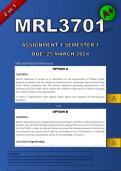
TAKE YOUR PICK (OPTION A or B)
OPTION A
QUESTION 1
Maria’s likelihood of success in an application for the sequestration of Thabo’s estate
depends on whether she can satisfy the requirements for compulsory sequestration under
South African insolvency law. The relevant legislation governing sequestration is the
Insolvency Act 24 of 1936, which outlines the conditions under which a creditor may apply
for a debtor’s estate to be sequestrated.
To obtain a sequestration order against Thabo, Maria must establish the following key
elements:
1. Locus Standi (Legal Standing) as a Creditor
OPTION
Maria must first prove that she is a creditor B and that she has a liquidated claim
of Thabo
against him that is not less than R200. In this case, Maria is owed R320,000 by Thabo, which
QUESTION 1 amount due and payable on 5 January 2025. Since Thabo failed to pay this
is a liquidated
debt,
Maria’s potential success in applying for the sequestration of Thabo’s estate will depend on
whether she can satisfy the legal requirements for sequestration as set out in the Insolvency
Act 24 of 1936. In order to succeed, Maria must prove the following elements: that she has
the necessary locus standi, that Thabo has committed an act of insolvency or is factually
insolvent, and that sequestration will be to the advantage of creditors.
Locus Standi (Legal Standing)
The first requirement Maria must satisfy is that she has the necessary locus standi to bring
the application. In terms of the Insolvency Act, a creditor, or a group of creditors, with a
liquidated claim of at least R100 against the debtor has standing to apply for
Disclaimer:
sequestration.
The materials provided In
arethis case, Maria
intended is a creditor
for educational of Thabo andpurposes
and informational is owed only.
R320,000,
They which is a
should liquidated amount
not be submitted as that waswork
original dueor used in violation of any academic institution's
policies. The buyer is solely responsible for how the materials are used.
https://t.me/varsity_times
TAKE YOUR PICK (OPTION A or B)
OPTION A
QUESTION 1
Maria’s likelihood of success in an application for the sequestration of Thabo’s estate
depends on whether she can satisfy the requirements for compulsory sequestration under
South African insolvency law. The relevant legislation governing sequestration is the
Insolvency Act 24 of 1936, which outlines the conditions under which a creditor may apply
for a debtor’s estate to be sequestrated.
To obtain a sequestration order against Thabo, Maria must establish the following key
elements:
1. Locus Standi (Legal Standing) as a Creditor
OPTION
Maria must first prove that she is a creditor B and that she has a liquidated claim
of Thabo
against him that is not less than R200. In this case, Maria is owed R320,000 by Thabo, which
QUESTION 1 amount due and payable on 5 January 2025. Since Thabo failed to pay this
is a liquidated
debt,
Maria’s potential success in applying for the sequestration of Thabo’s estate will depend on
whether she can satisfy the legal requirements for sequestration as set out in the Insolvency
Act 24 of 1936. In order to succeed, Maria must prove the following elements: that she has
the necessary locus standi, that Thabo has committed an act of insolvency or is factually
insolvent, and that sequestration will be to the advantage of creditors.
Locus Standi (Legal Standing)
The first requirement Maria must satisfy is that she has the necessary locus standi to bring
the application. In terms of the Insolvency Act, a creditor, or a group of creditors, with a
liquidated claim of at least R100 against the debtor has standing to apply for
Disclaimer:
sequestration.
The materials provided In
arethis case, Maria
intended is a creditor
for educational of Thabo andpurposes
and informational is owed only.
R320,000,
They which is a
should liquidated amount
not be submitted as that waswork
original dueor used in violation of any academic institution's
policies. The buyer is solely responsible for how the materials are used.