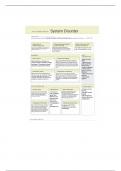
ACTIVE LEARNING TEMPLATE: System Disorder
STUDENT NAME _____________________________________
Discharge Teaching for a Child Who Has Major Burns REVIEW MODULE CHAPTER ___________
DISORDER/DISEASE PROCESS __________________________________________________________ 32, 71, 75
Alterations in Pathophysiology Related Health Promotion and
Health (Diagnosis) to Client Problem Disease Prevention
Burns over the over the bodies tissue, including internal Burns are wounds caused by an Avoid high heat exposure to the
organs as well. greatly can effect organs from inhalation
of smoke, even tissue damage will cause serious Energy transfer from a heat source to
imbalances in the body. the body, heating the tissue enough to body. Avoid breathing in smoke
cause damage.
ASSESSMENT SAFETY
CONSIDERATIONS
Risk Factors Expected Findings - Keep wounds
F&E imbalance, decrease in burns covering different areas of the body, three clean
different stages, 1st-3rd. 3rd being the worst, 1st
cardiac output, metoblic change being just a reddened area on the skin. decreased - Take all burnt
(increase), GI problems, Renal pulmonary function, increased metabolic changes,
decreased renal function, decreased or deminished
clothing off the
funaction, pulmonary effects. pulses depeneding on locations and severity of the patient asap.
burns - Keep the patient
covered with a
sheet to prevent
Laboratory Tests Diagnostic Procedures infection.
CBC to run a basic blood pannel to xrays, ct scan, or mri may be used if the - Clean wounds as
collect data on any metabolic changes patient has any other underlying issues from
the accident they where involved in. might
ordered.
occuring. MBP, again to watch for
metabolic changes. F&E balance and even get a CT scan due to any possible organ - Good hand
imbalance, blood loss, fluid loss damage or lung damage due to breathing in hygiene
smoke.
PATIENT-CENTERED CARE Complications
Nursing Care Medications Client Education - Infection in the
hydrate. increased fluid loss with
wounds
keep the patient covered to help prevent infection.
immediate actions is to remove the clothing and - IV fluids to burns good nutrition to help the - Delayed wound
stop the burn with tepid water. pain management is
important. monitoring and watching for s/s of help establish wounds heal properly pain
healing
management to help with debridement
infection. close monitor of I&O, HR, BP, and
respiratory. good hydration and IV fluids are key. good fluid of hte burns or dressing changes, or - F&E imbalance
lots of fluid loss with burns
balance and cleanings. clean/sterile technique
- Excess fluid loss
when changing dressings.
decrease the - Dehydration
chance of
dehydration.
Therapeutic Procedures - IV opioids for Interprofessional Care
pain management therapeuic response pain imaging HCP PT/OT
find out what else they might have lost
(family, house,pets) help the patient
management respiratory pulmonary
with comfort. nutroition is important,
help the patient find items they like and
Cardiology
enjoy that they can eat. to help wound
healing. help patient stay hydrated.
ACTIVE LEARNING TEMPLATES
STUDENT NAME _____________________________________
Discharge Teaching for a Child Who Has Major Burns REVIEW MODULE CHAPTER ___________
DISORDER/DISEASE PROCESS __________________________________________________________ 32, 71, 75
Alterations in Pathophysiology Related Health Promotion and
Health (Diagnosis) to Client Problem Disease Prevention
Burns over the over the bodies tissue, including internal Burns are wounds caused by an Avoid high heat exposure to the
organs as well. greatly can effect organs from inhalation
of smoke, even tissue damage will cause serious Energy transfer from a heat source to
imbalances in the body. the body, heating the tissue enough to body. Avoid breathing in smoke
cause damage.
ASSESSMENT SAFETY
CONSIDERATIONS
Risk Factors Expected Findings - Keep wounds
F&E imbalance, decrease in burns covering different areas of the body, three clean
different stages, 1st-3rd. 3rd being the worst, 1st
cardiac output, metoblic change being just a reddened area on the skin. decreased - Take all burnt
(increase), GI problems, Renal pulmonary function, increased metabolic changes,
decreased renal function, decreased or deminished
clothing off the
funaction, pulmonary effects. pulses depeneding on locations and severity of the patient asap.
burns - Keep the patient
covered with a
sheet to prevent
Laboratory Tests Diagnostic Procedures infection.
CBC to run a basic blood pannel to xrays, ct scan, or mri may be used if the - Clean wounds as
collect data on any metabolic changes patient has any other underlying issues from
the accident they where involved in. might
ordered.
occuring. MBP, again to watch for
metabolic changes. F&E balance and even get a CT scan due to any possible organ - Good hand
imbalance, blood loss, fluid loss damage or lung damage due to breathing in hygiene
smoke.
PATIENT-CENTERED CARE Complications
Nursing Care Medications Client Education - Infection in the
hydrate. increased fluid loss with
wounds
keep the patient covered to help prevent infection.
immediate actions is to remove the clothing and - IV fluids to burns good nutrition to help the - Delayed wound
stop the burn with tepid water. pain management is
important. monitoring and watching for s/s of help establish wounds heal properly pain
healing
management to help with debridement
infection. close monitor of I&O, HR, BP, and
respiratory. good hydration and IV fluids are key. good fluid of hte burns or dressing changes, or - F&E imbalance
lots of fluid loss with burns
balance and cleanings. clean/sterile technique
- Excess fluid loss
when changing dressings.
decrease the - Dehydration
chance of
dehydration.
Therapeutic Procedures - IV opioids for Interprofessional Care
pain management therapeuic response pain imaging HCP PT/OT
find out what else they might have lost
(family, house,pets) help the patient
management respiratory pulmonary
with comfort. nutroition is important,
help the patient find items they like and
Cardiology
enjoy that they can eat. to help wound
healing. help patient stay hydrated.
ACTIVE LEARNING TEMPLATES