10 marker paper 1 for study
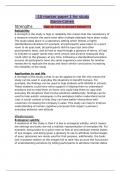
Baron-Cohen
Strengths (tips on how to answer below!!!!)
Reliability
A strength is the study is high in reliability this means that the consistency of
a measure remains the same even after multiple attempts have been made.
The study takes place in a laboratory setting which follows a highly
standardized procedure for example, all participants were taken to a quiet
room to do eyes task, all participants did the eyes test and other
psychometric tests, and all had to read through a glossary of terms, all had
to indicate on paper words they were unsure and all were reassured they
could refer to the glossary at any time. Following a standardized procedure
ensures all participants have the same experience and allows for another
researcher to replicate the study and reach similar conclusions increasing
the reliability of the study
Application to real life
A strength of the study is that it can be applied to real life; this means the
study can be used in everyday life situations to benefit humans. For
example, the findings can be used to help students with HFA/AS in schools,
These students could have extra support in helping them to understand
emotions and to read them on faces, this could help them to cope with
everyday life situations that involve emotions additionally, findings can be
used to help autistic employees in the workplace better understand social
cues in social context so that they can have better interactions with
customers increasing the company’s sales. This study can help to improve
understanding of human cognitive processes that impact a person's
everyday behavior and attitude
Weaknesses
Ecological validity
A weakness of the study is that it is low in ecological validity, which means
the settings and tasks are not a realistic representation of everyday life. For
example, being taken to a quiet room to look at and attribute mental states
of eye images, and being given a glossary to use to attribute mental stages
of eyes, glossaries are rarely used for that purpose, additionally, the tasks
lack mundane realism as the images fail to take into account the full picture
of understanding emotions by telling participants to attribute mental states
Baron-Cohen
Strengths (tips on how to answer below!!!!)
Reliability
A strength is the study is high in reliability this means that the consistency of
a measure remains the same even after multiple attempts have been made.
The study takes place in a laboratory setting which follows a highly
standardized procedure for example, all participants were taken to a quiet
room to do eyes task, all participants did the eyes test and other
psychometric tests, and all had to read through a glossary of terms, all had
to indicate on paper words they were unsure and all were reassured they
could refer to the glossary at any time. Following a standardized procedure
ensures all participants have the same experience and allows for another
researcher to replicate the study and reach similar conclusions increasing
the reliability of the study
Application to real life
A strength of the study is that it can be applied to real life; this means the
study can be used in everyday life situations to benefit humans. For
example, the findings can be used to help students with HFA/AS in schools,
These students could have extra support in helping them to understand
emotions and to read them on faces, this could help them to cope with
everyday life situations that involve emotions additionally, findings can be
used to help autistic employees in the workplace better understand social
cues in social context so that they can have better interactions with
customers increasing the company’s sales. This study can help to improve
understanding of human cognitive processes that impact a person's
everyday behavior and attitude
Weaknesses
Ecological validity
A weakness of the study is that it is low in ecological validity, which means
the settings and tasks are not a realistic representation of everyday life. For
example, being taken to a quiet room to look at and attribute mental states
of eye images, and being given a glossary to use to attribute mental stages
of eyes, glossaries are rarely used for that purpose, additionally, the tasks
lack mundane realism as the images fail to take into account the full picture
of understanding emotions by telling participants to attribute mental states