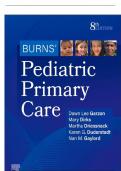
,Burns' Pediatric Primary Care, 8th Edition - Test Bank Sample Questions
Table of Contents
Unit 1: Pediatric Primary Care
1. Pediatric Primary Care
2. Global and National Influences on Child Health Status
3. Environmental Influences on Pediatric Health
4. Justice, Equity, Inclusion, and Diversity
Unit 2: Pediatric Health Supervision
5. Pediatric and Family Assessment
6. Behavioral and Mental Health Promotion
7. Sexuality and Gender Identity
Section 2A: Growth and Development
8. Developmental Principles and Theories
9. Developmental Management of Newborns and Neonates
10. Developmental Management of Infants
11. Developmental Management of Early Childhood
12. Developmental Management of Middle Childhood
13. Developmental Management of Adolescents
Section 2B: Health Promotion
14. Nutrition
15. Breastfeeding
16. Sleep
17. Elimination
18. Physical Activity and Sports
Section 2C: Health Protection
19. Immunizations
20. Dental and Oral Health
21. Pediatric Injury Prevention
22. Child Maltreatment
Unit 3: Disease Management
Section 3A: General Management Principles
23. Prescribing Traditional and Complementary Therapies
,29. Neurodivergence and Behavioral and Mental Health Disorders
30. Eye and Vision Disorders
31. Ear and Hearing Disorders
32. Respiratory Disorders
33. Cardiovascular Disorders
34. Gastrointestinal Disorders
35. Infectious Diseases
36. Inflammatory Disorders
37. Dermatologic Disorders
38. Hematologic Disorders
39. Endocrine and Metabolic Disorders
40. Musculoskeletal Disorders
41. Neurologic Disorders
42. Genitourinary Disorders
43. Gynecology and Reproductive Health
Chapter 8. Developmental Management in Pediatric PrimaryCare Questions
1. A single mother of an infant worries that living in a household with only one
parent will cause her child to be maladjusted. To help address the mother‟s
concerns, the primary care pediatric nurse practitioner will suggest
S. developing consistent daily routines for the child. Correct
T. exposing her child to extended family members when possible.
U. not working outside the home during the first few years.
V. taking her child to regular play date activities with other children.
2. During a well child exam, the primary care pediatric nurse practitioner learns that
the parents of a young child fight frequently about finances. The parents state that
they do not fight in front of the child and feel that the situation is temporary and
related to the father‟s job layoff. What will the nurse practitioner do?
R. Reassure them that the child is too young to understand.
S. Recommend that they continue to not argue in front of the child.
T. Suggest counseling tolearn waystohandlestress. Correct
U. Tell them that the conflict will resolve when the situation changes.
3. During a well child assessment of an 18monthold child, the
primary care
pediatric nurse practitioner observes the child becoming irritable and
uncooperative. The parent tells the child to stop fussing. What will the nurse
practitioner do? S. Allow the parent to put the child in a “timeout.”
T. Ask the parent about usual discipline practices.
U. Offer the child a book or a toy to look at. Correct
V. Stop the exam since the child has reached a “meltdown.”
4. Which recommendation will a primary care pediatric nurse practitioner make
, Chapter 4. Environmental Issues Questions
1. What has been the result of passage of the Toxic Substances Control Act. (TSCA) of
1976?
G. A mandate for corporations to disclose known toxic chemicals
H. A requirement that all manufactured chemicals undergo toxicity testing I.
Authorization of the EPA to require testing and reporting of some chemicals
Correct
J. Development of a mechanism to report reactions to toxic chemicals
2. Many European nations use the “precautionary principle” to help regulate
potentially toxic chemicals. What does this mean?
G. Chemicals must be proven to be safe before being introduced into the
environment. Correct
H. Corporations may be exempt from testing if their costs in doing so are too high.
I.
J.
Regulators must demonstrate risk to the public before banning a chemical.
Without a strong risk, corporations need not release data about their products.
3. During a clinic visit, a child‟s rapid capillary screening test for lead revealsa level
of 11 mcg/dL. What will the primary care pediatric nurse practitioner do next?
I. Institute lead abatement measures in the child‟s home.
J. Monitor lead levels monthly until decreased.
K. Order a venous sample to test for lead levels. Correct
L. Test the child‟s siblings and parents for lead.
4. A child has a lead level of 25 mcg/dL. Once lead abatement measures are
instituted, what is an important intervention to help prevent permanent damage
H. Chelation therapy
I. Dietary changes
C. Followup testing Correct
.
D. Testing family members
5. A child whose parent works in a factory pr esents with swelling of the
extremities, pain and weakness in the pelvis, and an erythematous maculopapular
rash. Which industrial toxin will the primary care pediatric nurse practitioner
suspect in this child? A. Lead
B. Mercury
C. Organophosphates Correct
Table of Contents
Unit 1: Pediatric Primary Care
1. Pediatric Primary Care
2. Global and National Influences on Child Health Status
3. Environmental Influences on Pediatric Health
4. Justice, Equity, Inclusion, and Diversity
Unit 2: Pediatric Health Supervision
5. Pediatric and Family Assessment
6. Behavioral and Mental Health Promotion
7. Sexuality and Gender Identity
Section 2A: Growth and Development
8. Developmental Principles and Theories
9. Developmental Management of Newborns and Neonates
10. Developmental Management of Infants
11. Developmental Management of Early Childhood
12. Developmental Management of Middle Childhood
13. Developmental Management of Adolescents
Section 2B: Health Promotion
14. Nutrition
15. Breastfeeding
16. Sleep
17. Elimination
18. Physical Activity and Sports
Section 2C: Health Protection
19. Immunizations
20. Dental and Oral Health
21. Pediatric Injury Prevention
22. Child Maltreatment
Unit 3: Disease Management
Section 3A: General Management Principles
23. Prescribing Traditional and Complementary Therapies
,29. Neurodivergence and Behavioral and Mental Health Disorders
30. Eye and Vision Disorders
31. Ear and Hearing Disorders
32. Respiratory Disorders
33. Cardiovascular Disorders
34. Gastrointestinal Disorders
35. Infectious Diseases
36. Inflammatory Disorders
37. Dermatologic Disorders
38. Hematologic Disorders
39. Endocrine and Metabolic Disorders
40. Musculoskeletal Disorders
41. Neurologic Disorders
42. Genitourinary Disorders
43. Gynecology and Reproductive Health
Chapter 8. Developmental Management in Pediatric PrimaryCare Questions
1. A single mother of an infant worries that living in a household with only one
parent will cause her child to be maladjusted. To help address the mother‟s
concerns, the primary care pediatric nurse practitioner will suggest
S. developing consistent daily routines for the child. Correct
T. exposing her child to extended family members when possible.
U. not working outside the home during the first few years.
V. taking her child to regular play date activities with other children.
2. During a well child exam, the primary care pediatric nurse practitioner learns that
the parents of a young child fight frequently about finances. The parents state that
they do not fight in front of the child and feel that the situation is temporary and
related to the father‟s job layoff. What will the nurse practitioner do?
R. Reassure them that the child is too young to understand.
S. Recommend that they continue to not argue in front of the child.
T. Suggest counseling tolearn waystohandlestress. Correct
U. Tell them that the conflict will resolve when the situation changes.
3. During a well child assessment of an 18monthold child, the
primary care
pediatric nurse practitioner observes the child becoming irritable and
uncooperative. The parent tells the child to stop fussing. What will the nurse
practitioner do? S. Allow the parent to put the child in a “timeout.”
T. Ask the parent about usual discipline practices.
U. Offer the child a book or a toy to look at. Correct
V. Stop the exam since the child has reached a “meltdown.”
4. Which recommendation will a primary care pediatric nurse practitioner make
, Chapter 4. Environmental Issues Questions
1. What has been the result of passage of the Toxic Substances Control Act. (TSCA) of
1976?
G. A mandate for corporations to disclose known toxic chemicals
H. A requirement that all manufactured chemicals undergo toxicity testing I.
Authorization of the EPA to require testing and reporting of some chemicals
Correct
J. Development of a mechanism to report reactions to toxic chemicals
2. Many European nations use the “precautionary principle” to help regulate
potentially toxic chemicals. What does this mean?
G. Chemicals must be proven to be safe before being introduced into the
environment. Correct
H. Corporations may be exempt from testing if their costs in doing so are too high.
I.
J.
Regulators must demonstrate risk to the public before banning a chemical.
Without a strong risk, corporations need not release data about their products.
3. During a clinic visit, a child‟s rapid capillary screening test for lead revealsa level
of 11 mcg/dL. What will the primary care pediatric nurse practitioner do next?
I. Institute lead abatement measures in the child‟s home.
J. Monitor lead levels monthly until decreased.
K. Order a venous sample to test for lead levels. Correct
L. Test the child‟s siblings and parents for lead.
4. A child has a lead level of 25 mcg/dL. Once lead abatement measures are
instituted, what is an important intervention to help prevent permanent damage
H. Chelation therapy
I. Dietary changes
C. Followup testing Correct
.
D. Testing family members
5. A child whose parent works in a factory pr esents with swelling of the
extremities, pain and weakness in the pelvis, and an erythematous maculopapular
rash. Which industrial toxin will the primary care pediatric nurse practitioner
suspect in this child? A. Lead
B. Mercury
C. Organophosphates Correct