Lecture
12 Phylogeny and Macroevolution
①
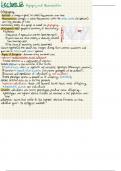
Phylogeny
Evolution change in gene (or allele) frequencies over time
a
· -
·
Macroevolution-changes in allele frequencies within the entire biota Call species)
long periods of time
over
evolutionary history of group is called its phylogeny
·
a
phylogenetic tree graphical summary of this history
·
·
-
branchea
,
↳ illustrates:
Osequence of speciation events (branches split)
② which taxa are more closely or distantly related
know branches split
timing of branching events (sometimes)
② the
·
Darwins hypothetical tree shows how lineages diverge from common ancestors and
extinct and extant species
give rise to
·
degree of divergence-distances along horizontal axis
Important ! Natural Selection is not evolution
·
↳ natural selection is a mechanism of evolution
-
·
Natural selection is the outcome of four facts :
① individuals within a species are variable (genotypicPhenotypic variation)
② variation in reproductive success some
(only genotypes will be passed)
③
Survival and reproduction of individuals is not ranidom!
⑪ some
prenotypic variation is passed on to
offspring (heritable)
Natural selection acts as a
sorting process
·
↳ acts onindividuals those with favored traits have more offspring
-
↳
population's evolve not individuals
·
fitness individuals with some
-
produce more offspring
phenotypes
↳
phenotypes with highest relative fitness will increase in the population over
time
adaptation traits that confer to the relative f tress
highest on the
-
individual its context
given ecological
, ·
adaptive traits can vary depending
on
ecological context T
trait selected
·
adaptivetraits can bei against ,
flounderdoes
Structural
↳
(morphology not blend in
↳ behavioral (instinct learning)
,
physiological/homeostasis development
↳
,
units 2and 3 will look at adaptations
·
that define different taxa
↑
trait selected for,
·
phylogenetics the study of evolutionary history
: and flander blends in
relationships between taxonomic of
groups living example monophyletic
:
I
things convergent traits :
FG H J
traits must be derived from a common
·
evolved independently
in different groups
E
D
ancestor to reveal relationships
↳ called shared derived traits or
evolutionary A
~
BC
synapamorphies ·
"node
monophyletic group
·
: consists of an ancestor
and all of its descendants
↳also called a clade
Species concepts :
①
Morphological/ecological a species is a
population that is
morphologically
distinct from other populations
② populations that are evolution
Biological arily independent of other populations
(i e reproductively isolatech)
. .
③
Phylogenetic-smallest statistically defined monophyletic groups
, ,
on a
phylogenetic
tree
-monophyletic
of
Degrees Species-ness example
less most
genotypic ecological biological phylogenic o
species cluster
allele
>
species adopt
hybrids monophyletic
Biological ference
a
specific DNA
not viable
a
niche
Creproductive isolation)
,②Macroevolution
macroevolution change in allele
frequency of entire biota over time
·
2 different patterns of macroevolution
·
species drift-differential survival and reproduction of alleles due to chance
↳
↳
species selection - differential survival and reproduction of alleles due to causal interaction
between
phenotype and environment
4 patterns of macroevolution :
Istasis-lineages that do not change for long period a of
time animals who not
adaptingchanging
,
are
↳ example-coelacanths ;
living fussil discovered
exactly resembles
fossil from 80 million
years ago
②character
change-lineages can
change quickly slowly
or in one
direction or multiple
↳
example-trilobites ; had many lineages with various numbers
developing
of ribs
③
lineage-splitting (speciation)
muss
these speciation patterns are traced using
-
=
extinction
phylogeny
⑪ extinction-can be frequent or rare event within a lineage , or can
Especiation
occur
simultaneously
③ Active Research Questions
-
I diverse and others sparse ?
some clades
why are
marine invertebrates with small bodies disperse less far and undergo
speciation more. They are also more likely to be endemic species /restricted to
a certain place
invertebrates with planktonic larval stage have
larger ranges and
↳
marine a
persist longer than species that do not have "
a larval stage
2) Are there "dead ends ?
evolutionary
species with specialist lineages have reduced capacity for persistence
diversification
or
↳
specialization of one resource limits an
organism's capacity to
persist through environmental
changes llimited evolutionary potential
Revolutionary potential capacity : ofa population to evolve in response to
environmental changes
12 Phylogeny and Macroevolution
①
Phylogeny
Evolution change in gene (or allele) frequencies over time
a
· -
·
Macroevolution-changes in allele frequencies within the entire biota Call species)
long periods of time
over
evolutionary history of group is called its phylogeny
·
a
phylogenetic tree graphical summary of this history
·
·
-
branchea
,
↳ illustrates:
Osequence of speciation events (branches split)
② which taxa are more closely or distantly related
know branches split
timing of branching events (sometimes)
② the
·
Darwins hypothetical tree shows how lineages diverge from common ancestors and
extinct and extant species
give rise to
·
degree of divergence-distances along horizontal axis
Important ! Natural Selection is not evolution
·
↳ natural selection is a mechanism of evolution
-
·
Natural selection is the outcome of four facts :
① individuals within a species are variable (genotypicPhenotypic variation)
② variation in reproductive success some
(only genotypes will be passed)
③
Survival and reproduction of individuals is not ranidom!
⑪ some
prenotypic variation is passed on to
offspring (heritable)
Natural selection acts as a
sorting process
·
↳ acts onindividuals those with favored traits have more offspring
-
↳
population's evolve not individuals
·
fitness individuals with some
-
produce more offspring
phenotypes
↳
phenotypes with highest relative fitness will increase in the population over
time
adaptation traits that confer to the relative f tress
highest on the
-
individual its context
given ecological
, ·
adaptive traits can vary depending
on
ecological context T
trait selected
·
adaptivetraits can bei against ,
flounderdoes
Structural
↳
(morphology not blend in
↳ behavioral (instinct learning)
,
physiological/homeostasis development
↳
,
units 2and 3 will look at adaptations
·
that define different taxa
↑
trait selected for,
·
phylogenetics the study of evolutionary history
: and flander blends in
relationships between taxonomic of
groups living example monophyletic
:
I
things convergent traits :
FG H J
traits must be derived from a common
·
evolved independently
in different groups
E
D
ancestor to reveal relationships
↳ called shared derived traits or
evolutionary A
~
BC
synapamorphies ·
"node
monophyletic group
·
: consists of an ancestor
and all of its descendants
↳also called a clade
Species concepts :
①
Morphological/ecological a species is a
population that is
morphologically
distinct from other populations
② populations that are evolution
Biological arily independent of other populations
(i e reproductively isolatech)
. .
③
Phylogenetic-smallest statistically defined monophyletic groups
, ,
on a
phylogenetic
tree
-monophyletic
of
Degrees Species-ness example
less most
genotypic ecological biological phylogenic o
species cluster
allele
>
species adopt
hybrids monophyletic
Biological ference
a
specific DNA
not viable
a
niche
Creproductive isolation)
,②Macroevolution
macroevolution change in allele
frequency of entire biota over time
·
2 different patterns of macroevolution
·
species drift-differential survival and reproduction of alleles due to chance
↳
↳
species selection - differential survival and reproduction of alleles due to causal interaction
between
phenotype and environment
4 patterns of macroevolution :
Istasis-lineages that do not change for long period a of
time animals who not
adaptingchanging
,
are
↳ example-coelacanths ;
living fussil discovered
exactly resembles
fossil from 80 million
years ago
②character
change-lineages can
change quickly slowly
or in one
direction or multiple
↳
example-trilobites ; had many lineages with various numbers
developing
of ribs
③
lineage-splitting (speciation)
muss
these speciation patterns are traced using
-
=
extinction
phylogeny
⑪ extinction-can be frequent or rare event within a lineage , or can
Especiation
occur
simultaneously
③ Active Research Questions
-
I diverse and others sparse ?
some clades
why are
marine invertebrates with small bodies disperse less far and undergo
speciation more. They are also more likely to be endemic species /restricted to
a certain place
invertebrates with planktonic larval stage have
larger ranges and
↳
marine a
persist longer than species that do not have "
a larval stage
2) Are there "dead ends ?
evolutionary
species with specialist lineages have reduced capacity for persistence
diversification
or
↳
specialization of one resource limits an
organism's capacity to
persist through environmental
changes llimited evolutionary potential
Revolutionary potential capacity : ofa population to evolve in response to
environmental changes