,ENG1503 Assignment 2 (COMPLETE ANSWERS)
Semester 1 2025 (802988) - DUE 9 April 2025
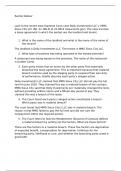
Non-sanctioned social multimedia platforms, such as Telegram,
podcasts, vodcasts, and WhatsApp, are increasingly being used
as supplementary tools in higher education, particularly in Open
Distance e-Learning (ODeL). These platforms provide
students with additional learning resources and enhance their
educational experiences
(Mohale, 2023).
Adapted from: Mohale, N.E. 2023. Exploring first-year
students’ perceptions and challenges of using
podcasts and vodcasts to enhance academic writing skills in an
ODeL institution in South Africa. PhD
Thesis, University of South Africa.
ASSIGNMENT 2 QUESTION
Using the text above as your starting point, do you agree or
disagree that non-sanctioned
multimedia platforms such as podcasts, vodcasts, and messaging
platforms (e.g.,
WhatsApp and Telegram) enhance student learning experiences
and engagement within
Open Distance e-Learning (ODeL) contexts? You must take a
stance and provide at least
THREE reasons for your stance. Lastly, in your concluding
paragraph, discuss your
preferred non-sanctioned tool and how it has enhanced your
learning.
, The Role of Non-Sanctioned Multimedia
Platforms in Enhancing Student Learning
Experiences in Open Distance e-Learning (ODeL)
1. Introduction
The landscape of higher education, particularly in
Open Distance e-Learning (ODeL), has evolved
significantly with the integration of digital
technologies. As traditional learning management
systems (LMS) sometimes fail to provide sufficient
interaction and engagement, students and educators
alike have turned to non-sanctioned multimedia
platforms such as Telegram, WhatsApp, podcasts,
and vodcasts to supplement their learning
experience. These platforms provide additional
resources that enhance academic engagement,
offering students more flexibility, accessibility, and
collaborative learning opportunities.
The growing reliance on these platforms raises the
question of their effectiveness in enhancing student
learning and engagement. This essay argues that
non-sanctioned multimedia platforms positively
contribute to student learning experiences in ODeL
contexts.
Semester 1 2025 (802988) - DUE 9 April 2025
Non-sanctioned social multimedia platforms, such as Telegram,
podcasts, vodcasts, and WhatsApp, are increasingly being used
as supplementary tools in higher education, particularly in Open
Distance e-Learning (ODeL). These platforms provide
students with additional learning resources and enhance their
educational experiences
(Mohale, 2023).
Adapted from: Mohale, N.E. 2023. Exploring first-year
students’ perceptions and challenges of using
podcasts and vodcasts to enhance academic writing skills in an
ODeL institution in South Africa. PhD
Thesis, University of South Africa.
ASSIGNMENT 2 QUESTION
Using the text above as your starting point, do you agree or
disagree that non-sanctioned
multimedia platforms such as podcasts, vodcasts, and messaging
platforms (e.g.,
WhatsApp and Telegram) enhance student learning experiences
and engagement within
Open Distance e-Learning (ODeL) contexts? You must take a
stance and provide at least
THREE reasons for your stance. Lastly, in your concluding
paragraph, discuss your
preferred non-sanctioned tool and how it has enhanced your
learning.
, The Role of Non-Sanctioned Multimedia
Platforms in Enhancing Student Learning
Experiences in Open Distance e-Learning (ODeL)
1. Introduction
The landscape of higher education, particularly in
Open Distance e-Learning (ODeL), has evolved
significantly with the integration of digital
technologies. As traditional learning management
systems (LMS) sometimes fail to provide sufficient
interaction and engagement, students and educators
alike have turned to non-sanctioned multimedia
platforms such as Telegram, WhatsApp, podcasts,
and vodcasts to supplement their learning
experience. These platforms provide additional
resources that enhance academic engagement,
offering students more flexibility, accessibility, and
collaborative learning opportunities.
The growing reliance on these platforms raises the
question of their effectiveness in enhancing student
learning and engagement. This essay argues that
non-sanctioned multimedia platforms positively
contribute to student learning experiences in ODeL
contexts.