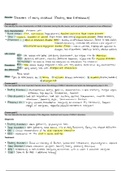
Disorder: Disorders of early childhood ( feeding ,
sleep & attachments )
Course goal 2
Can identify the core characteristics of DSM-V disorders during the life course, such as symptoms, prevalence & sex differences.
Core characteristics: problems with :
'
Food intake : Pica , rumination (regurgitation ) ,
avoidant I restrictive -
food intake disorder
-
Sleep =
insomnia , disorders of (night terrors sleepwalking! nightmare disorder (dream anxiety )
arousal ,
Attachment it Reactive attachment disorder (RAD) absence of attachment behaviors failure to seek comfort
-
= =
,
,
reduced increased neg emotion t poor regulation
reciprocity ,
.
2) Dis inhibited social
engagement disorder (DSED) =
inappropriate approach to
lack of wariness
,
strangers ,
lack of boundaries superficial socially attention seeking
,
,
Life course:
RAD =
can improve with better caregiving environment but higher ,
risk for depression
DSED
'
-
persisting difficulties requires additional treatment higher
, ,
risk for impulsive disorders
Eating & sleep can start of small but caregivers can exacerbate
= the situation
Prevalence: RAD rare almost always diagnosed in kids with very adverse leg maltreatment)
=
,
experiences .
DSED =
Using among kids with disorganized attachments
Sex differences:
None noted .
Other: Types of attachments are 1) secure 2) resistant (anxious I ambivalent ) 3) avoidant (anxious ) avoidant )
4) disorganized
Course goal 3
You can explain the most important theories about the etiology of DSM-V disorders and what role heterogeneity plays in this
-
Feeding disorders = developmental delays , genetics ,
abnormalities in oral anatomy , hunger signal
differences , high reactive temperament ,
trauma
-
Sleep disorders = bad self -
regulation ,
bad self -
soothing abilities , temperament ,
medical reasons ,
attachment ,
parenting style ,
Socioeconomic factors
Attachment highly caregiving environments leg institutions) frequent
- dis = unusual / maladaptive .
,
.
changes of caregivers , neglectful ) abusive 1 unresponsive caregivers
Course goal 5
You can describe the basic principles of the diagnosis, treatment and course of DSM-V disorders.
Diagnosis:
-
Feeding disorders = data gathering physiological tests
,
Sleep data gathering sleep diaries info on daily functioning family into related difficulties
'
disorders =
, , , ,
-
RAD = Clinical interpretations of the child -
caregiver interaction
-
DSED =
observation of the child in social settings
Treatment:
Feeding disorders focus interplay of factors behavioral interventions
psychodynamic
'
= on , ,
approach
-
Sleep disorders =
parent -
education program ,
learning theory , parenting techniques
-
RAD establishing safe & stable with &
caregiving
=
a environment a warm consistent caregiver
-
DIED = Same as for RAD t additional
therapy
, Disorder: Autism Spectrum disorder
Course goal 2
Can identify the core characteristics of DSM-V disorders during the life course, such as symptoms, prevalence & sex differences.
Core characteristics:
1 .
deficits in social communication & interaction
↳
reciprocity ,
non -
verbal & relationships
2 .
restrictive 1 repetitive behaviors Interests lactivities
↳ movements ,
routines fixaded interests ,
hyper I hypo reactivity
,
Life course:
- Between age o -
14 →
communication improves most .
Social
slightly & repetitive behaviors
persist daily or when stressed (except high functioning groups )
-
Aqui sitios of
language t no intellectual
disability = more improvement
301
displays regression following puberty often
persisting difficulty I e. g part-time
'
.
, .
Prevalence: employment
1- 1.5 t have increased due to
Sex differences:
.
→ :
widening criteria ,
awareness ,
better identification , possible
true increase
( possible female
Got .
is male
camouflaging )
females have higher rates of intellectual disability
Other:
There social the aloof the d the active odd
are 3
subtypes →
, passive
Course goal 3
You can explain the most important theories about the etiology of DSM-V disorders and what role heterogeneity plays in this
Early hypothesis
'
now
Phenotypic heterogeneity
'
=
cool ,
distant refrigerator moms → :
genetic &
Gene by naturally solitary children have diff experiences
environment
shaping them
-
- - = more .
Growth dysregulation hypothesis frontal / tempera
early overgrowth & white matter
-
brain in in
gray
=
in childhood & rapid deterioration from adolescence onward
regions
Over pruning
hypothesis overly aggressive synoptic pruning in sensory and/or motor regions
'
=
-
'
Mirror neuron theory dysfunction in the mirror neuron system f- to understand others )
=
Johnson theory it's an
atypical brain adopting to the info that comes trough ( redundancy )
.
=
-
Central coherence hypothesis =
they process info in a
fragmented fashion (can 't see the whole)
theory (E theory ) they have below (empathy) above
average systemizing
of mind S
theory
-
of mind I
average
-
=
Social Consequences for
'
theory language development
-
motivation emotional deficits lead to
early socio
neg social
-
-
-
.
- Pre & postnatal factors = toxin exposure ,
weight respiratory distress during delivery
infection ,
low birth
,
Two hit
neurodevelopmental disruptions leading to vulnerable neural circuits t childhood
-
-
model -
-
1st hit -
-
genetic d
outcomes → 2nd hit adolescent pubertal hormones t related social
challenges =
poor adult role
-
-
Course goal 5
You can describe the basic principles of the diagnosis, treatment and course of DSM-V disorders.
Diagnosis: A- DOS & ADI R to assess for the core symptoms
-
test intelligence for tics disorders
+ rule out
language disorders ADHD
+
assess ,
mood
, , ,
Treatment: -
Pharma logical : antidepressants ,
stimulants , neuroleptic @ nxiety I
feeding issues
-
psychological : emphasize social & behavioral techniques
↳ Lovaas approach = intensive behavioral approach with des Crete trail format =
giving the child
behavior I rewarding response limitation building
a
single to continue more
Schools improve classroom language thermae behaviors this
-
: inclusion , supportive services up x way
'
long - term : residential options ,
vocational
training
↳ social skills
training
sleep & attachments )
Course goal 2
Can identify the core characteristics of DSM-V disorders during the life course, such as symptoms, prevalence & sex differences.
Core characteristics: problems with :
'
Food intake : Pica , rumination (regurgitation ) ,
avoidant I restrictive -
food intake disorder
-
Sleep =
insomnia , disorders of (night terrors sleepwalking! nightmare disorder (dream anxiety )
arousal ,
Attachment it Reactive attachment disorder (RAD) absence of attachment behaviors failure to seek comfort
-
= =
,
,
reduced increased neg emotion t poor regulation
reciprocity ,
.
2) Dis inhibited social
engagement disorder (DSED) =
inappropriate approach to
lack of wariness
,
strangers ,
lack of boundaries superficial socially attention seeking
,
,
Life course:
RAD =
can improve with better caregiving environment but higher ,
risk for depression
DSED
'
-
persisting difficulties requires additional treatment higher
, ,
risk for impulsive disorders
Eating & sleep can start of small but caregivers can exacerbate
= the situation
Prevalence: RAD rare almost always diagnosed in kids with very adverse leg maltreatment)
=
,
experiences .
DSED =
Using among kids with disorganized attachments
Sex differences:
None noted .
Other: Types of attachments are 1) secure 2) resistant (anxious I ambivalent ) 3) avoidant (anxious ) avoidant )
4) disorganized
Course goal 3
You can explain the most important theories about the etiology of DSM-V disorders and what role heterogeneity plays in this
-
Feeding disorders = developmental delays , genetics ,
abnormalities in oral anatomy , hunger signal
differences , high reactive temperament ,
trauma
-
Sleep disorders = bad self -
regulation ,
bad self -
soothing abilities , temperament ,
medical reasons ,
attachment ,
parenting style ,
Socioeconomic factors
Attachment highly caregiving environments leg institutions) frequent
- dis = unusual / maladaptive .
,
.
changes of caregivers , neglectful ) abusive 1 unresponsive caregivers
Course goal 5
You can describe the basic principles of the diagnosis, treatment and course of DSM-V disorders.
Diagnosis:
-
Feeding disorders = data gathering physiological tests
,
Sleep data gathering sleep diaries info on daily functioning family into related difficulties
'
disorders =
, , , ,
-
RAD = Clinical interpretations of the child -
caregiver interaction
-
DSED =
observation of the child in social settings
Treatment:
Feeding disorders focus interplay of factors behavioral interventions
psychodynamic
'
= on , ,
approach
-
Sleep disorders =
parent -
education program ,
learning theory , parenting techniques
-
RAD establishing safe & stable with &
caregiving
=
a environment a warm consistent caregiver
-
DIED = Same as for RAD t additional
therapy
, Disorder: Autism Spectrum disorder
Course goal 2
Can identify the core characteristics of DSM-V disorders during the life course, such as symptoms, prevalence & sex differences.
Core characteristics:
1 .
deficits in social communication & interaction
↳
reciprocity ,
non -
verbal & relationships
2 .
restrictive 1 repetitive behaviors Interests lactivities
↳ movements ,
routines fixaded interests ,
hyper I hypo reactivity
,
Life course:
- Between age o -
14 →
communication improves most .
Social
slightly & repetitive behaviors
persist daily or when stressed (except high functioning groups )
-
Aqui sitios of
language t no intellectual
disability = more improvement
301
displays regression following puberty often
persisting difficulty I e. g part-time
'
.
, .
Prevalence: employment
1- 1.5 t have increased due to
Sex differences:
.
→ :
widening criteria ,
awareness ,
better identification , possible
true increase
( possible female
Got .
is male
camouflaging )
females have higher rates of intellectual disability
Other:
There social the aloof the d the active odd
are 3
subtypes →
, passive
Course goal 3
You can explain the most important theories about the etiology of DSM-V disorders and what role heterogeneity plays in this
Early hypothesis
'
now
Phenotypic heterogeneity
'
=
cool ,
distant refrigerator moms → :
genetic &
Gene by naturally solitary children have diff experiences
environment
shaping them
-
- - = more .
Growth dysregulation hypothesis frontal / tempera
early overgrowth & white matter
-
brain in in
gray
=
in childhood & rapid deterioration from adolescence onward
regions
Over pruning
hypothesis overly aggressive synoptic pruning in sensory and/or motor regions
'
=
-
'
Mirror neuron theory dysfunction in the mirror neuron system f- to understand others )
=
Johnson theory it's an
atypical brain adopting to the info that comes trough ( redundancy )
.
=
-
Central coherence hypothesis =
they process info in a
fragmented fashion (can 't see the whole)
theory (E theory ) they have below (empathy) above
average systemizing
of mind S
theory
-
of mind I
average
-
=
Social Consequences for
'
theory language development
-
motivation emotional deficits lead to
early socio
neg social
-
-
-
.
- Pre & postnatal factors = toxin exposure ,
weight respiratory distress during delivery
infection ,
low birth
,
Two hit
neurodevelopmental disruptions leading to vulnerable neural circuits t childhood
-
-
model -
-
1st hit -
-
genetic d
outcomes → 2nd hit adolescent pubertal hormones t related social
challenges =
poor adult role
-
-
Course goal 5
You can describe the basic principles of the diagnosis, treatment and course of DSM-V disorders.
Diagnosis: A- DOS & ADI R to assess for the core symptoms
-
test intelligence for tics disorders
+ rule out
language disorders ADHD
+
assess ,
mood
, , ,
Treatment: -
Pharma logical : antidepressants ,
stimulants , neuroleptic @ nxiety I
feeding issues
-
psychological : emphasize social & behavioral techniques
↳ Lovaas approach = intensive behavioral approach with des Crete trail format =
giving the child
behavior I rewarding response limitation building
a
single to continue more
Schools improve classroom language thermae behaviors this
-
: inclusion , supportive services up x way
'
long - term : residential options ,
vocational
training
↳ social skills
training