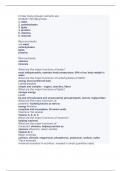
In how many groups nutrients are
divided? into six groups
1. water
2. carbohydrates
3. lipids
4. proteins
5. vitamins
6. minerals
Macronutrients
are water
carbohydrates
lipids
proteins
Micronutrients
vitamins
minerals
What are the major functions of water?
most indispensable, maintain body temperature, 60% of our body weight is
water
What are the major functions of carbohydrates (CH2O)?
energy (most preferred fuel)
Carbohydrates
simple and complex - sugars, starches, fibers
What are the major functions of lipids?
storage energy
Lipids
fat and oil (saturated and unsaturated); phospholipids, sterols, triglycerides
What are the major functions of
proteins? building blocks as well as
energy Proteins
complete and incomplete; 20 amino acids
Vitamins: fat soluble
Vitamin A, E, D, K
What are the major functions of vitamins?
helping nutrients
What are the major functions of
minerals? skeleton, helping nutrient as
vitamins Vitamins: water soluble
Vitamin B, C
Major minerals
calcium, chloride, magnesium, phosphorus, potassium, sodium, sulfur
Trace minerals
minerals essential in nutrition, needed in small quantities daily
, examples: copper, iron, iodine, zinc
Organic nutrients
Nutrients must contain the element carbon and derived from living thing
(organism). How many nutrients groups are organic?
four
1. carbohydrates
2. lipids
3. proteins
4. vitamins
Inorganic
nutrients
which can be found other than living
organisms How many nutrients groups are
inorganic?
two
1. minerals
2. water
Which nutrients provide us calories?
carbohydrate
protein
fat
alcohol
How many calories per gram carbohydrate provides?
4 cal/gram
How many calories per gram protein provides?
4 cal/ gram
How many calories per gram fat provides?
9 cal/gram
How many calories per gram alcohol provides?
7 cal/gram
**alcohol is a toxin**
**alcohol - not a nutrient**
If you know number of grams of CH2O, fat and protein in a food you can
calculate the number of calories:
•45g of CH2O x 4 Cal. = 180 cal.
•27g of protein x 4 Cal. = 108 cal.
•39g of FAT x 9 Cal.= 350 cal.
Total = 639 cal.
*** divide by 4 it gives you "g" ***
Find percentage by dividing the number of calories from each energy
nutrient by the total calories, and multiplying your answer by 100:
•CH2O = (180/639) x 100 = 28%
•Fat= (351/639)x 100 = 55%
•Protein= (108/639)x 100= 17%
1 teaspoon
4 grams
1 table spoon
3 teaspoons
divided? into six groups
1. water
2. carbohydrates
3. lipids
4. proteins
5. vitamins
6. minerals
Macronutrients
are water
carbohydrates
lipids
proteins
Micronutrients
vitamins
minerals
What are the major functions of water?
most indispensable, maintain body temperature, 60% of our body weight is
water
What are the major functions of carbohydrates (CH2O)?
energy (most preferred fuel)
Carbohydrates
simple and complex - sugars, starches, fibers
What are the major functions of lipids?
storage energy
Lipids
fat and oil (saturated and unsaturated); phospholipids, sterols, triglycerides
What are the major functions of
proteins? building blocks as well as
energy Proteins
complete and incomplete; 20 amino acids
Vitamins: fat soluble
Vitamin A, E, D, K
What are the major functions of vitamins?
helping nutrients
What are the major functions of
minerals? skeleton, helping nutrient as
vitamins Vitamins: water soluble
Vitamin B, C
Major minerals
calcium, chloride, magnesium, phosphorus, potassium, sodium, sulfur
Trace minerals
minerals essential in nutrition, needed in small quantities daily
, examples: copper, iron, iodine, zinc
Organic nutrients
Nutrients must contain the element carbon and derived from living thing
(organism). How many nutrients groups are organic?
four
1. carbohydrates
2. lipids
3. proteins
4. vitamins
Inorganic
nutrients
which can be found other than living
organisms How many nutrients groups are
inorganic?
two
1. minerals
2. water
Which nutrients provide us calories?
carbohydrate
protein
fat
alcohol
How many calories per gram carbohydrate provides?
4 cal/gram
How many calories per gram protein provides?
4 cal/ gram
How many calories per gram fat provides?
9 cal/gram
How many calories per gram alcohol provides?
7 cal/gram
**alcohol is a toxin**
**alcohol - not a nutrient**
If you know number of grams of CH2O, fat and protein in a food you can
calculate the number of calories:
•45g of CH2O x 4 Cal. = 180 cal.
•27g of protein x 4 Cal. = 108 cal.
•39g of FAT x 9 Cal.= 350 cal.
Total = 639 cal.
*** divide by 4 it gives you "g" ***
Find percentage by dividing the number of calories from each energy
nutrient by the total calories, and multiplying your answer by 100:
•CH2O = (180/639) x 100 = 28%
•Fat= (351/639)x 100 = 55%
•Protein= (108/639)x 100= 17%
1 teaspoon
4 grams
1 table spoon
3 teaspoons