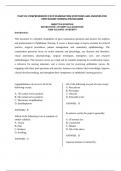
PART III: COMPREHENSIVE PAST EXAMINATION QUESTIONS AND ANSWERS FOR
OPHTHALMIC NURSING PROGRAMME
OBJECTIVE QUESTION
INSTRUCTION: ATTEMPT ALL QUESTIONS
TIME ALLOWED: 30 MUNITS
Introduction:
This document is a detailed compilation of past examination questions and answers for students
and professionals in Ophthalmic Nursing. It covers a broad range of topics essential for clinical
practice, surgical procedures, patient management, and community ophthalmology. The
examination questions focus on ocular anatomy and physiology, eye diseases and disorders,
visual assessment, pharmacology, surgical techniques, emergency care, and research
methodologies. This resource serves as a study aid for students preparing for certification exams,
a reference for nursing educators, and a review tool for practicing ophthalmic nurses. By
engaging with these past questions and answers, learners can enhance their knowledge, improve
clinical decision-making, and strengthen their competency in ophthalmic nursing practice.
Lagophthalmos can occur in all of the All of the following are part of uvea except:
following except; A. Pars plicata
B. Pars plana
A. 7th cranial nerve paralysis C. Choroid
B. 5th cranial nerve paralysis D. Schwalbe’s line
C. Thyrotoxic exophthalmos
D. Symblepharon ANSWER: D
ANSWER: B
In anterior uveitis the pupil is generally:
Which of the following is not a symptom of
orbital cellulitis: A. Of normal size
A. Vision B. Constricted
B. Pain C. Dilated
C. Redness D. All of the above
D. Swelling
ANSWER: B
ANSWER: A
Aqueous humour is formed by:
,A. Epithelium of ciliary body A. Capsular ligament
B. Posterior surface of iris B. Endo-sulcus
C. Lens C. Ciliary supported
D. Pars plana D. Capsular bag
ANSWER: A ANSWER: D
Aphakia is likely to be corrected by the use All the following are associated open angle
any of the following Except: glaucoma include except:
A. Anterior chamber intraocular lens A. Enlarged blind spot
B. Posterior chamber intraocular lens B. Generalized depression of isopters
C. Contact tens C. Loss of central fields
D. plus 10 lenses D. Tubular vision
ANSWER: D ANSWER: D
Lens induced glaucoma is least likely to Topical atropine is contraindicated in:
occur in:
A. Retinoscopy in children
A. Intumescent cataract. B. Iridocyclitis
B. Anterior lens dislocation, C. Corneal ulcer
C. Posterior subcapsular cataract D. Primary angle closure glaucoma
D. Posterior lens dislocation
ANSWER: D
ANSWER: C
Which of the Followin is a clinical diagnosis
Earliest visual rehabilitation occurs with: of glaucoma?\
A. Phacoemulsification plus intraocular lens A. Shallow anterior chamber
implantation B. Optic disc cupping
B. Intracapsular cataract extraction plus C. Narrow angle
intraocular lens implantation D. visual acuity and refractive error
C. Extracapsular cataract extraction plus
intraocular lens implantation ANSWER: B
D. small incision cataract extraction
ANSWER: A
In retinal detachment, fluid accumulates
Best site where intraocular lens is fitted: between:
, All the following are extra ocular muscle of
A. Outer plexiform layer and inner nuclear eye except:
layer.
B. Neurosensory retina and layer of retinal A. Superior rectus
pigment epithelium B. Ciliary muscle
C. Nerve fiber layer and rest of retina. C. Inferior oblique
D. Retinal pigment epithelium and Bruch’s D. Superior oblique
membrane.
ANSWER: B
ANSWER: B
The action of superior rectus is:
A cat's eye reflex is seen in:
A. Elevation, intorsion, abduction
A. Papilloedema B. Elevation, intorsion, adduction
B. Retinoblastoma C. Elevation, extorsion, adduction
C. Papillitis D. Elevation, extorsion, abduction.
D. Retinitis
ANSWER: B
ANSWER: B
Primary optic atrophy results from:
The only extraocular muscle which does not
A. Retinal disease arise from the apex of The orbit is:
B. Chronic glaucoma
C. Papilledema A. Superior rectus
D. Neurological disease B. Superior oblique
C. Inferior oblique
ANSWER: D D. Inferior rectus
ANSWER: C
Optic disc diameter is: The best treatment for amblyopia is:
A. 1 mm A. Orthoptic exercises
B. 1.5 mm B. Occlusion
C. 2 mm C. Surgery
D. 3 mm D. Best treat after age 10 years
ANSWER; B ANSWER: B
OPHTHALMIC NURSING PROGRAMME
OBJECTIVE QUESTION
INSTRUCTION: ATTEMPT ALL QUESTIONS
TIME ALLOWED: 30 MUNITS
Introduction:
This document is a detailed compilation of past examination questions and answers for students
and professionals in Ophthalmic Nursing. It covers a broad range of topics essential for clinical
practice, surgical procedures, patient management, and community ophthalmology. The
examination questions focus on ocular anatomy and physiology, eye diseases and disorders,
visual assessment, pharmacology, surgical techniques, emergency care, and research
methodologies. This resource serves as a study aid for students preparing for certification exams,
a reference for nursing educators, and a review tool for practicing ophthalmic nurses. By
engaging with these past questions and answers, learners can enhance their knowledge, improve
clinical decision-making, and strengthen their competency in ophthalmic nursing practice.
Lagophthalmos can occur in all of the All of the following are part of uvea except:
following except; A. Pars plicata
B. Pars plana
A. 7th cranial nerve paralysis C. Choroid
B. 5th cranial nerve paralysis D. Schwalbe’s line
C. Thyrotoxic exophthalmos
D. Symblepharon ANSWER: D
ANSWER: B
In anterior uveitis the pupil is generally:
Which of the following is not a symptom of
orbital cellulitis: A. Of normal size
A. Vision B. Constricted
B. Pain C. Dilated
C. Redness D. All of the above
D. Swelling
ANSWER: B
ANSWER: A
Aqueous humour is formed by:
,A. Epithelium of ciliary body A. Capsular ligament
B. Posterior surface of iris B. Endo-sulcus
C. Lens C. Ciliary supported
D. Pars plana D. Capsular bag
ANSWER: A ANSWER: D
Aphakia is likely to be corrected by the use All the following are associated open angle
any of the following Except: glaucoma include except:
A. Anterior chamber intraocular lens A. Enlarged blind spot
B. Posterior chamber intraocular lens B. Generalized depression of isopters
C. Contact tens C. Loss of central fields
D. plus 10 lenses D. Tubular vision
ANSWER: D ANSWER: D
Lens induced glaucoma is least likely to Topical atropine is contraindicated in:
occur in:
A. Retinoscopy in children
A. Intumescent cataract. B. Iridocyclitis
B. Anterior lens dislocation, C. Corneal ulcer
C. Posterior subcapsular cataract D. Primary angle closure glaucoma
D. Posterior lens dislocation
ANSWER: D
ANSWER: C
Which of the Followin is a clinical diagnosis
Earliest visual rehabilitation occurs with: of glaucoma?\
A. Phacoemulsification plus intraocular lens A. Shallow anterior chamber
implantation B. Optic disc cupping
B. Intracapsular cataract extraction plus C. Narrow angle
intraocular lens implantation D. visual acuity and refractive error
C. Extracapsular cataract extraction plus
intraocular lens implantation ANSWER: B
D. small incision cataract extraction
ANSWER: A
In retinal detachment, fluid accumulates
Best site where intraocular lens is fitted: between:
, All the following are extra ocular muscle of
A. Outer plexiform layer and inner nuclear eye except:
layer.
B. Neurosensory retina and layer of retinal A. Superior rectus
pigment epithelium B. Ciliary muscle
C. Nerve fiber layer and rest of retina. C. Inferior oblique
D. Retinal pigment epithelium and Bruch’s D. Superior oblique
membrane.
ANSWER: B
ANSWER: B
The action of superior rectus is:
A cat's eye reflex is seen in:
A. Elevation, intorsion, abduction
A. Papilloedema B. Elevation, intorsion, adduction
B. Retinoblastoma C. Elevation, extorsion, adduction
C. Papillitis D. Elevation, extorsion, abduction.
D. Retinitis
ANSWER: B
ANSWER: B
Primary optic atrophy results from:
The only extraocular muscle which does not
A. Retinal disease arise from the apex of The orbit is:
B. Chronic glaucoma
C. Papilledema A. Superior rectus
D. Neurological disease B. Superior oblique
C. Inferior oblique
ANSWER: D D. Inferior rectus
ANSWER: C
Optic disc diameter is: The best treatment for amblyopia is:
A. 1 mm A. Orthoptic exercises
B. 1.5 mm B. Occlusion
C. 2 mm C. Surgery
D. 3 mm D. Best treat after age 10 years
ANSWER; B ANSWER: B