NURSING NSG6005 Final Exam Study Guide [UPDATED]
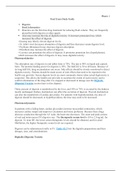
Pharm 1 Final Exam Study Guide 1. Digoxin- Book Information- • Diuretics are the first-line drug treatment for reducing fluid volume. They are frequently prescribed with digoxin or other agents. • Aloe may increase the risk of digitalis toxicity. It increases potassium loss, which increases the effect of digoxin. Ginseng may falsely elevate digoxin levels. • St. John's wort decreases absorption of digoxin and thus decreases serum digoxin level. • Psyllium (Metamucil) may decrease digoxin absorption. • Hawthorn may increase the effect of digoxin. • Licorice can potentiate the effect of digoxin. It promotes potassium loss (hypokalemia), which increases the effect of digoxin. It may cause digitalis toxicity. Pharmacokinetics The absorption rate of digoxin in oral tablet form is 70%. The rate is 90% in liquid and capsule form. The protein-binding power for digoxin is 30%. The half-life is 30 to 40 hours. Because of its long half-life, drug accumulation can occur. Side effects should be closely monitored to detect digitalis toxicity. Patients should be made aware of side effects that need to be reported to the health care provider. Serum digoxin levels are most commonly drawn when actual digitoxicity is suspected. This allows the health care provider to ascertain the extent of such toxicity and to confirm elimination of the drug after it is stopped or decreased in dosage (see the Digitalis [Digoxin] Toxicity section later in this chapter). Thirty percent of digoxin is metabolized by the liver, and 50% to 70% is excreted by the kidneys mostly unchanged. Kidney dysfunction can affect the excretion of digoxin. Thyroid dysfunction can alter the metabolism of cardiac glycosides. For patients with hypothyroidism, the dose of digoxin should be decreased; in hyperthyroidism, the dose may need to be increased. Pharmacodynamics In patients with a failing heart, cardiac glycosides increase myocardial contraction, which increases cardiac output and improves circulation and tissue perfusion. Because these drugs decrease conduction through the AV node, the heart rate decreases. The onset and peak actions of oral and intravenous (IV) digoxin vary. The therapeutic serum level is 0.8 to 2.0 ng/mL for digoxin. To treat HF, the lower serum therapeutic levels should be obtained, and for atrial fibrillation, the higher therapeutic serum levels are required. Digoxin can be administered orally or IV. Table 42-2 lists the digitalis preparations and their dosages, uses, and considerations. Digitalis (Digoxin) Toxicity Overdose or accumulation of digoxin causes digitalis toxicity. Signs and symptoms include anorexia, diarrhea, nausea and vomiting, bradycardia (pulse rate below 60 beats/min), premature ventricular contractions, cardiac dysrhythmias, headaches, malaise, blurred vision, visual illusions (white, green, yellow halos around objects), confusion, and delirium. Older adults are more prone to toxicity. Cardiotoxicity is a serious adverse reaction to digoxin; ventricular dysrhythmias result. Three cardiac-altered functions can contribute to digoxin-induced ventricular dysrhythmias: (1) suppression of AV conduction, (2) increased automaticity, and (3) a decreased refractory period in ventricular muscle. The antidysrhythmics phenytoin and lidocaine are effective in treating digoxin-induced ventricular dysrhythmias. Lidocaine should be limited to short-term treatment. Antidote for Cardiac/Digitalis Glycosides Digoxin immune Fab (ovine, Digibind) may be given to treat severe digitalis toxicity. This agent binds with digoxin to form complex molecules that can be excreted in the urine; thus, digoxin is unable to bind at the cellular site of action. Signs and symptoms of digoxin toxicity should be reported promptly to the health care provider. Serum digoxin levels Evaluate the effectiveness of digoxin by noting patient's response to drug (decreased heart rate, decreased rales) and absence of side effects. Continue monitoring pulse rate. Analyze conflicts in values and beliefs, and use culturally consistent communication practices. It is essential that patients taking digoxin, diuretics, and potassium supplements for HF do not miss any doses of their medication. Patient should be fully aware of adverse effects and readily report them to the health care provider. • Assessment: ▪ Obtain a drug and herbal history. Report if drug-drug or drug-herb interaction is probable. If patient is taking digoxin and a potassium-wasting diuretic or cortisone drug, hypokalemia might result, causing digitalis toxicity. Low serum potassium level enhances action of digoxin. Patients taking a thiazide and/or cortisone with digoxin should take a potassium supplement. • ▪ Obtain a baseline pulse rate for future comparisons. Apical pulse should be taken for a full minute and should be greater than 60 beats/min. • ▪ Assess for signs and symptoms of digitalis toxicity. Common symptoms include anorexia, nausea, vomiting, bradycardia, cardiac dysrhythmias, and visual disturbances. Report symptoms immediately to the health care provider. Patient Teaching: Teach patient how to check pulse rate before taking digoxin and to notify health care provider if pulse rate is <60 beats/min or irregular. Nursing Interventions: Monitor serum digoxin level (normal therapeutic drug range is 0.8 to 2 ng/mL). A serum digoxin level greater than 2 ng/mL is indicative of digitalis toxicity. Monitor serum digoxin level (normal therapeutic drug range is 0.8 to 2 ng/mL). A serum digoxin level greater than 2 ng/mL is indicative of digitalis toxicity. A patient is taking a potassium-depleting diuretic and digoxin. The nurse expects that a low potassium level (hypokalemia) could have what effect on digoxin (Lanoxin)? a.Increase serum digoxin sensitivity level b.Decrease serum digoxin sensitivity level c.Have no effect on serum digoxin sensitivity level d.Cause a low average serum digoxin sensitivity level The patient is receiving digoxin for treatment of heart failure. Which finding would suggest to the nurse that heart failure is improving? a.Pale and cool extremities b.Absence of peripheral edema c.Urine output of 60 mL/4 h d.Complaints of increasing dyspnea 2.The patient's serum digoxin level is 3.0 ng/mL. What does the nurse know about this serum digoxin level? a.It is in the high (elevated) range. b.It is in the low (decreased) range. c.It is within the normal range. d.It is in the low average range. 2. Lasix- Questions: What should the nurse do when a patient is taking furosemide (Lasix)? a.Instruct patient to change positions quickly when getting out of bed. b.Assess blood pressure before administration. c.Administer at bedtime for maximum effectiveness d.Teach to avoid fruits to prevent hyperkalemia. A patient has heart failure, and a high dose of furosemide (Lasix) is ordered. What suggests a favorable response to Lasix? a.Decrease in level of consciousness and sleeping more b.Respiratory rate decreases from 28/min to 20/min and the depth increases. c.Increased congestion heard in breath sounds and complains of shortness of breath d.Urine output of 50 mL/4 h and intake of 200 mL 3. Hydrochlorothiazide- For the patient taking a diuretic, a combination such as triamterene and hydrochlorothiazide may be prescribed. The nurse realizes that this combination is ordered for which purpose? a.To decrease serum potassium level b.To increase serum potassium level c.To decrease glucose level d.To increase glucose level • A patient is taking hydrochlorothiazide (HCTZ) 50 mg/day and digoxin (Lanoxin) 0.25 mg/day. The nurse plans to monitor the patient for which potential electrolyte imbalance? o a.Hypocalcemia o b.Hypokalemia o c.Hyperkalemia o d.Hypermagnesemia • 2.The nurse knows that which statement is correct regarding nursing care of a patient receiving hydrochlorothiazide (HCTZ)? (Select all that apply.) o a.Monitor patient for signs of hypoglycemia. o b.Administer ordered potassium supplements. o c.Monitor serum potassium and uric acid levels. o d.Assess blood pressure before administration. o e.Notify health care provider if patient has had oliguria for 24 hours. o f.Assess for decreased cholesterol and triglyceride levels. o The nurse knows that which diuretic is most frequently combined with an antihypertensive drug? • thalidone • chlorothiazide • oflumethiazide • sium-sparing diuretic 4. BNP Levels- 5. Side effect of nitrates- Headaches are one of the most common side effects of nitroglycerin, but they may become less frequent with continued use. Otherwise acetaminophen may provide some relief. Other side effects include hypotension, dizziness, weakness, and faintness. When nitroglycerin ointment or transdermal patches are discontinued, the dose should be tapered over several weeks to prevent the rebound effect of severe pain caused by myocardial ischemia (lack of blood supply to the heart muscle). In addition, reflex tachycardia may occur if the nitrate is given too rapidly. The heart rate increases greatly because of overcompensation of the cardiovascular system. 6. Variant angina- Treatment- Calcium-Channel blockers. CCB’s relax coronary artery spasm (variant angina). 7. Milrinone (Primacor)- Phosphodiesterase Inhibitor- Milrinone lactate. Increases stroke colume and cardiac output and promotes vasodilation. Administered IV for no longer than 48-72 hours. Severe cardiac dysrhythmias might result from the use of phosphodiesterase inhibitors, so the patient’s ECG and cardiac status shoulf be closly monitored. Used for short-term treatment of HF, may be given before a heart transplant. Heart rate and Blood pressure should be closely monitored. 8. Mannitol (Osmitrol)- Mannitol is a potent osmotic potassium-wasting diuretic frequently used in emergency situations such as ICP and IOP. In addition, mannitol can be used with cisplatin and carboplatin in cancer chemotherapy to induce a frank diuresis and decreased side effects of treatment. Mannitol is the most frequently prescribed osmotic diuretic, followed by urea. Diuresis occurs within 1 to 3 hours after IV administration. Table 43-4 describes Mannitol. SE: The side effects and adverse reactions of mannitol include fluid and electrolyte imbalance, pulmonary edema from rapid shift of fluids, nausea, vomiting, tachycardia from rapid fluid loss, and acidosis. Crystallization of mannitol in the vial may occur when the drug is exposed to a low temperature. The vial should be warmed to dissolve the crystals. The mannitol solution should not be used for IV infusion if crystals are present and have not been dissolved. Contraindications: Mannitol must be given with extreme caution to patients who have heart disease and HF. It should be immediately discontinued if the patient develops HF or renal failure. What does the nurse know to be correct concerning the use of mannitol (Osmitrol) in patients? • a.Decreases intracranial pressure • b.Increases intraocular pressure • c.Causes sodium and potassium retention • d.Causes diuresis in several days 9. HTN, Renin in African Americans- African Americans are more likely to develop hypertension at an earlier age than white Americans. They also have a higher mortality rate from hypertension than the white population. The use of beta-adrenergic blockers (beta blockers) and angiotensin-converting enzyme (ACE) inhibitors is less effective for the control of hypertension in African Americans unless the drug is combined or given with a diuretic. This group is susceptible to low-renin hypertension; therefore, they do not respond well to beta blockers and ACE inhibitors. The antihypertensive drugs that are effective for African Americans are alpha1 blockers and calcium channel blockers (calcium blockers). African-American patients do respond to diuretics as the initial monotherapy for controlling hypertension. White patients usually have high-renin hypertension and respond well to all antihypertensive agents.
Escuela, estudio y materia
- Institución
- Florida International University
- Grado
- NURSING NSG6005
Información del documento
- Subido en
- 18 de junio de 2020
- Número de páginas
- 6
- Escrito en
- 2019/2020
- Tipo
- Study guide
Temas
-
pharm 1 final exam study guide 1 digoxin book information • diuretics are the first line drug treatment for reducing fluid volume they are frequently prescribed with digoxin or other agents • al

Documento también disponible en un lote